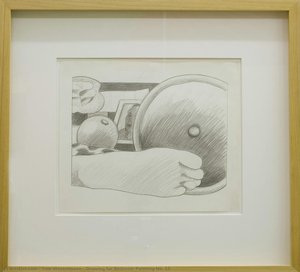
Acrylic On PaperNeo-Dada
 1958
1958 21.0 x 29.0 cm
 Tate Modern
Vásároljon nagy felbontású, javított digitális képet, amely minőségében messze felülmúlja az online előnézetet.
Minden fájlt szakembereink a legmodernebb eszközök és precíz, kézi retusálás segítségével készítenek el aprólékosan. Gondoskodunk arról, hogy minden kép kivételes tisztasággal, pontos színhelyességgel és részletgazdag finomsággal rendelkezzen.
A végleges fájl 72 órán belül e-mailben megérkezik, professzionális, szerkesztői és nyomtatási környezetbe optimalizálva az azonnali használathoz. Ez ugyanaz a minőség, amelyben a legmeghatározóbb tervezőstúdiók, kiadók és galériák is megbízhatnak.
Töltsön le nagy felbontású fájlt személyes kiállításokhoz, nyomtatáshoz és kreatív projektekhez. ( Nyomat rendelése Kézzel festett másolat rendelése)
Amikor a BuyPopArt.com szolgáltatást választja, nem csupán egy képet kap – professzionálisan felmagasított digitális műalkotást kap, amely precizitással készült, és amelyet megelégsedési gwarancia tesz biztoslássá. Az alábbiakban automatikusan minden benne 】

A nagy felbontású digitális képmásolatát a megrendelést követő 72 órán belül e-mailben elküldjük Önnek – azonnal használható formátumban.

Műve professzionális módon kerül optimalizálásra fejlett mesterséges intelligencia eszközök és manuális szerkesztés segítségével, biztosítva a maximális részletességet, tisztaságot és színpontosságot.

Véletlenül törölted vagy elvesztetted a fájlodat? Ne aggódj – bármikor ingyen újra megküldjük neked.

Élvezze műalkotásait azonnal, vám, illeték vagy szállítási költség nélkül – a digitális letöltések mindig adamentesek.

Professzionális eszközök és színkezelés segítségével garantáljuk, hogy digitális képe a lehető legpontosabban tükrözze az eredeti színeket.

Ha nemມີ elégedett a digitális képpel, 60 napon belül átmunkáljuk azt, vagy 100% visszatérítjük az amountot – kérdés nélkül.

Nem érheted el a teljes elégedettséget? 60 napon belül teljes visszatérítést kapsz a digitális fájlod megérkezése után – kérdés nélkül.

Vásároljon 3 képet, spóroljon 10%-et - Vásároljon 5-öt, spóroljon 15%-et - Vásároljon 10+ képet, spóroljon 20%-at. Kiváló kreatív projektekhez, galériákhoz és ügynökségekhez.
Joseph Beuys's "Actresses," rendered in 1958 on a deceptively simple pale beige background, isn’t merely a sketch; it’s a distilled essence of performance, vulnerability, and the potent symbolism inherent within the human form. This preparatory drawing, a glimpse into the mind of one of the 20th century's most radical artists, immediately draws the viewer in with its loose, gestural lines – a deliberate rejection of rigid representation in favor of capturing a fleeting moment of embodied expression. The two figures, presented in profile and seemingly caught mid-movement, possess an immediate theatricality, hinting at dancers, performers, or perhaps even the silent drama of everyday life. Beuys wasn’t interested in replicating reality; he sought to translate feeling onto paper, imbuing his subjects with a palpable sense of energy and contained emotion.
The composition is strikingly asymmetrical, defying traditional notions of balance. The figures aren’t centered within the frame, instead occupying distinct points that create a dynamic imbalance—a visual representation of movement itself. Vertical lines, subtly introduced from the top edge, provide an anchor and structure to this otherwise fluid arrangement, preventing the drawing from dissolving into pure abstraction. Beuys's technique is characterized by a masterful use of hatching and cross-hatching, skillfully employed to build volume and shadow without resorting to precise shading. The loose, sketchy lines, rendered with charcoal or graphite, contribute significantly to the overall sense of spontaneity and immediacy—as if the artist were capturing a fleeting impression rather than meticulously crafting a finished image. Notice how he uses varying line weights to emphasize certain areas, drawing attention to the contours of the figures’ limbs and torsos.
The muted color palette—dominated by earthy browns, ochres, and subtle touches of purple—reinforces the drawing's emotional depth. The beige background acts as a neutral canvas, allowing the figures to command attention without distraction. The small area of mauve on one figure introduces an element of mystery or perhaps even melancholy, hinting at hidden emotions beneath the surface. Beyond mere color choices, Beuys’s use of earth tones speaks to a deep connection with nature and the primal roots of human experience. Considering his later work focused heavily on social sculpture and the integration of art into everyday life, this grounding in natural materials and forms is profoundly significant. The elongated figures themselves can be interpreted as symbols of theatricality—a deliberate exaggeration that highlights the performative aspect of existence.
“Actresses” was created during a period of immense social and political upheaval in post-war Germany, a time when artists were grappling with questions of identity, purpose, and the role of art in society. Beuys’s work reflects this broader context, aligning with the burgeoning Expressionist movement and foreshadowing the rise of Fluxus and other avant-garde artistic practices. The drawing's emphasis on gesture and emotion anticipates the performance art that would become increasingly prominent in the latter half of the 20th century. Furthermore, it shares affinities with Surrealism, particularly in its exploration of the subconscious and its use of symbolic imagery. It’s worth noting that Beuys himself was deeply influenced by Carl Linnaeus's *Systema Naturae*, a book he rescued from a Nazi book burning—an event that profoundly shaped his artistic philosophy and his belief in art as a tool for social transformation. The drawing, therefore, can be seen as a meditation on the fragility of existence and the enduring power of human connection.
This preparatory sketch offers a rare glimpse into the creative process of one of the 20th century’s most visionary artists. “Actresses” is more than just a drawing; it's a testament to Beuys’s profound understanding of the human condition and his unwavering commitment to exploring the transformative potential of art.

1921 - 1986 , Németország


Maradjon naprakész a legfrissebb művészeti hírekkel, exkluzív ajánlatokkal és dekorációs ötletekkel.
Írja le nekünk projektjét, és művészeti szakértőink 3 személyre szabott műalkotási javaslatot készítenek Önnek.
Hagyjuk, hogy mi válogassunk ki Önnek 3 legjobb opciót – Ingyenesen!


 Megtekintés
 Küldés
 Megosztás
 Részletek

 Letöltés
 Hasonló darabok
 X-ray felvétel
 Diavetítés
 Összes részlet megjelenítése