A művész életrajza
A Life Etched in Parisian Stone
Maurice Utrillo, born Maurice Valadon in the heart of Montmartre in 1883, was a painter inextricably linked to the spirit of Paris itself. His life, marked by both profound artistic talent and personal struggle, unfolded against the backdrop of a rapidly changing city – a world he captured with an almost melancholic tenderness. Unlike many artists who sought inspiration *in* Montmartre, Utrillo was born *of* it – one of the few prominent painters to actually originate within its bohemian boundaries. His story is not simply that of an artist, but a reflection of the district’s own evolving identity at the turn of the 20th century. The question of his paternity remained shrouded in speculation for years; theories ranged from Pierre-Cécile Puvis de Chavannes to Renoir, though Miguel Utrillo eventually legally acknowledged him. This ambiguity perhaps foreshadowed a life lived on the fringes, observing rather than fully participating, and translating those observations into canvases imbued with quiet introspection.
From Troubled Youth to Artistic Awakening
Utrillo’s early years were far from idyllic. Marked by truancy and a growing struggle with alcoholism, his path seemed destined for hardship. In 1904, he received a diagnosis of schizophrenia, leading to periods of institutionalization that would continue throughout his life. It was during these times, however, that art began to emerge as a lifeline. Encouraged by his mother, Suzanne Valadon – herself a remarkable figure who transitioned from model to respected artist – Utrillo discovered an innate talent for painting. Valadon’s influence was pivotal; she provided not formal training, but rather a foundational understanding of artistic principles and unwavering encouragement during periods of immense personal difficulty. He began by depicting the familiar streets and buildings around Montmartre, quickly developing a distinctive style characterized by its delicate brushwork and muted palette. These early works weren't merely representations of place, they were emotional landscapes reflecting his own internal world – a sense of isolation, perhaps, or a yearning for connection. The starkness of the city’s architecture, the weathered facades, became recurring motifs in his work, mirroring the complexities of his own life.
The White Period and Beyond: A Unique Artistic Vision
Utrillo’s artistic development culminated in what is known as his “White Period” (approximately 1909-1914). This phase saw him employ a distinctive technique involving the generous use of zinc white, often mixed with plaster, to create textured surfaces that evoked the weathered walls and timeworn facades of Montmartre. The resulting paintings possess a unique luminosity and a sense of quiet decay, capturing the essence of a neighborhood undergoing transformation. He wasn’t interested in grand narratives or heroic figures; instead, he focused on the everyday – the humble streets, the corner cafes, the solitary buildings standing sentinel against the Parisian sky. His palette favored ochres, browns, and grays, lending his cityscapes a melancholic atmosphere that resonated with the spirit of the time. This period is particularly notable for its expressive use of light and shadow, creating an almost dreamlike quality in many of his works. Later works, even those created from memory or postcards due to declining health, retained this signature style, demonstrating a remarkable consistency of vision. Notable pieces like “Rue du Mont-Cenis Under The Snow” and "Montmartre Street Corner or Lapin Agile" exemplify his ability to transform ordinary scenes into evocative meditations on urban life.
Influences and Connections
Utrillo’s artistic journey was deeply intertwined with the vibrant artistic community of Montmartre. His mother, Suzanne Valadon, a celebrated artist in her own right, provided him with an invaluable foundation – not through formal instruction, but through her own example and unwavering belief in his talent. She had herself been a model for many prominent artists, including Berthe Morisot, Renoir, and Toulouse-Lautrec, absorbing their techniques and approaches to painting. This connection to the established art world subtly shaped Utrillo’s style, while simultaneously allowing him to maintain an independent voice. The influence of Edgar Degas is also evident in his meticulous observation of figures and spaces, though he ultimately developed a more personal and emotionally charged approach. Furthermore, his work shares affinities with Francesco Guardi and Camille Corot, masters known for their atmospheric landscapes and ability to capture the essence of urban environments.
Recognition, Legacy, and Enduring Influence
By the 1920s, Utrillo’s work had gained significant recognition. He was awarded the Cross of the Légion d'honneur in 1928, a testament to his growing reputation within the French art world. Despite ongoing battles with illness and institutionalization, he continued to paint prolifically, leaving behind a vast body of work that provides invaluable insight into early 20th-century Paris. His paintings are now held in numerous museums worldwide, including the Musée Maurice Denis and Galerie Paul Pétridès, ensuring his legacy for generations to come. Utrillo’s influence can be seen in subsequent artists who sought to capture the atmosphere and emotion of urban environments. He wasn't simply documenting a place; he was conveying a feeling – a sense of solitude, nostalgia, and quiet beauty that continues to resonate with viewers today. His work serves as a poignant reminder of a Paris lost, yet forever preserved on canvas, etched in stone and memory. He remains a master of capturing the soul of a city.



 Készíttetnék festményként
 Megosztás
 Részletek
 Kedvencekhez ad
 Letöltés
 Hasonló alkotások
 X-ray felvétel
 Diavetítés






 Megosztás

 Tovább olvasom


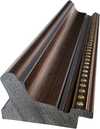
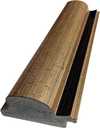

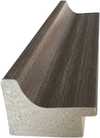
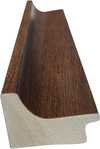
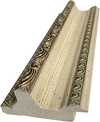
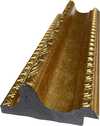
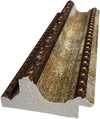
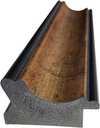
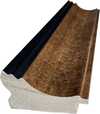

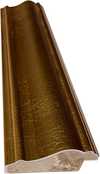


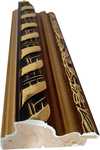

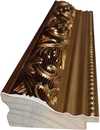

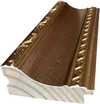

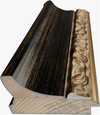
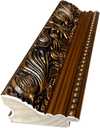
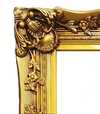
 Az üvegkeretes opció csak 110 cm alatti méretben érhető el


