

 Contemporary Realism
 1978Contemporary
 152.0 x 152.0 cm
 University of Iowa Museum of Art
Múzeumi minőségű giclée vagy vászonnyomat, gyors gyártással és rugalmas finomítási lehetőségekkel. ( Kézzel festett festmény vásárlása Kép vásárlása)





























Válasszon előre meghatározott méreteink közül, amelyek megfelelnek a műalkotás eredeti arányainak.

Megadhat saját méreteket is egy konkrét kerethez vagy helyszínhez igazítva. Amennyiben a kiválasztott méret nem egyezik az eredeti kép arányokkal, a műalkotást le fogjuk vágni, vagy kiegészítjük a képet tükrözött vagy egyszínű szélekkel. A gyártás megkezdése előtt egy digitális tervezetet küldünk jóváhagyásra.
Kérjük, vegye figyelembe, hogy a képernyőn látható előnézet nem tükrözi a tényleges levágást vagy kiegészítést. Csak a tervezet mutatja pontosan a végső kompozíciót.
Bár az egyedi méretek is elérhetőek, az eredeti arányok megőrzése érdekében azt javasoljuk, hogy válasszon a előre meghatározott listából származó méretet.
Világszerte történő kiszállítás területére 2 hét alatt, a szokásos 4-5 hét helyett. 13 augusztus


Connection
A reprodukció mérete
Miriam Schapiro’s “Connection,” created in 1978, stands as a cornerstone of Feminist Art and embodies the vibrant spirit of Pattern and Decoration (P&D) style. More than just a visual aesthetic, it represents a deliberate challenge to traditional artistic conventions—a bold assertion that craft and fine art could coexist harmoniously, fostering dialogue about gender roles and identity.
Born in Toronto, Canada, in 1923, Schapiro’s artistic journey began with a profound appreciation for her father's influence as an artist and industrial designer. This formative experience instilled in her a belief that art could be both intellectually stimulating and emotionally resonant—a conviction she carried throughout her prolific career. “Connection” exemplifies the P&D movement’s core principles: prioritizing tactile qualities alongside bold color palettes. Rejecting the austere minimalism prevalent in much of postwar European art, Schapiro embraced ornamentation and decorative elements, reflecting a broader cultural shift toward celebrating domesticity and creativity.
The artwork itself is dominated by an expansive quilt-like arrangement of square patches—a deliberate visual metaphor for interconnectedness. Each patch is individually crafted with distinct hues, patterns, and textures – reds, yellows, blues, floral motifs, geometric designs – yet collectively they coalesce into a unified whole. This technique wasn’t merely decorative; it served as a conscious statement about the importance of embracing differences while recognizing their contribution to a larger tapestry of experience.
Schapiro skillfully utilized acrylic paint on fabric—a choice that underscores her commitment to blending artistic expression with traditional craft practices. The meticulous layering of colors and textures creates depth and luminosity, inviting viewers to contemplate the interplay between surface appearance and underlying structure. The fabric medium itself lends a sense of warmth and materiality to the piece, grounding it in tangible reality.
"Connection" speaks powerfully to themes of feminine identity and creative dialogue—concepts central to Schapiro’s feminist artistic vision. The quilt pattern symbolizes nurturing, caregiving, and the weaving together of individual experiences into a collective narrative. It represents an assertion that women's contributions to art and culture are equally valuable as those of men, fostering a celebration of diverse perspectives.
Ultimately, “Connection” transcends its stylistic conventions to offer a profound meditation on unity and diversity—values that remain remarkably relevant in contemporary artistic discourse. Miriam Schapiro’s enduring legacy lies not only in her groundbreaking contributions to Feminist Art but also in her unwavering belief that art can illuminate the human condition with beauty and insight.
Miriam Schapiro, born November 15, 1923 in Toronto, Canada, was an artist whose life’s journey mirrored the evolving landscape of twentieth and twenty-first century art. Her artistic path wasn't merely a progression through stylistic trends but a deliberate dismantling of boundaries – between high and low art, masculine and feminine expression, and ultimately, between personal experience and universal themes. Schapiro’s formative years were steeped in creativity; her father, Theodore Shapiro, an artist and industrial designer himself, nurtured her innate artistic inclinations from the tender age of six. This foundational encouragement, coupled with instruction at the Museum of Modern Art, established a lifelong dedication to visual expression.
Early Artistic Explorations: Abstract Expressionism and Beyond
The Birth of Femmage: Challenging Conventions
Innovations in Collage and Texture: Defining Schapiro’s Style
Themes of Identity, History, and Decoration: Schapiro’s Artistic Legacy
Schapiro's enduring influence stems from her pioneering work in collage and assemblage, which expanded the possibilities of artistic expression. Her commitment to feminist ideals reshaped perceptions of art history and cemented her place as one of the most important artists of her time.

1923 - 2015 , Kanada

Explore the captivating history of geometric abstraction in art, from ancient roots to contemporary masters. Expert insights for collectors & enthusiasts. Discover key artists, movements & investment potential.
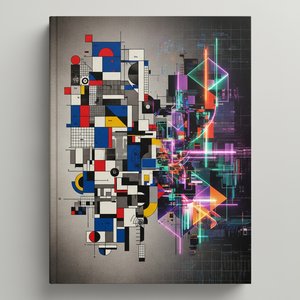
Explore the evolution of geometric abstraction from Cubism to contemporary art. Discover key artists like Malevich & Mondrian, investment insights, and expert collecting advice at BuyPopArt.

Explore the world of contemporary abstract art with BuyPopArt. Discover key movements, influential artists & expert collecting advice. Invest in museum-quality paintings today.

Fedezze fel a geometrikus absztrakció 10 legikonikusabb műalkotását! Kandinsky, Mondrian és más mesterek festményeinek története inspirálja otthona dekorációját. Múzeumi minőségű reprodukciók a BuyPopArt.com-on – fedezze fel online!

Explore Orphism, the vibrant abstract art movement pioneered by Robert & Sonia Delaunay. Discover its unique color theory, lasting influence on modern art, and how to bring this 'symphony of color' into your home with BuyPopArt.


Maradjon naprakész a legfrissebb művészeti hírekkel, exkluzív ajánlatokkal és dekorációs ötletekkel.
Írja le nekünk projektjét, és művészeti szakértőink 3 személyre szabott műalkotási javaslatot készítenek Önnek.
Hagyjuk, hogy mi válogassunk ki Önnek 3 legjobb opciót – Ingyenesen!


 Előnézet
 Megosztás
 Megosztás
 Részletek

 Letöltés
 Hasonló alkotások
 X-ray felvétel
 Diavetítés
 Tovább olvasom







 Az üvegkeretes opció csak 110 cm alatti méretben érhető el


