

Kézzel festett olajvastú vászon, az Ön által választott méretben és keretben, művészeink készítik meglévőre. ( Nyomat rendelése Kép letöltése)





























Válasszon előre meghatározott méreteink közül, amelyek megfelelnek a műalkotás eredeti arányainak.

Ön megadhat saját méreteket egy adott kerethez vagy térhez igazításhoz. Ha a kiválasztott méret nem egyezik az eredeti kép arányával, akkor a műalkotást levágjuk, vagy további kézzel festett elemekkel meghosszabbítjuk a festményt. A gyártás megkezdése előtt küldünk Önnek egy digitális előnézetet jóváhagyásra.
Kérjük, vegye figyelembe, hogy a képernyőn megjelenő előnézet nem tükrözi a tényleges vágást vagy kiterjesztést. Csak az előnézet fog pontosan mutatni a végső kompozíciót.
Bár egyedi méretek állnak rendelkezésre, javasoljuk, hogy válasszon egy méretet az előre meghatározott listából az eredeti arányok megőrzése érdekében.
Világszerte elérhető szállítás () 3-4 hét alatt a szokásos 5 hét helyett. (17 augusztus). A minőség nem kérdőjelezhető.


The Boulevards
Reprodukció mérete
To step into Pierre Bonnard’s “The Boulevards” is to wander through a dream of fin de siècle Paris, where the bustling energy of the city is softened by a veil of poetic nostalgia. Created in 1900, this exquisite lithograph does not merely document a street scene; it captures the very breath of the Belle Époque. As a master of the Intimist movement, Bonnard moves away from the grand, sweeping gestures of traditional landscape painting to focus on the quiet, fleeting moments that define urban existence. The viewer is not an outsider looking in, but a silent participant, drifting alongside the figures strolling through a world rendered in a palette of muted greens, soft violets, and delicate pinks.
The composition possesses a deceptive simplicity that masks a profound emotional depth. Bonnard utilizes a subtly flattened perspective, compressing the space of the boulevard to draw the eye inward toward a towering architectural presence. This technique creates an intimate atmosphere, as if the city itself is leaning in to share a secret. The way the light filters through the scene—not with the harsh brilliance of the Impressionists, but with a diffused, ethereal glow—imbued the lithograph with a sense of timelessness. For the collector or interior designer, this piece offers a sophisticated balance of structure and softness, making it an ideal focal point for spaces that require a touch of historical elegance and contemplative calm.
The technical mastery behind “The Boulevards” lies in Bonnard’s ability to use color as a vehicle for emotion rather than mere description. Executed as a lithograph on fine paper, the work showcases a remarkable command of tonal layering. By eschewing heavy outlines and traditional shading, Bonnard relies on overlapping planes of color to suggest depth and movement. The interplay between the cool greens and the warm, fleshy pinks creates a rhythmic vibration across the surface, mimicking the flickering movement of pedestrians and bicycles passing through the street. This approach reflects his roots in the Nabis group, where the decorative quality of the medium was just as vital as the subject matter itself.
Every stroke and color choice serves to evoke the atmosphere of a city in transition. There is a certain melancholy present in the muted tones, a reflection of the shifting social tides at the turn of the century. Yet, beneath this layer of nostalgia, there is an undeniable vibrancy—a pulse of life that remains even in the most subdued hues. For those seeking to adorn a home with art that tells a story, this reproduction provides more than just visual beauty; it offers a window into a vanished era of Parisian splendor, inviting a sense of romanticism and intellectual curiosity into any curated collection.

1867 - 1947 , Franciaország
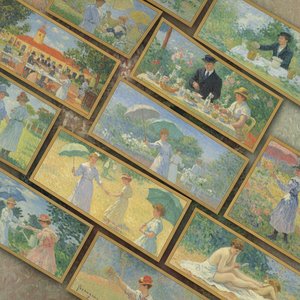
Fedezze fel Pierre-Auguste Renoir 25 legszebb művét! Ismerje meg az impresszionizmus gyöngyszemeit, a színek és fény játékát. Vásároljon exkluzív Renoir reprodukciókat otthonába a BuyPopArt.com kínálatából – minőségi faliképek és inspiráló dekoráció.

Fedezze fel Georges Seurat 25 legikonikusabb művét! Ismerje meg a pontillizmus zsenialitását, az impresszionizmus forradalmát és a színek lenyűgöző játékát. Prémium minőségű reprodukciók és inspiráló otthoni dekorációk a BuyPopArt.com-on. Fedezze fel a teljes gyűjteményt online!

Explore the captivating world of Pierre Bonnard, a master of Post-Impressionism and Intimism. Discover his vibrant use of color, intimate scenes & lasting legacy with BuyPopArt.

Fedezze fel a 10 legikonikus impresszionista tájkép festményt! Monet, Renoir és más mesterek alkotásainak története. Olajfestmények, vászonképek otthonába – BuyPopArt.com kínálatából. Explore the full collection online!

Fedezze fel a 10 legnagyobb impresszionista remekművet! Monet, Degas és Renoir alkotásainak története, technikája és időtálló szépsége. Vásároljon online prémium minőségű festmény reprodukciókat a BuyPopArt-on – inspirálja otthonát művészettel!


Maradjon naprakész a legfrissebb művészeti hírekkel, exkluzív ajánlatokkal és dekorációs ötletekkel.
Írja le nekünk projektjét, és művészeti szakértőink 3 személyre szabott műalkotási javaslatot készítenek Önnek.
Hagyjuk, hogy mi válogassunk ki Önnek 3 legjobb opciót – Ingyenesen!


 Megtekintés
 Küldés
 Megosztás
 Részletek

 Letöltés
 Hasonló darabok
 X-ray felvétel
 Diavetítés


 Összes részlet megjelenítése







 Az üvegkeretes opció csak 110 cm alatti méretben érhető el


