Múzeumi minőségű giclée vagy vászonnyomat, gyors gyártással és rugalmas finomítási lehetőségekkel. ( Kézzel festett festmény vásárlása Kép vásárlása)





























Válasszon előre meghatározott méreteink közül, amelyek megfelelnek a műalkotás eredeti arányainak.

Megadhat saját méreteket is egy konkrét kerethez vagy helyszínhez igazítva. Amennyiben a kiválasztott méret nem egyezik az eredeti kép arányokkal, a műalkotást le fogjuk vágni, vagy kiegészítjük a képet tükrözött vagy egyszínű szélekkel. A gyártás megkezdése előtt egy digitális tervezetet küldünk jóváhagyásra.
Kérjük, vegye figyelembe, hogy a képernyőn látható előnézet nem tükrözi a tényleges levágást vagy kiegészítést. Csak a tervezet mutatja pontosan a végső kompozíciót.
Bár az egyedi méretek is elérhetőek, az eredeti arányok megőrzése érdekében azt javasoljuk, hogy válasszon a előre meghatározott listából származó méretet.
Világszerte történő kiszállítás területére 2 hét alatt, a szokásos 4-5 hét helyett. 12 augusztus


Salutat
A reprodukció mérete
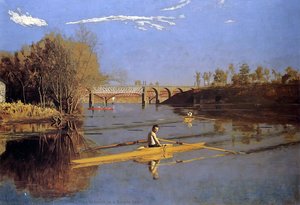
Thomas Cowperthwait Eakins (1844-1916), born in Philadelphia, stands as a cornerstone of American art history. Unlike many artists of his era preoccupied with grand narratives or romantic ideals, Eakins relentlessly pursued the depiction of everyday life—the world of doctors, rowers, and hunters—with an unwavering commitment to anatomical precision and psychological insight.
His formative years instilled in him a profound appreciation for observation and scientific inquiry. This dedication would propel him to become one of the most influential realist painters of the late nineteenth century, challenging conventions and establishing a new standard for artistic representation. Eakins’s Philadelphia was not a city of picturesque vistas; it was a crucible of intellectual ferment—a place where he honed his skills and developed his distinctive vision.
Eakins’ artistic approach stemmed from a deep understanding of human anatomy. He meticulously studied musculature, striving to capture the subtle nuances of posture and movement—a practice that would inform his paintings with remarkable accuracy. This scientific rigor extended beyond mere anatomical representation; it served as a springboard for exploring psychological states.
Furthermore, Eakins favored a monochromatic palette—primarily shades of gray—to heighten emotional resonance. By eliminating color, he focused the viewer’s gaze on form and texture, emphasizing the expressive qualities of light and shadow. This technique underscores his belief that visual art could convey profound truths about human experience.
"Salutat" isn't simply a portrait; it’s an invitation to delve into the complexities of human consciousness. Eakins skillfully captures the vulnerability inherent in solitude—the man’s averted gaze conveying a sense of introspection and confronting unspoken anxieties.
The painting’s deliberate simplicity amplifies its impact, prompting viewers to consider questions of identity and perception. Like Elizabeth at the Piano and Portrait of Professor Henry A. Rowland – also available on BuyPopArt.com – “Salutat” exemplifies Eakins's unwavering dedication to portraying the human condition with unflinching honesty.

1844 - 1916 , Egyesült Államok

Explore the profound depth of American Realism. From the gritty Ashcan School to poignant social landscapes, discover how masters captured the raw soul of a nation through evocative oil paintings and timeless art history.


Maradjon naprakész a legfrissebb művészeti hírekkel, exkluzív ajánlatokkal és dekorációs ötletekkel.
Írja le nekünk projektjét, és művészeti szakértőink 3 személyre szabott műalkotási javaslatot készítenek Önnek.
Hagyjuk, hogy mi válogassunk ki Önnek 3 legjobb opciót – Ingyenesen!


 Előnézet
 Megosztás
 Megosztás
 Részletek

 Letöltés
 Hasonló alkotások
 X-ray felvétel
 Diavetítés


 Tovább olvasom







 Az üvegkeretes opció csak 110 cm alatti méretben érhető el