

Múzeumi minőségű giclée vagy vászonnyomat, gyors gyártással és rugalmas finomítási lehetőségekkel. ( Áttérés a kézzel festett másolatra Képváltás)





























Válasszon előre meghatározott méreteink közül, amelyek megfelelnek a műalkotás eredeti arányainak.

Megadhat saját méreteket is egy konkrét kerethez vagy helyszínhez igazítva. Amennyiben a kiválasztott méret nem egyezik az eredeti kép arányokkal, a műalkotást le fogjuk vágni, vagy kiegészítjük a képet tükrözött vagy egyszínű szélekkel. A gyártás megkezdése előtt egy digitális tervezetet küldünk jóváhagyásra.
Kérjük, vegye figyelembe, hogy a képernyőn látható előnézet nem tükrözi a tényleges levágást vagy kiegészítést. Csak a tervezet mutatja pontosan a végső kompozíciót.
Bár az egyedi méretek is elérhetőek, az eredeti arányok megőrzése érdekében azt javasoljuk, hogy válasszon a előre meghatározott listából származó méretet.
Világszerte történő kiszállítás területére 2 hét alatt, a szokásos 4-5 hét helyett. 1 augusztus


Ude
A reprodukció mérete
Victor Vasarely (1906-1997), a Hungarian-born artist who irrevocably shaped the landscape of 20th-century art, stands as an undisputed champion of Op Art – Optical Art. His seminal work, “Ude,” exemplifies this groundbreaking movement’s fascination with illusion and perception, presenting a deceptively simple grid pattern imbued with profound artistic significance.
Born Károly Vaszary in Pécs, Croatia, Vasarely's early life was marked by an unexpected detour from the medical profession. Drawn to visual expression, he enrolled at Sándor Bortnyik’s Műhely – a Bauhaus-influenced workshop – where he honed his skills in geometric abstraction and embraced the principles of functional design. This formative experience would become the bedrock upon which he constructed his distinctive artistic style.
“Ude,” created in 1929, represents a pivotal moment in Vasarely’s artistic evolution. Influenced by Bauhaus ideals and fueled by an intellectual curiosity regarding visual perception, he embarked on a systematic exploration of mathematical concepts – specifically the Fibonacci sequence – to generate his compositions. This meticulous approach wasn't merely stylistic; it was driven by a desire to decode the fundamental mechanisms underlying how humans experience color and form.
The artwork’s striking visual impact stems from its masterful manipulation of optical illusion. The dominant blue and green grid, punctuated by yellow squares positioned centrally, creates an unsettling yet captivating effect. As viewers gaze upon “Ude,” their eyes perceive movement and depth where none exist objectively. This deliberate distortion of reality is characteristic of Op Art's ambition – to challenge conventional notions of representation and engage the viewer in a dynamic interplay between perception and illusion.
“Ude” emerged during the vibrant intellectual milieu of the Bauhaus movement, which championed functional design and geometric abstraction as tools for reshaping society. Vasarely’s work aligns seamlessly with this aesthetic ethos, reflecting a broader trend toward simplifying visual language and prioritizing mathematical precision. His influence extends far beyond Op Art, impacting fields such as graphic design and architecture, cementing his place as one of the most influential artists of the 20th century.
Despite its seemingly sterile geometric structure, “Ude” possesses a surprising emotional depth. The interplay of color – cool blues and greens juxtaposed with warm yellows – evokes feelings of balance, harmony, and subtle dynamism. Vasarely’s unwavering commitment to exploring the boundaries of perception serves as an enduring inspiration for artists seeking to push creative limits and challenge viewers' expectations. Reproductions of “Ude” offer a captivating glimpse into this visionary artist’s groundbreaking contribution to modern art.

1906 - 1997 , Kroatia

Fedezze fel a geometrikus absztrakció 10 legikonikusabb műalkotását! Kandinsky, Mondrian és más mesterek festményeinek története inspirálja otthona dekorációját. Múzeumi minőségű reprodukciók a BuyPopArt.com-on – fedezze fel online!

Explore the revolutionary world of Victor Vasarely, father of Op Art. Discover his geometric masterpieces, artistic system, & lasting impact on modern design. A guide for discerning art collectors.

Fedezze fel a kortárs absztrakt festészet lenyűgöző világát! Szakértői elemzések, művészportrék és inspiráló ötletek a fény szerepéről. Prémium minőségű reprodukciók és egyedi alkotások – BuyPopArt.

Explore the captivating history of geometric abstraction in art, from ancient roots to contemporary masters. Expert insights for collectors & enthusiasts. Discover key artists, movements & investment potential.
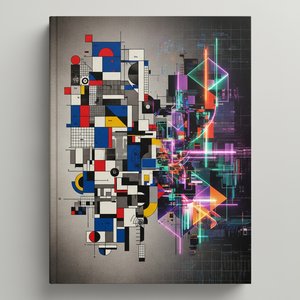
Explore the evolution of geometric abstraction from Cubism to contemporary art. Discover key artists like Malevich & Mondrian, investment insights, and expert collecting advice at BuyPopArt.


Maradjon naprakész a legfrissebb művészeti hírekkel, exkluzív ajánlatokkal és dekorációs ötletekkel.
Írja le nekünk projektjét, és művészeti szakértőink 3 személyre szabott műalkotási javaslatot készítenek Önnek.
Hagyjuk, hogy mi válogassunk ki Önnek 3 legjobb opciót – Ingyenesen!


 Előnézet
 Megosztás
 Megosztás
 Részletek

 Letöltés
 Hasonló alkotások
 X-ray felvétel
 Diavetítés
 Tovább olvasom







 Az üvegkeretes opció csak 110 cm alatti méretben érhető el


