


 Oil On CanvasWallArtAbstract Expressionism
 1939Early Medieval
 97.0 x 87.0 cm
Vásároljon egy nagy felbontású, javított digitális képet, amely sokkal jobb minőségű, mint az online előnézet.
Minden fájlt szakembereink a legmodernebb eszközök és precíz, kézi retusálás segítségével készítenek el aprólékosan. Gondoskodunk arról, hogy minden kép kivételes tisztasággal, pontos színhelyességgel és részletgazdag finomsággal rendelkezzen.
A végleges fájl 72 órán belül e-mailben megérkezik, professzionális, szerkesztői és nyomtatási környezetbe optimalizálva az azonnali használathoz. Ez ugyanaz a minőség, amelyben a legmeghatározóbb tervezőstúdiók, kiadók és galériák is megbízhatnak.
Töltsön le nagy felbontású fájlt személyes kiállításokhoz, nyomtatáshoz és kreatív projektekhez. ( Váltás nyomtatványra Áttérés a kézzel festett másolatra)
Amikor a BuyPopArt.com weboldalt választja, nem csupán egy képet kap – professzionálisan felmagasított digitális műalkotást kap, amely precizitással készült, és amelyet megelégsedési gwarancia tesz biztoslássá. Az alábbiakban automatikusan minden benne 】

A nagy felbontású digitális képmásolatát a megrendelést követő 72 órán belül e-mailben elküldjük Önnek – azonnal használható formátumban.

Műve professzionális módon kerül optimalizálásra fejlett mesterséges intelligencia eszközök és manuális szerkesztés segítségével, biztosítva a maximális részletességet, tisztaságot és színpontosságot.

Véletlenül törölted vagy elvesztetted a fájlodat? Ne aggódj – bármikor ingyenesen újra megküldjük neked.

Élvezze műalkotásait azonnal, vám, illeték vagy szállítási költség nélkül – a digitális letöltések mindig adamentesek.

Professzionális eszközök és színkezelés segítségével garantáljuk, hogy digitális képe a lehető legpontosabban tükrözze az eredeti színeket.

Ha nemມີ elégedett a digitális képpel, 60 napon belül átmunkáljuk azt, vagy 100% visszatérítjük az amountot – kérdés nélkül.

Nem érheted el a teljes elégedettséget? 60 napon belül teljes visszatérítést kapsz a digitális fájlod megérkezése után – kérdés बिना.

Vásároljon 3 képet, spóroljon 10%-et - Vásároljon 5-öt, spóroljon 15%-et - Vásároljon 10+ képet, spóroljon 20%-at. Kiváló kreatív projektekhez, galériákhoz és ügynökségekhez.
Willem de Kooning's “Seated Man,” painted in 1939, isn’t merely a depiction of a man at rest; it’s a potent distillation of the artist’s evolving approach to capturing human emotion and experience. This oil on canvas, measuring a modest yet significant 97 x 87 cm, currently resides within the Hirshhorn Museum and Sculpture Garden in Washington D.C., offering viewers an intimate glimpse into the mind of a pivotal figure in the New York School of art. De Kooning’s work during this period represents a fascinating crossroads – a deliberate exploration of realism interwoven with the burgeoning abstraction that would define his legacy, creating a dynamic tension within each piece.
The painting immediately draws the eye to its central subject: a man seated in a chair, his posture relaxed yet imbued with an underlying sense of contemplation. His arms are crossed, suggesting both vulnerability and self-possession. The deliberate use of color – primarily yellows and browns – contributes significantly to the work’s mood. The bright yellow shirt contrasts sharply with the darker tones of the figure's clothing and the chair, creating a visual rhythm that guides the viewer’s gaze across the canvas. Notably, de Kooning eschews a completely smooth finish; visible brushstrokes are prominent, adding texture and immediacy to the scene – a characteristic hallmark of his style.
The composition itself is carefully constructed to establish a clear dialogue between form and space. The man occupies the left side of the frame, anchoring the viewer’s attention while simultaneously allowing the right half of the canvas to be dominated by a dining table. This arrangement isn't arbitrary; it subtly suggests a domestic scene, a moment of quiet contemplation or perhaps even a shared meal. Two bowls are placed on the table, one closer to the center and the other slightly further away – a detail that invites speculation about their contents and the context of the gathering. A bottle is positioned in the upper left corner, adding another layer of visual interest and subtly directing the eye upwards.
The placement of these objects isn’t simply decorative; it contributes to the painting's overall sense of ambiguity. Is this a portrait of an individual lost in thought? Or does it represent a broader commentary on human interaction and the rituals of daily life? De Kooning deliberately avoids providing easy answers, leaving the interpretation open to the viewer’s own sensibility.
“Seated Man” is deeply rooted in de Kooning's early experimentation with abstract expressionism. While retaining elements of realism – particularly in the depiction of the man’s face and posture – the painting demonstrates a willingness to distort and fragment forms, anticipating the more radical gestures that would characterize his later work. This exploration of the human figure, often rendered with a sense of unease or even violence, reflects de Kooning's broader engagement with themes of identity, alienation, and the complexities of modern life. His work during this period was profoundly influenced by artists like Jackson Pollock and Franz Kline, whose techniques he absorbed and adapted to his own unique vision.
“Seated Man” stands as a significant testament to de Kooning’s contribution to the development of abstract expressionism. It exemplifies his ability to balance realism with abstraction, capturing not only the outward appearance of a subject but also its underlying emotional state. The painting's blend of observation and invention makes it a compelling study for art enthusiasts and scholars alike, offering insights into the artist’s creative process and his place within the broader context of 20th-century art. Reproductions of this powerful work offer a tangible connection to a pivotal moment in artistic history, allowing viewers to experience de Kooning's vision firsthand.
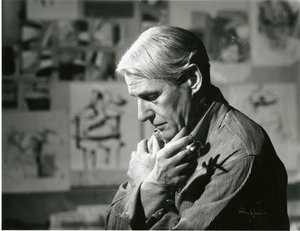
1904 - 1997 , Holland


Maradjon naprakész a legfrissebb művészeti hírekkel, exkluzív ajánlatokkal és dekorációs ötletekkel.
Írja le nekünk projektjét, és művészeti szakértőink 3 személyre szabott műalkotási javaslatot készítenek Önnek.
Hagyjuk, hogy mi válogassunk ki Önnek 3 legjobb opciót – Ingyenesen!


 Előnézet
 Megosztás
 Megosztás
 Részletek

 Letöltés
 Hasonló alkotások
 X-ray felvétel
 Diavetítés
 Tovább olvasom