

Stampa giclée o su tela di qualità museale, con produzione rapida e diverse opzioni di finitura. ( Passa alla versione dipinta a mano Passa all'immagine)





























Scegli tra le nostre dimensioni predefinite, che rispettano le proporzioni originali dell'opera d'arte.

È possibile inserire dimensioni personalizzate per adattare l'opera a una cornice o a uno spazio specifico. Se la dimensione selezionata non corrisponde alle proporzioni dell'immagine originale, procederemo al ritaglio dell'opera o all'estensione dell'immagine con un bordo specchiato o a tinta unita. Un mockup digitale ti verrà inviato per approvazione prima dell'inizio della produzione.
Si prega di notare che l'anteprima a schermo non riflette il ritaglio o l'estensione effettivi. Solo il mockup mostrerà accuratamente la composizione finale.
Sebbene siano disponibili dimensioni personalizzate, si raccomanda di selezionare una dimensione dall'elenco predefinito per preservare le proporzioni originali.
Consegna in tutto il mondo () in 2 settimane invece delle normali 4/5 settimane. (10 Agosto)


Composition
Dimensioni della riproduzione
Alberto Burri's "Composition," painted in 1953, isn’t merely a landscape; it’s a visceral embodiment of post-war Italy grappling with the ruins of its past and the uncertain promise of the future. Born amidst the devastation of World War II, Burri’s artistic journey was profoundly shaped by his experiences as a prisoner of war in Texas, an event that instilled within him a deep sense of fragmentation and loss – emotions powerfully reflected in this seminal work. The painting immediately confronts the viewer with its raw materiality; it's not about depicting a scene but rather presenting the very elements of construction itself—burlap, fabric scraps, wood fragments, and other found objects meticulously assembled onto a canvas. This deliberate rejection of traditional representation aligns Burri squarely within the burgeoning Arte Povera movement, an Italian artistic current that championed the use of humble, everyday materials to challenge conventional notions of beauty and value.
The composition itself is deliberately chaotic yet strangely balanced. Large, irregularly shaped patches dominate the canvas, each bearing the distinct texture of its constituent material – the coarse weave of burlap, the rough edges of wood, the yielding softness of fabric. There’s no single focal point to draw the eye; instead, the viewer is invited on a meandering journey across the surface, encountering these disparate elements and considering their interplay. The seams where the patches meet are visible, not concealed, emphasizing the act of construction and highlighting the inherent tension between order and disorder. This deliberate lack of hierarchy mirrors Burri’s own experience – a world shattered and reassembled, yet never fully restored.
Burri's masterful manipulation of texture is central to "Composition’s" impact. He doesn’t smooth or refine the materials; instead, he embraces their inherent imperfections – tears, wrinkles, burns, and stains—as integral components of the artwork. The burlap, for instance, appears weathered and worn, suggesting a history of labor and hardship. The wood fragments bear the marks of time and decay, hinting at the collapse of structures and the passage of years. This tactile quality invites the viewer to engage with the work on a sensory level, prompting an emotional response beyond mere visual appreciation. It’s as if Burri is inviting us to touch the remnants of a broken world and contemplate its enduring power.
The color palette further reinforces this sense of decay and resilience. The dominant tones are earthy – browns, tans, beiges, and greys—evoking images of dust, soil, and stone. Sparse accents of red and blue provide subtle points of visual interest, like flashes of memory or the lingering traces of violence. These muted colors contribute to a feeling of age and wear, suggesting that the artwork has witnessed significant events and endured considerable hardship. The overall effect is one of melancholic beauty—a testament to the ability of art to transform trauma into something meaningful.
Beyond its purely material qualities, “Composition” resonates with profound symbolic weight. It’s widely believed that Burri's experiences as a prisoner of war deeply influenced his artistic vision. The fragmented nature of the composition mirrors the shattered state of his own psyche—a world torn apart by violence and loss. The act of assembling disparate materials into a cohesive whole can be interpreted as an attempt to rebuild, to create order from chaos, to find meaning in destruction. The title itself, “Composition,” suggests a deliberate effort to impose structure on a fragmented reality.
Furthermore, the painting’s connection to the Cretto di Gibellina—the monumental sculpture created by Burri on the ruins of his hometown after the devastating 1968 earthquake—is significant. The Cretto, like “Composition,” is a testament to resilience and a memorial to those who perished in the disaster. Both works confront the viewer with the stark reality of destruction while simultaneously celebrating the enduring spirit of humanity. The painting’s raw materiality and evocative textures serve as a powerful reminder of the fragility of life and the importance of confronting our past.
Alberto Burri’s “Composition” stands as a pivotal work in the history of 20th-century art, profoundly influencing generations of artists. His pioneering use of unconventional materials and his exploration of themes such as trauma, memory, and resilience continue to resonate today. Reproductions of this powerful artwork offer a unique opportunity to experience Burri’s vision firsthand, inviting viewers to contemplate the complexities of human existence and the enduring beauty that can be found even in the face of adversity. It is a piece that demands attention, prompting reflection on the nature of art, memory, and the human condition.
Alberto Burri è stato un pittore e scultore italiano considerato una figura chiave nell'arte del dopoguerra. È associato a movimenti come neo-dada, nouveau réalisme, postminimalismo e arte povera. La sua opera è caratterizzata dall'uso innovativo di materiali non convenzionali e da un focus sulla materialità dell'arte stessa.
L'esperienza di essere un prigioniero di guerra si rivelò fondamentale, fornendogli il tempo e lo spazio per dedicarsi alla pittura senza una formazione formale. La tragica morte del suo fratello durante la guerra lo colpì profondamente.
Lo sviluppo artistico di Burri fu segnato da una costante esplorazione dei materiali e dei processi, allontanandosi dalle tecniche pittoriche tradizionali verso un approccio più scultoreo e basato sui materiali.
Il significato di Alberto Burri risiede nel suo uso pionieristico dei materiali e nel suo rifiuto delle convenzioni artistiche tradizionali. È considerato una figura chiave nell'arte povera e ha influenzato le generazioni successive di artisti che hanno esplorato la materialità e il processo nel loro lavoro. Il suo monumentale progetto *Grande cretto* testimonia la sua ambizione e visione, consolidando il suo posto nella storia dell'arte contemporanea.

1915 - 1995 , Italia

Explore the Italian Renaissance! Discover humanist ideals, iconic masterpieces by Leonardo, Michelangelo & Raphael, and lasting artistic innovations. A comprehensive guide for art enthusiasts.

Explore the captivating world of Alberto Pasini (1826-1899), a master of Orientalist scenes and Venetian landscapes. Discover his stunning paintings & learn about his legacy at BuyPopArt.
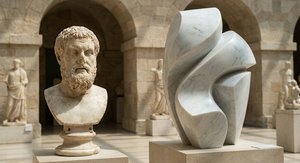
Explore the captivating history of marble sculpture from ancient Greece to modern art. Discover renowned artists like Canova & Michelangelo, carving techniques, and investment insights at BuyPopArt.

Esplora la rivoluzionaria arte di Giotto di Bondone! Scopri l'evoluzione stilistica, gli affreschi iconici della Cappella Scrovegni e il suo impatto sull'arte rinascimentale. Analisi approfondite e contesto storico.

Explore the captivating world of monochrome art! Discover its rich history, influential artists like Malevich & Klein, and profound emotional impact. Expert insights for collectors & design enthusiasts.


Rimani aggiornato sulle ultime novità dell'arte, sulle offerte esclusive e sulle idee di decorazione.
Raccontaci del tuo progetto e i nostri esperti d'arte ti proporranno 3 suggerimenti artistici personalizzati.
Lascia che creiamo per te una selezione di 3 opzioni su misura – Gratis!


 Anteprima in scala reale
 Condividi
 Condividi
 Dettagli

 Scarica immagine
 Articoli simili
 Radiografia
 Slideshow


 Leggi tutto







 L'opzione vetro è disponibile solo per dimensioni inferiori a 110 cm


