Stampa giclée o su tela di qualità museale, con produzione rapida e diverse opzioni di finitura. ( Ordina la riproduzione dipinta a mano Acquista download)





























Scegli tra le nostre dimensioni predefinite, che rispettano le proporzioni originali dell'opera d'arte.

È possibile inserire dimensioni personalizzate per adattare l'opera a una cornice o a uno spazio specifico. Se la dimensione selezionata non corrisponde alle proporzioni dell'immagine originale, procederemo al ritaglio dell'opera o all'estensione dell'immagine con un bordo specchiato o a tinta unita. Un mockup digitale ti verrà inviato per approvazione prima dell'inizio della produzione.
Si prega di notare che l'anteprima a schermo non riflette il ritaglio o l'estensione effettivi. Solo il mockup mostrerà accuratamente la composizione finale.
Sebbene siano disponibili dimensioni personalizzate, si raccomanda di selezionare una dimensione dall'elenco predefinito per preservare le proporzioni originali.
Consegna in tutto il mondo () in 2 settimane invece delle normali 4/5 settimane. (16 Agosto)


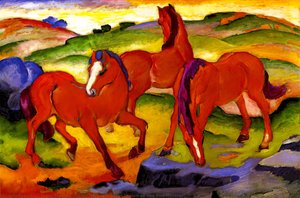
Sonno di Cavallo
Dimensioni della riproduzione
Franz Moritz Wilhelm Marc (8 February 1880 – 4 March 1916) was a German painter and printmaker, one of the key figures of German Expressionism. He was a founding member of Der Blaue Reiter (The Blue Rider), a journal whose name later became synonymous with the circle of artists collaborating in it.
His story is one of profound spiritual seeking translated into a vibrant visual language, a quest to understand the essence of life through the purity he found in the natural world—particularly within the animal kingdom. Initially influenced by his father, Wilhelm Marc, a landscape painter, young Franz’s artistic path wasn't immediately certain. He briefly considered theology, grappling with questions of faith and existence before ultimately dedicating himself to art at the Academy of Fine Arts in Munich.
His academic training provided him with technical foundations, but it was encounters with the works of Vincent van Gogh that truly ignited his artistic imagination. Van Gogh’s expressive brushstrokes and bold use of color profoundly impacted Marc’s stylistic choices, shaping his belief that art could be a conduit for emotional experience.
Dreaming Horse exemplifies the core tenets of Expressionism. Marc’s masterful technique utilized oil paint on canvas to achieve a thick, textured surface—a deliberate decision designed to convey palpable energy and depth. The artist eschewed meticulous realism, prioritizing simplified forms and vibrant hues that prioritized emotional resonance over precise representation.
Marc's stylistic approach mirrored the broader philosophical currents of his time, reflecting a desire to transcend academic conventions and tap into primal instincts. He sought to capture not merely what he saw but how he *felt*, channeling inner turmoil and spiritual contemplation onto the canvas.
Dreaming Horse transcends mere visual depiction; it embodies Marc’s deep connection with nature and his conviction that animals possessed a sacred significance. The horse’s serene gaze and ethereal state suggest a realm beyond rational comprehension, inviting viewers to contemplate profound questions about existence and spirituality.
As an Expressionist artist, Marc deliberately rejected the prevailing aesthetic ideals of his era—favoring instead a subjective response to the world around him. This painting serves as a testament to his unwavering commitment to conveying emotion through art, mirroring the broader artistic movement’s preoccupation with psychological exploration.
Marc's oeuvre extends beyond Dreaming Horse, encompassing numerous landscapes and animal studies that showcase his distinctive style. Notable pieces include “The Red Deer,” created in 1912—a masterful depiction of deer amidst a tranquil woodland setting—and “Sleeping Deer,” which employs cubist techniques to explore the complexities of perception.
These artworks underscore Marc’s unwavering dedication to portraying the natural world with uncompromising honesty and emotional intensity. His canvases resonate with a palpable sense of wonder, reflecting his belief that art could illuminate hidden truths about the human condition.
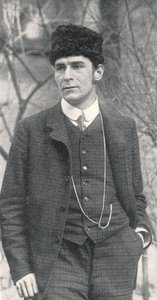
1880 - 1916 , Germania

Dive into the visceral world of Surrealist Expressionism. Explore how dream logic meets raw emotion through a visual journey of iconic techniques, post-war history, and bold aesthetics to transform your modern space with high-impact, unforgettable art.


Rimani aggiornato sulle ultime novità dell'arte, sulle offerte esclusive e sulle idee di decorazione.
Raccontaci del tuo progetto e i nostri esperti d'arte ti proporranno 3 suggerimenti artistici personalizzati.
Lascia che creiamo per te una selezione di 3 opzioni su misura – Gratis!


 Anteprima in scala reale
 Condividi
 Condividi
 Dettagli

 Scarica immagine
 Articoli simili
 Radiografia
 Slideshow

 Leggi tutto







 L'opzione vetro è disponibile solo per dimensioni inferiori a 110 cm