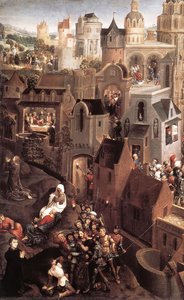
Oil On PanelEarly Netherlandish
 1480Renaissance
 48.0 x 17.0 cm
Olio su tela dipinto a mano nelle tue dimensioni e con la tua cornice, realizzato su ordinazione dai nostri artisti. ( Passa alla stampa Passa all'immagine)





























Scegli tra le nostre dimensioni predefinite, che rispettano le proporzioni originali dell'opera d'arte.

È possibile inserire dimensioni personalizzate per adattare l'opera a una cornice o a uno spazio specifico. Se la dimensione selezionata non corrisponde alle proporzioni dell'immagine originale, provvederemo a ritagliare l'opera o a estendere il dipinto con elementi aggiuntivi dipinti a mano. Un mockup digitale ti sarà inviato per approvazione prima dell'inizio della produzione.
Si prega di notare che l'anteprima a schermo non riflette il ritaglio o l'estensione effettivi. Solo il mockup mostrerà accuratamente la composizione finale.
Sebbene siano disponibili dimensioni personalizzate, consigliamo di selezionare una dimensione dall'elenco predefinito per preservare le proporzioni originali.
Consegna in tutto il mondo () in 3/4 settimane anziché nelle normali 5 settimane. (5 Agosto). Nessun compromesso sulla qualità.


St. Stephen
Dimensioni della riproduzione
In the quiet, luminous realm of Early Netherlandish painting, few masters captured the intersection of human dignity and divine grace as tenderly as Hans Memling. His portrait of St. Stephen, dating to approximately 1480, serves as a breathtaking window into the spiritual fervor of the fifteenth century. The painting presents us with a figure of profound solemnity; St. Stephen is depicted not merely as a historical martyr, but as a living presence, his gaze and posture inviting the viewer into a moment of silent contemplation. Clad in the heavy, textured robes characteristic of the period, the saint holds a book—a symbol of the sacred word and the wisdom he carried—which acts as a focal point for both the composition and the soul.
The brilliance of this work lies in Memling’s unparalleled ability to marry meticulous detail with an atmospheric softness. As a student of the great Rogier van der Weyden, Memling inherited a mastery of oil technique that allowed him to render textures with almost tactile precision. In this piece, one can sense the weight of the fabric and the delicate interplay of light upon the saint's skin. Beyond the central figure, the artist subtly introduces a landscape populated by distant figures and verdant trees, creating a sense of depth that breathes life into the frame. This masterful use of perspective ensures that while the subject remains the emotional anchor, the world around him feels expansive and infinitely detailed.
Every element within this composition is imbued with layers of meaning designed to resonate with the faithful. The book held by St. Stephen is more than a mere attribute; it represents the foundation of faith and the transmission of divine truth. The background, far from being a simple backdrop, serves as a testament to the interconnectedness of the sacred and the natural world. By placing the saint within an outdoor setting, Memling suggests that the presence of the divine is woven into the very fabric of the natural landscape. This technique was a hallmark of the Bruges masters, aiming to evoke a sense of wonder at the beauty of creation.
For the discerning collector or interior designer, this reproduction offers more than just visual splendor; it provides an emotional anchor for any space. The painting’s palette, rich yet harmonious, possesses a timeless quality that complements both classical and contemporary settings. Whether placed in a sunlit study or a grand gallery, the portrait of St. Stephen brings with it an aura of tranquility and intellectual depth. It is a piece that demands a second look, rewarding the observer with new discoveries in every brushstroke—from the subtle shadows in the folds of his robe to the ethereal light filtering through the distant trees.
Owning a high-quality reproduction of such a masterpiece allows one to preserve the legacy of the Flemish Primitives. It is an invitation to surround oneself with history, craftsmanship, and the enduring power of sacred art. In an era of fleeting digital images, the profound, steady presence of Memling’s St. Stephen offers a rare opportunity to reconnect with the slow, deliberate beauty of the Renaissance spirit.

Germania

Esplora i 10 ritratti più iconici della storia dell'arte! Da Leonardo a Van Gogh, scopri le storie e le tecniche dietro capolavori senza tempo. Trova riproduzioni di alta qualità per la tua casa su BuyPopArt.com.

Esplora i 10 capolavori della pittura fiamminga antica! Jan van Eyck, Rogier van der Weyden e altri maestri rinascimentali. Scopri storia, tecnica e simbolismo di questi dipinti iconici. Trova riproduzioni d'arte di alta qualità per la tua casa su BuyPopArt.com.

Esplora i 10 capolavori del Rinascimento Netherlandese: Jan van Eyck, Rogier van der Weyden e altri maestri fiamminghi. Scopri la storia, le tecniche e il simbolismo di questi dipinti iconici. Riproduzioni d'arte di lusso su BuyPopArt.com.

Commissiona un ritratto di coppia ad olio unico e senza tempo. Artisti esperti creano opere d'arte personalizzate, simboliche ed emozionanti per tramandare la vostra storia familiare. Scopri il valore dell'arte come eredità.

Explore the captivating world of vintage portrait art! Discover styles, techniques & the enduring appeal of 19th-century masterpieces. Expert restoration, custom reproductions & appraisal services at BuyPopArt.


Rimani aggiornato sulle ultime novità dell'arte, sulle offerte esclusive e sulle idee di decorazione.
Raccontaci del tuo progetto e i nostri esperti d'arte ti proporranno 3 suggerimenti artistici personalizzati.
Lascia che creiamo per te una selezione di 3 opzioni su misura – Gratis!


 Anteprima in scala reale
 Condividi
 Condividi
 Dettagli

 Scarica immagine
 Articoli simili
 Radiografia
 Slideshow
 Leggi tutto







 L'opzione vetro è disponibile solo per dimensioni inferiori a 110 cm