

 WatercolorWallArtMinimalism
 1989Contemporary
 22.0 x 25.0 cm
 Museum of Modern Art
Stampa giclée o su tela di qualità museale, con produzione rapida e diverse opzioni di finitura. ( Ordina la riproduzione dipinta a mano Acquista download)
Scegli tra le nostre dimensioni predefinite, che rispettano le proporzioni originali dell'opera d'arte.

È possibile inserire dimensioni personalizzate per adattare l'opera a una cornice o a uno spazio specifico. Se la dimensione selezionata non corrisponde alle proporzioni dell'immagine originale, procederemo al ritaglio dell'opera o all'estensione dell'immagine con un bordo specchiato o a tinta unita. Un mockup digitale ti verrà inviato per approvazione prima dell'inizio della produzione.
Si prega di notare che l'anteprima a schermo non riflette il ritaglio o l'estensione effettivi. Solo il mockup mostrerà accuratamente la composizione finale.
Sebbene siano disponibili dimensioni personalizzate, si raccomanda di selezionare una dimensione dall'elenco predefinito per preservare le proporzioni originali.
Consegna in tutto il mondo () in 2 settimane invece delle normali 4/5 settimane. (13 Agosto)


Pages #10
Dimensioni della riproduzione
In the quiet realm of abstract geometry, Robert Mangold’s Pages #10 stands as a profound testament to the power of restraint. Created in 1989, this delicate composition invites the viewer into a meditative space where the noise of the outside world dissolves into a study of pure form. The artwork presents a masterful arrangement of geometric shapes—a singular, commanding circle and a series of soft triangles—that dance across a pale, cream-colored expanse. There is an inherent grace in how these elements interact; they do not compete for attention but rather exist in a state of balanced tension. The composition, clustered subtly toward the upper left, avoids the stagnation of perfect symmetry, opting instead for a spontaneous yet controlled movement that guides the eye through a rhythmic, visual poem.
The technical execution of Pages #10 reveals Mangold’s deep-seated appreciation for precision and the subtle nuances of medium. Utilizing what appears to be graphite and watercolor on paper, the artist achieves a breathtakingly smooth texture that feels both organic and meticulously planned. The color palette is intentionally muted, relying on soft greens and warm, light beiges to create a sense of atmospheric depth without the need for heavy shadows. Each edge is defined with a clean, decisive line, suggesting the hand of an artist who understands that in minimalism, every millimeter carries immense weight. This layering of flat colors and precise boundaries creates a subtle illusion of depth, where shapes overlap to suggest a structural complexity hidden beneath a deceptively simple surface.
To encounter Mangold’s work is to experience a "quiet revolution" in the language of painting. Emerging from an era dominated by the raw emotion of Abstract Expressionism, Mangold sought a more intellectual and structured approach to the canvas. Pages #10 embodies this transition, moving away from gestural chaos toward a search for underlying order. The symbolism within the piece is not found in representational imagery, but in the relationship between the void and the form. The way the green triangles intersect with the circular boundary evokes a sense of cosmic balance, reminiscent of the mathematical elegance found in nature. It is an art of contemplation, designed to evoke feelings of serenity, stability, and a profound sense of peace.
For the discerning collector or interior designer, this piece offers more than mere decoration; it provides an anchor of sophistication for any modern environment. Its understated aesthetic makes it an ideal centerpiece for spaces dedicated to reflection, such as a minimalist study, a contemporary gallery-style living room, or a high-end boutique hotel suite. The artwork’s ability to harmonize with neutral tones while providing a focal point of geometric interest allows it to integrate seamlessly into diverse architectural styles. Owning a reproduction of Pages #10 is an opportunity to bring the disciplined beauty of American Minimalism into one's personal sanctuary, fostering an atmosphere of timeless elegance and intellectual depth.
Robert Mangold (nato nel 1937) è un pittore minimalista americano molto influente, celebrato per il suo approccio innovativo alla forma e al colore. Il suo lavoro sfida i confini tradizionali della pittura, enfatizzando le idee concettuali sull'esecuzione materiale.
Nato a North Tonawanda, New York, Robert Mangold inizialmente studiò ingegneria prima di concentrarsi sull'arte. Ha conseguito una laurea in Belle Arti presso l'Università di Buffalo nel 1959 e un Master of Fine Arts presso la Yale University School of Art nel 1961.
Il percorso artistico di Mangold è iniziato con l'espressionismo astratto, ma si è rapidamente spostato verso il minimalismo nei primi anni '60. È stato significativamente influenzato da artisti come Kazimir Malevich, Piet Mondrian e Barnett Newman, che hanno esplorato l'astrazione pura e le forme ridotte. Il suo lavoro riflette anche una reazione contro l'intensità gestuale dell'Espressionismo Astratto, preferendo invece un approccio più contenuto e intellettuale.
Mangold è rinomato per i suoi teloni sagomati – dipinti che non sono rettangolari ma assumono forme irregolari o geometriche. Questa deviazione dalle strutture di supporto tradizionali è diventata un marchio di fabbrica del suo stile. I suoi dipinti tipicamente presentano:
Nel corso della sua carriera, Mangold ha prodotto diverse serie significative:
Il lavoro di Robert Mangold è stato ampiamente esposto in musei e gallerie in tutto il mondo. Ha ricevuto numerosi premi e onorificenze, consolidando la sua posizione come figura di spicco dell'arte contemporanea. Le sue opere sono conservate in importanti collezioni tra cui:
Robert Mangold ha svolto un ruolo cruciale nel plasmare lo sviluppo della pittura minimalista. La sua esplorazione dei teloni sagomati e dei campi di colore tenui ha ampliato le possibilità dell'arte astratta e ha sfidato le concezioni convenzionali della rappresentazione. Insieme ad artisti come Robert Ryman, rappresenta il nucleo della pittura minimalista, dando priorità alla rigorosità concettuale e alla riduzione formale. La sua influenza continua a farsi sentire dagli artisti contemporanei che lavorano con l'astrazione e le forme geometriche.

1937 - , Stati Uniti d'America

Esplora i 10 capolavori dell'Astrazione Geometrica: Mondrian, Malevich e Kandinsky rivoluzionano l'arte moderna. Scopri la storia, i colori e le tecniche di questi movimenti iconici. Stampe d'arte di alta qualità su BuyPopArt.com!
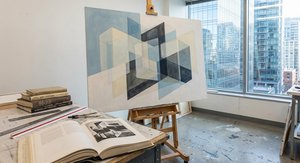
Explore the captivating world of geometric abstraction! Discover its origins, key artists like Malevich & Mondrian, and why this movement remains highly valued by art collectors today. Expert insights at BuyPopArt.

Explore the profound spiritual depth of geometric abstraction. From Malevich's Suprematism to modern masters, our expert guide reveals how pure form and color command presence in fine art collections.
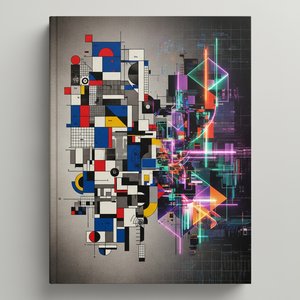
Explore the evolution of geometric abstraction from Cubism to contemporary art. Discover key artists like Malevich & Mondrian, investment insights, and expert collecting advice at BuyPopArt.

Explore the rich history & symbolism of green in art! Discover iconic paintings, techniques, and how to bring verdant harmony into your home with BuyPopArt's expert guide.


Rimani aggiornato sulle ultime novità dell'arte, sulle offerte esclusive e sulle idee di decorazione.
Raccontaci del tuo progetto e i nostri esperti d'arte ti proporranno 3 suggerimenti artistici personalizzati.
Lascia che creiamo per te una selezione di 3 opzioni su misura – Gratis!


 Anteprima in scala reale
 Condividi
 Condividi
 Dettagli

 Scarica immagine
 Articoli simili
 Radiografia
 Slideshow
 Leggi tutto




































 L'opzione vetro è disponibile solo per dimensioni inferiori a 110 cm


