
x

Olio su tela dipinto a mano nelle tue dimensioni e con la tua cornice, realizzato su ordinazione dai nostri artisti. ( Acquista stampa Acquista immagine)





























Scegli tra le nostre dimensioni predefinite, che rispettano le proporzioni originali dell'opera d'arte.

È possibile inserire dimensioni personalizzate per adattare l'opera a una cornice o a uno spazio specifico. Se la dimensione selezionata non corrisponde alle proporzioni dell'immagine originale, provvederemo a ritagliare l'opera o a estendere il dipinto con elementi aggiuntivi dipinti a mano. Un mockup digitale ti sarà inviato per approvazione prima dell'inizio della produzione.
Si prega di notare che l'anteprima a schermo non riflette il ritaglio o l'estensione effettivi. Solo il mockup mostrerà accuratamente la composizione finale.
Sebbene siano disponibili dimensioni personalizzate, consigliamo di selezionare una dimensione dall'elenco predefinito per preservare le proporzioni originali.
Consegna in tutto il mondo () in 3/4 settimane anziché nelle normali 5 settimane. (25 Agosto). Nessun compromesso sulla qualità.


Composizione III blu e giallo
Dimensioni riproduzione
Piet Mondrian's Composition III blue and yellow is not merely a painting; it is a visual manifesto, a distillation of artistic principles that would come to define an era. Emerging from the vibrant currents of early 20th-century abstraction, this work embodies the core tenets of Neoplasticism – a style Mondrian himself championed as a pathway towards universal harmony. The canvas presents a rigorously structured grid of black lines, dividing the space into rectangles filled with primary colors: bold reds, serene blues, and luminous yellows, punctuated by areas of pure white. It’s a deceptively simple arrangement that belies a profound intellectual and spiritual quest.
To truly appreciate Composition III blue and yellow, one must understand the artistic evolution of Piet Mondrian. Born in Amersfoort, Netherlands, in 1872, Mondrian initially trained as a teacher while simultaneously pursuing his passion for art. His early works were steeped in naturalism, reflecting the Dutch landscape tradition – windmills, fields, and rivers rendered with Impressionistic brushstrokes. However, this representational phase was merely a stepping stone. A pivotal move to Paris in 1912 exposed him to the radical ideas of Cubism, igniting a period of intense experimentation. Mondrian began deconstructing forms, dismantling traditional perspective, and gradually reducing his palette. This journey led him towards an increasingly abstract aesthetic, culminating in the birth of Neoplasticism around 1917.
Neoplasticism, as Mondrian envisioned it, was not simply about creating aesthetically pleasing arrangements. It was a philosophical system aimed at expressing underlying spiritual truths through the purest possible visual language. The horizontal and vertical lines, he believed, represented opposing forces – masculine and feminine, static and dynamic – achieving equilibrium when perfectly balanced. The primary colors were chosen for their inherent energy and clarity, devoid of any emotional or representational baggage. White, representing nothingness, served as a crucial element, allowing the colors to breathe and resonate. In Composition III blue and yellow, these elements coalesce into a harmonious whole, inviting contemplation on themes of order, balance, and the search for universal beauty. The seemingly random placement of colored rectangles is, in fact, meticulously calculated to achieve a dynamic equilibrium, a visual rhythm that captivates the eye and soothes the soul.
The impact of Piet Mondrian extends far beyond the realm of painting. His aesthetic principles have profoundly influenced countless artists, architects, and designers throughout the 20th and 21st centuries. From furniture design to fashion, the clean lines, geometric forms, and primary color palettes characteristic of Neoplasticism continue to inspire contemporary creations. Composition III blue and yellow stands as a testament to Mondrian’s enduring vision – a belief in the power of abstraction to transcend the material world and connect us to something deeper, more universal. Owning a reproduction of this iconic work is not merely acquiring a beautiful object; it's embracing a legacy of artistic innovation and philosophical inquiry.
Mondrian’s artistic path was not one of immediate revelation but a gradual unfolding. His early life was steeped in tradition; his uncle, Frits Mondriaan, was already an established painter, and this familial connection initially steered him towards landscape painting. These formative works, reminiscent of the Hague School and Dutch Impressionism – pieces like *The Red Mill* – reveal a young artist diligently studying nature, mastering technique, yet subtly searching for something beyond mere representation.
To truly appreciate Composition III blue and yellow, one must understand the artistic evolution of Piet Mondrian. He began deconstructing forms, dismantling traditional perspective, and gradually reducing his palette. This journey led him towards an increasingly abstract aesthetic, culminating in the birth of Neoplasticism around 1917.
Neoplasticism, as Mondrian envisioned it, was not simply about creating aesthetically pleasing arrangements. It was a philosophical system aimed at expressing underlying spiritual truths through the purest possible visual language. The horizontal and vertical lines, he believed, represented opposing forces – masculine and feminine, static and dynamic – achieving equilibrium when perfectly balanced.
The primary colors were chosen for their inherent energy and clarity, devoid of any emotional or representational baggage. White, representing nothingness, served as a crucial element, allowing the colors to breathe and resonate.
In Composition III blue and yellow, these elements coalesce into a harmonious whole, inviting contemplation on themes of order, balance, and the search for universal beauty.
The seemingly random placement of colored rectangles is, in fact, meticulously calculated to achieve a dynamic equilibrium, a visual rhythm that captivates the eye and soothes the soul.
The impact of Piet Mondrian extends far beyond the realm of painting. His aesthetic principles have profoundly influenced countless artists, architects, and designers throughout the 20th and 21st centuries.
Owning a reproduction of this iconic work is not merely acquiring a beautiful object; it's embracing a legacy of artistic innovation and philosophical inquiry.
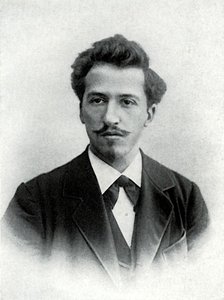
1872 - 1944 , Paesi Bassi

Discover the power of Neo-Abstract art. Explore how bold geometric forms and high-impact visual energy are redefining modern design. Learn to curate sophisticated, high-energy spaces with the latest trends in contemporary abstraction and structural color.

Discover the high-impact world of Geometric Abstraction. From Cubist roots to modern urban trends, explore how bold shapes and colors redefine contemporary design. Elevate your space with expert art insights and custom-made abstract masterpieces.


Rimani aggiornato sulle ultime novità dell'arte, sulle offerte esclusive e sulle idee di decorazione.
Raccontaci del tuo progetto e i nostri esperti d'arte ti proporranno 3 suggerimenti artistici personalizzati.
Lascia che creiamo per te una selezione di 3 opzioni su misura – Gratis!


 Anteprima in scala reale
 Invia
Invia Condividi
 Dettagli opera

 Scarica immagine
 Simili
 Radiografia
 Slideshow

 Espandi i dettagli







 L'opzione vetro è disponibile solo per dimensioni inferiori a 110 cm


