

Olio su tela dipinto a mano nelle tue dimensioni e con la tua cornice, realizzato su ordinazione dai nostri artisti. ( Ordina stampa Acquista download)





























Scegli tra le nostre dimensioni predefinite, che rispettano le proporzioni originali dell'opera d'arte.

È possibile inserire dimensioni personalizzate per adattare l'opera a una cornice o a uno spazio specifico. Se la dimensione selezionata non corrisponde alle proporzioni dell'immagine originale, provvederemo a ritagliare l'opera o a estendere il dipinto con elementi aggiuntivi dipinti a mano. Un mockup digitale ti sarà inviato per approvazione prima dell'inizio della produzione.
Si prega di notare che l'anteprima a schermo non riflette il ritaglio o l'estensione effettivi. Solo il mockup mostrerà accuratamente la composizione finale.
Sebbene siano disponibili dimensioni personalizzate, consigliamo di selezionare una dimensione dall'elenco predefinito per preservare le proporzioni originali.
Consegna in tutto il mondo () in 3/4 settimane anziché nelle normali 5 settimane. (14 Agosto). Nessun compromesso sulla qualità.


Giverny
Dimensioni della riproduzione
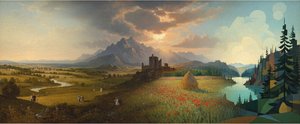
Theodore Robinson's “Giverny,” painted in 1888, isn’t merely a landscape; it’s a distilled moment of profound serenity captured with the delicate brushstrokes characteristic of American Impressionism. Born in Vermont and deeply influenced by European artistic traditions – particularly the luminist painters who championed the effects of light – Robinson sought to translate his observations of nature into a uniquely American visual language. This particular canvas, rendered in oil on canvas, transports us to a quiet corner of rural France, a place where the boundaries between reality and dream seem to blur. The scene unfolds within a verdant valley, dominated by a modest farmhouse nestled amongst rolling hills, its simple form offering a grounding presence amidst the ethereal light.
Robinson’s artistic journey was marked by a pivotal relocation to Giverny in 1887, a village already renowned for its connection to Claude Monet. This immersion into the heart of Impressionism profoundly shaped Robinson's style. He wasn’t simply copying Monet; he was absorbing and reinterpreting his mentor’s techniques, adapting them to his own sensibility and incorporating elements of his native American landscape. The painting reflects this synthesis – a harmonious blend of French luminosity and distinctly American spatial awareness.
Close examination reveals Robinson's masterful command of light and color. He employs broken brushstrokes, layering thin washes of paint to create an atmospheric effect that mimics the shifting qualities of sunlight filtering through foliage. The dappled shadows dance across the fields and hillsides, while highlights shimmer on the weathered stone walls of the farmhouse. Notice how he captures the fleeting effects of time – a subtle sense of warmth suggesting late afternoon, hinting at the promise of twilight. The composition is carefully balanced, drawing the eye towards the distant horizon where the sky merges seamlessly with the landscape.
Beyond its purely aesthetic qualities, “Giverny” resonates with deeper symbolic meaning. The humble farmhouse represents the virtues of simplicity and connection to the land – values deeply rooted in the American ethos. Robinson’s choice to depict a rural scene speaks to his desire to capture the essence of the American experience, translating the beauty of nature into a visual language that reflects his own identity. The painting can be interpreted as an ode to the restorative power of nature and the quiet dignity of rural life.
Furthermore, the painting’s connection to Giverny—a place already associated with artistic innovation—underscores Robinson's role as a pioneer in American Impressionism. He wasn’t merely replicating European trends; he was forging his own path, establishing a distinct voice within the burgeoning American art scene.
Reproductions of “Giverny” offer a remarkable opportunity to experience Robinson's luminous vision firsthand. Whether displayed in a grand salon or a cozy study, this painting evokes feelings of tranquility, nostalgia, and connection to the natural world. Its timeless appeal lies not only in its technical brilliance but also in its ability to transport us to a place of profound beauty and serenity. Consider framing your reproduction within a warm, neutral color palette to best complement the painting’s delicate hues, allowing Robinson's masterful use of light to truly shine.
Theodore Robinson (3 luglio 1852 – 2 aprile 1896) è stato un pittore statunitense, considerato uno dei primi artisti americani ad abbracciare pienamente l’impressionismo verso la fine degli anni ’80. La sua vita e la sua arte furono profondamente influenzate dalla frequentazione di Claude Monet a Giverny, in Normandia.
Nato a Irasburg, nel Vermont, Robinson trascorse gran parte della sua infanzia a Evansville, Wisconsin. La sua famiglia si trasferì lì poco dopo la sua nascita. Fin da giovane dimostrò un talento per il disegno, incoraggiato dalla madre durante i periodi di malattia causati dall'asma che lo affliggeva. Studiò arte all’Art Institute of Chicago nel 1869. Nel 1874 si trasferì a New York City, frequentando la National Academy of Design e l’Art Students League.
Nel 1876 Robinson partì per Parigi, dove studiò alla Scuola di Belle Arti sotto Carolus-Duran e Jean-Léon Gérôme. Inizialmente dipinse opere in stile realista, ritraendo soggetti umani impegnati in attività agricole o domestiche. Nel 1884 tornò in Francia, stabilendosi a Giverny, dove conobbe Claude Monet. Questa esperienza fu cruciale per la sua evoluzione artistica. Robinson divenne un seguace di Monet, assorbendone le tecniche e l'approccio all’impressionismo.
Nel 1892 Robinson fece ritorno negli Stati Uniti, portando con sé l'esperienza impressionista acquisita in Europa. Insegnò alla Brooklyn Art School e collaborò con John Henry Twachtman e Julian Alden Weir alla Cos Cob Art Colony nel Connecticut. Durante questo periodo dipinse marine al Riverside Yacht Club.
L'opera di Theodore Robinson è oggi apprezzata per la sua capacità di fondere l’influenza europea con una sensibilità americana. Le sue tele sono conservate in importanti musei come il Metropolitan Museum of Art di New York e lo Smithsonian American Art Museum. Robinson ha contribuito significativamente allo sviluppo dell'impressionismo americano, aprendo la strada a una nuova generazione di artisti che avrebbero abbracciato le tecniche e i principi di questo movimento rivoluzionario.
Riferimenti:

1852 - 1896 , Stati Uniti d'America
Esplora i 25 capolavori di Paul Cézanne, il maestro dell'impressionismo e post-impressionismo. Scopri la storia, le tecniche e i colori iconici dietro opere come 'Le grandi bagnanti' e 'Mont Sainte-Victoire'. Trova riproduzioni artistiche di alta qualità per decorare la tua casa su BuyPopArt.com.
Esplora i 10 capolavori del paesaggio artistico! Da Monet a Van Gogh, scopri la storia e le tecniche dietro quadri iconici. Trova stampe su tela di alta qualità per decorare casa con arte e stile. Scopri tutte le opere su BuyPopArt.com
Explore the rich history of landscape art with BuyPopArt. Discover renowned artists, movements like Impressionism & Romanticism, and expert guidance for collecting timeless pieces. Find your perfect serene escape today!

Explore the rich history of landscape art with BuyPopArt. Discover renowned artists, movements like Impressionism & tonalism, and expert guidance for collecting timeless pieces. Find your perfect serene escape today!

Explore the rich history of trees in painting! Discover symbolism, Romantic masterpieces by Caspar David Friedrich & beyond. A curated journey for art enthusiasts.


Rimani aggiornato sulle ultime novità dell'arte, sulle offerte esclusive e sulle idee di decorazione.
Raccontaci del tuo progetto e i nostri esperti d'arte ti proporranno 3 suggerimenti artistici personalizzati.
Lascia che creiamo per te una selezione di 3 opzioni su misura – Gratis!


 Anteprima in scala reale
 Condividi
 Condividi
 Dettagli

 Scarica immagine
 Articoli simili
 Radiografia
 Slideshow


 Leggi tutto







 L'opzione vetro è disponibile solo per dimensioni inferiori a 110 cm


