Sell Your Art
x
PreviewPreview 手描き複製画を注文する 手描き複製画を注文する画像を 購入する 画像を 購入する シェアするシェアする
詳細を見る詳細を見る お気に入りに追加 お気に入りに追加 ダウンロードダウンロード 似ている作品似ている作品 X線調査X線調査 スライドショースライドショー

Tramp Steamer

Experience the evocative stillness of Edward Hopper's 'Tramp Steamer.' This striking black and white print captures a solitary steamboat battling stormy seas, embodying Hopper’s signature style.

アメリカンリアリズムの巨匠、エドワード・ホッパー。孤独な都市生活と光影を巧みに捉え、『Nighthawks』や『日曜日の午後』など、時代を超越した傑作群で知られます。20世紀アメリカ社会の深層心理を映し出す芸術家。

ジークレー/アートプリント

迅速な制作と多彩な仕上げオプションを備えた、ミュージアムクオリティのジークレーまたはキャンバスプリント。

P118B $10
P118H $10
P118W $10
P438Z $10
P508JH $12
P508YH $12
P805H $10
P805Z $10
P919BZ $10
P919G $10
P919XJ $10
P959ZH $10
P968JZ $12
W106C $8
W218G $10
W218JH $8
W218Y $10
W307PJ $10
W316G $10
W316PJ $8
W316Y $10
W398PJ $8
W4111J $10
W500HY $15
W500JH $15
W692G $12
W849H $8
W940BG $15
W953PJ $8

Standard
custom
CM
INCH

作品のオリジナル比率に合わせた、当店の規定サイズからお選びください。

高さ

特定のフレームやスペースに合わせて、ご自身でサイズを指定することも可能です。選択されたサイズが元の画像の比率と一致しない場合、作品をトリミングするか、鏡面反射または単色での塗りつぶしによって画像を拡張いたします。制作を開始する前に、ご確認用のデジタルモックアップをお送りいたします。
画面上のプレビューには、実際のトリミングや拡張は反映されませんのでご注意ください。最終的な構図を正確に確認できるのは、モックアップのみとなります。
カスタムサイズも承っておりますが、元の比率を維持するためには、あらかじめ用意されたリストからサイズを選択することをお勧めいたします。

世界中への配送()は、標準の4〜5週間ではなく、2週間でお届けいたします。(26 7月)

why_choose_icon
世界中へ無料エクスプレス配送
why_choose_icon
高品質なリネンキャンバス
why_choose_icon
配送時完全保険付
why_choose_icon
関税・輸入税の払い戻し保証
why_choose_icon
忠実な色彩再現保証
why_choose_icon
60日間返品保証(製造上の欠陥のみ)
why_choose_icon
100% 全額返金保証
why_choose_icon
まとめ買い割引のご案内

合計金額

-

reproduction

Tramp Steamer

ジークレー/アートプリント

複製画のサイズ

-

合計金額

-

作品詳細

  • Artist: Edward Hopper
  • Location: Private Collection
  • Notable elements or techniques: Dramatic lighting; Atmospheric perspective
  • Artistic style: Realist
  • Dimensions: 51 x 74 cm
  • Movement: American Impressionism
  • Year: 1908

アート・クイズ

各質問の正解は1つだけです。

問題 1:
What is the predominant color scheme employed in Edward Hopper’s ‘Tramp Steamer’?
問題 2:
The painting depicts a scene of what type of maritime activity?
問題 3:
What is Hopper’s artistic style primarily characterized by?
問題 4:
Based on the image description, what can you infer about the weather conditions during the depicted voyage?
問題 5:
Which artistic movement influenced Hopper’s approach to portraying urban landscapes?

作品詳細説明

A Portrait of Urban Loneliness: Exploring Edward Hopper’s “Tramp Steamer”

The painting "Tramp Steamer," completed in 1908 by Edward Hopper, transcends mere depiction; it embodies a profound exploration of solitude and the pervasive sense of detachment characteristic of early 20th-century American experience. More than just capturing a seascape, Hopper meticulously crafts an atmosphere laden with unspoken narratives—a testament to his mastery as a visual storyteller.

Subject Matter and Composition

At first glance, “Tramp Steamer” presents a straightforward scene: a large steamboat navigating turbulent waters against a dusky sky. However, Hopper’s genius lies in how he orchestrates the composition. The dominant vessel commands attention, its masts punctuating the horizon line with stark verticality—a visual anchor amidst the horizontal expanse of the ocean. Scattered figures populate the deck, yet they exist largely isolated from one another, their gazes averted and postures conveying a palpable stillness. Notably, a smaller boat drifts in the background, adding to the sense of vulnerability and emphasizing the vastness of the surrounding environment. Hopper deliberately avoids grand gestures or dramatic action, prioritizing instead the subtle interplay of light and shadow that defines the scene.

Style and Technique: Impressionistic Realism

Hopper’s artistic approach firmly resides within the realm of Impressionistic realism. While acknowledging the influence of Impressionist principles—particularly in capturing fleeting moments of atmospheric luminescence—he eschews the blurred brushstrokes favored by Monet and Renoir. Instead, Hopper employs a precise technique honed through meticulous observation, resulting in sharply defined forms and textures. The artist’s use of muted tones – predominantly blues and grays – contributes significantly to the painting's melancholic mood. Hopper skillfully renders the reflections on the water surface and the weathered planks of the steamboat deck with remarkable accuracy, grounding the scene in tangible reality while simultaneously conveying an emotional resonance that transcends mere visual representation.

Historical Context: The Dawn of Modern Anxiety

“Tramp Steamer” emerged during a period marked by significant social and psychological upheaval—the burgeoning anxieties of the Industrial Revolution and the rapid urbanization reshaping American society. Hopper’s depiction aligns perfectly with the broader artistic currents of his time, reflecting a growing preoccupation with themes of alienation and isolation. The painting speaks to the experience of individuals navigating increasingly impersonal urban landscapes, grappling with feelings of displacement and yearning for connection—themes that would become central to Hopper's oeuvre throughout his career. It’s important to note that Hopper was influenced by Symbolist painters like Gustave Moreau, who explored psychological states through evocative imagery and suggestive color palettes.

Symbolism and Emotional Impact

Beyond its formal elements, “Tramp Steamer” resonates with symbolic significance. The steamboat itself can be interpreted as representing progress—yet it’s a progress devoid of warmth or companionship. The figures on board embody the human condition: individuals adrift in a world that offers little solace. Hopper's masterful manipulation of light and shadow amplifies this emotional impact, creating an unsettling yet undeniably captivating visual experience. The painting invites contemplation about themes of loneliness, vulnerability, and the unspoken dramas unfolding within seemingly ordinary moments—a timeless exploration of the human psyche that continues to captivate audiences today.

Conclusion: An Enduring Legacy

“Tramp Steamer” remains a cornerstone of Hopper’s artistic legacy and a compelling exemplar of American Impressionistic realism. Its enduring appeal stems from its ability to distill complex emotions into deceptively simple visual forms—a testament to Hopper's profound understanding of human psychology and his unwavering commitment to portraying the quiet beauty of everyday life. Reproductions of this iconic artwork offer an opportunity to immerse oneself in Hopper’s evocative vision, capturing a moment frozen in time yet perpetually relevant to our own experience of solitude and contemplation.

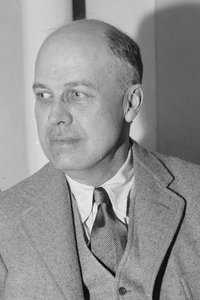
アーティストの略歴

観察された孤独:エドワード・ホッパーの生涯と芸術

20世紀のアメリカ社会に漂っていた静寂と、かすかな憂鬱。エドワード・ホッパーという名は、単なる風景の画家としてではなく、光と影の詩人、そして現代的な孤立を描き出した記録者として、その時代の空気と分かちがたく結びついています。1882年、ニューヨーク州ナイアックにて、オランダ系の血を引く中産階級の両親のもとに生まれたホッパーの幼少期は、彼の芸術的傾向を育む安定した環境にありました。日付と署名が丁寧に記された子供時代のスケッチを見れば、鋭い観察眼と天賦の描画才能が、彼の本質的な要素であったことは明白です。当初、両親からは現実的な提案として商業イラストレーターへの道を勧められましたが、ホッパーの野心は純粋芸術へと向かっていました。彼はニューヨーク・スクール・オブ・アートに入学し、ウィリアム・メリット・チェイスやロバート・ヘンリーに師事します。この形成期は、技術的な習熟だけでなく、リアリズムへの深い理解と、世界をありのままに、飾らず誠実に描き出すという決意を彼に植え付けました。ラルフ・ワルド・エマーソンの著作はホッパーの心に深く響き、彼の芸術的ビジョンの特徴となる個人主義と鋭い観察眼をより強固なものにしました。初期のパリ滞在では印象派に触れる機会もありましたが、ホッパーは印象派の刹那的な筆致とは異なる、彼独自の道を切り拓いていったのです。

独自の表現の探求:リアリズムとアメリカン・シーン

ホッパーの芸術的旅路は、決して平坦なものではありませんでした。彼は自身の際立った「声」を見出すべく葛藤し、キャリアを決定づけることになるリアリズムに辿り着く前には、様々な様式を試行錯誤しました。彼の描くリアリズムは、単なる現実の複製ではありません。それは、余分な細部を削ぎ落とし、その根底にある感情的な真実を露わにするための、本質の抽出でした。彼の作品は、家々、ダイナー、オフィス、ホテルの客室といった日常的な風景へと焦点を移していき、そこには静止した時間と、しばしば孤独感が漂っていました。彼は被写体の心理状態を捉える並外れた能力を備えており、言葉で明示することなく、物語の断片を暗示させました。光と影の精密な描写は、単なる説明的な要素を超え、感情を揺さぶる手がかりとして不可欠なものとなり、魅惑的でありながらどこか不安をかき立てる空気感を作り出しました。初期の傑作である『線路脇の家』(1925年)は、この手法を象徴しています。一見シンプルな構図の中に、深い孤独と神秘性が放射されています。また、見落とされがちな版画制作も、絵画と並行して行われ、同様のテーマや様式美を共有しており、彼の表現領域の広さを示しています。彼は壮大な歴史的物語や寓話的な象徴には関心がありませんでした。むしろ、日常的なものに目を向け、細やかな観察と感情的な共鳴を通じて、それを高次元へと昇華させたのです。

象徴的なヴィジョン:『夜警』とその先へ

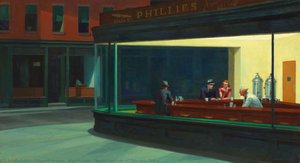
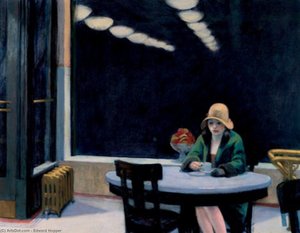
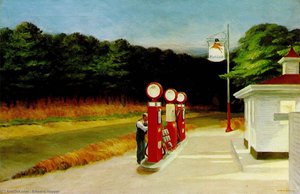
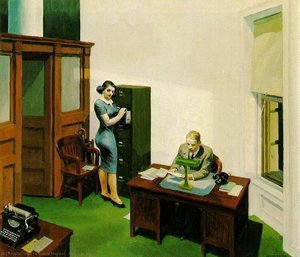
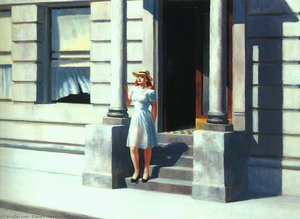
ホッパーのキャリアは緩やかに進展しましたが、ある特定の作品が彼を一躍、世界的な名声へと押し上げました。『夜警』(1942年)は、おそらく彼の最も有名な作品であり、アメリカ文化の象徴となりました。強烈な蛍光灯の光に照らされた深夜のダイナーの情景は、現代の都市生活における疎外感と匿名性を見事に凝縮しています。店内にいる人々は、互いに近くにありながらも、それぞれの思索に沈み込み、断絶しています。それは人間存在の本質に対する痛切な批評でもあります。『ガソリンスタンド』(1940年)では、道端のガソリンスタンドを印象的に描くことで、アメリカの風景と、当時急速に発展していた自動車文化への彼の関心を示しています。他にも、『オートマット』、『小さな街のオフィス』、『夏』といった重要な作品は、それぞれが20なるアメリカ社会の複雑さに対する独自の洞察を与えてくれます。これらの絵画は単なる場所の描写ではなく、日常的な舞台で展開される情緒、心理、そして微細なドラマの探求でした。妻であるジョセフィン・ニビソン・ホッパーは、生涯の伴侶としてだけでなく、頻繁にモデルを務めることで、彼の描く女性像のキャラクター形成に多大な貢献を果たしました。

テーマと遺産:永続する影響力

ホッパーの作品群には、いくつかの繰り返されるテーマが流れています。最も顕著なのは「都市の孤立」でしょう。群衆の中にいながらも感じられる孤独感です。彼はアメリカの風景を、田舎から都市に至るまで探求し、その荒涼とした空虚さをしばしば強調しました。また、彼の作品は心理的リアリズムを掘り下げ、単なる描写を超えた感受性で被写体の内面を突き止めます。そこには、より単純だった過去へのノスタルジーと、現代生活の複雑さや不安への認識が共存しています。後世の芸術家に対するホッパーの影響は否定できません。彼の独特なスタイルは、ピエール・サンフォード・ロスを含む数多くの画家たちにインスピレーションを与え続け、人間の経験の本質を捉えようとする現代のアーティストたちの心にも響き続けています。彼の作品は今なおコレクターから熱望され、世界中の主要な美術館で展示されており、アメリカ美術史における極めて重要な人物としての地位を確固たるものにしています。単なる芸術家を超えて、エドワード・ホッパーは視覚的な哲学者でした。光、影、そして構図の巧みな操作を通じて、人間存在に対する深い洞察を提示したのです。
  • 彼の遺産は、絵画の美しさだけでなく、思考を促し、感情を呼び起こし、私たちの人生をしばしば定義づける「静かな孤独」を思い出させてくれる、その永続的な力にあります。
  • ホッパーの作品が観衆を魅了し続けるのは、それが孤独、孤立、そして急速に変化する世界における意味の探求という、普遍的なテーマを語りかけてくるからです。
  • 彼の絵画はアメリカ文化の象徴的な表現となり、20世紀、そしてそれ以降の時代の不安や志を象徴するものとしてしばしば用いられています。
  • ホッパーの美学は、映画監督(アルフレッド・ヒッチコックなど)や作家にも深い影響を与え、疎外感や心理的緊張という同様のテーマを探求する数多くの作品にインスピレーションを与えてきました。
誠実さ、感受性、そして独特な芸術的ビジョンをもって現代アメリカ生活の本質を捉えるエドワード・ホッパーの能力は、彼を20世紀で最も重要な芸術家の一人として、歴史に刻み込んでいます。
エドワード・ホッパー

エドワード・ホッパー

1931 - 1967 , アメリカ合衆国

基本情報

  • Artistic Movement Or Style: リアリズム
  • Artists Who Influenced This Artist:
    • ウィリアム・ミルトン・チェイス
    • ロバート・ヘンリー
  • Date Of Birth: 1882年7月22日
  • Date Of Death: 1967年5月15日
  • Full Name: Edward Hopper
  • Nationality: アメリカ合衆国
  • Notable Artworks:
    • ナイハウクス
    • 鉄道沿いの家
  • Place Of Birth: ニューヨーク州ナヤック
テーマ、スタイル、特徴別に分類された作品を探索しましょう。