A Silent Autumnal Reverie: Exploring Egon Schiele’s Untitled Landscape
Egon Schiele's “untitled (697)” offers a poignant glimpse into the artist’s deeply personal and often melancholic world, though diverging from his more famous explorations of the human form. This landscape, depicting stark trees against a muted sky punctuated by a radiant sun, is not merely a representation of nature; it’s an emotional terrain mirroring Schiele's own internal struggles and profound sensitivity. Painted around 1918, in the waning years of his short life—he succumbed to influenza at just 28—the work carries with it a sense of premonition and quiet resignation. The bare branches reach upwards like skeletal fingers, stripped of their foliage, evoking themes of mortality and transience that were ever-present in Schiele’s oeuvre.
The Expressionist Language of Line and Light
While Schiele is celebrated for his intensely psychological portraits and often unsettling depictions of the body, this landscape reveals a mastery of expressionism applied to natural forms. The painting isn't about meticulous detail or realistic representation; instead, it prioritizes emotional impact through bold simplification and expressive linework. Notice how the trees aren’t rendered with precise botanical accuracy but are defined by strong, angular lines that convey a sense of fragility and vulnerability. The sun, positioned centrally, is not a source of warmth in the conventional sense, but rather a stark presence—a beacon offering little comfort against the bleakness of the surrounding scene. Schiele's technique here relies on a restrained palette, favoring muted tones that amplify the painting’s somber mood. The brushstrokes are visible, adding to the raw and immediate quality of the work, characteristic of his expressive style.
A Life Cut Short: Context and Symbolism
To understand “untitled (697)” fully, it's crucial to consider the context of Schiele’s life. Born in 1890, he experienced considerable hardship from a young age—the death of his father, a controlling upbringing, and societal censure for his artistic explorations of sexuality and the human condition. His art was often met with scandal and rejection, and even imprisonment for perceived obscenity. This sense of alienation and struggle permeates much of his work. The barren trees can be interpreted as symbols of loss, isolation, and the inevitable decay of life. However, the presence of the sun suggests a glimmer of hope or perhaps acceptance—a recognition of beauty even in the face of darkness. The landscape itself could represent Schiele’s own emotional terrain: stark, unforgiving, yet possessing a haunting beauty.
Bringing Schiele's Vision Home
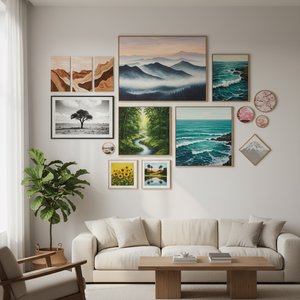
A reproduction of “untitled (697)” offers more than just an aesthetic addition to a space; it invites contemplation and introspection. The painting’s subdued palette and evocative imagery make it particularly well-suited for interiors seeking a sense of quiet drama or understated elegance. It would complement minimalist décor, adding depth and emotional resonance without overwhelming the room. For collectors, this work represents a less common facet of Schiele's artistic output—a testament to his versatility and enduring power as an expressionist master. It’s a piece that speaks not just to the eye but to the soul, offering a timeless reflection on life, loss, and the search for meaning in a transient world.


 プレビュー
プレビュー
 プリントを購入
 シェアする
シェアする シェアする
シェアする
 詳細を見る
詳細を見る

 ダウンロード
 似ている作品
 X線調査
X線調査 スライドショー
 詳細を見る
詳細を見る






































 ガラスオプションは、110cm未満のサイズでのみご利用いただけます。