
x
迅速な制作と多彩な仕上げオプションを備えた、ミュージアムクオリティのジークレーまたはキャンバスプリント。 ( 手描きの絵画を購入 画像を購入)
作品のオリジナル比率に合わせた、当店の規定サイズからお選びください。

特定のフレームやスペースに合わせて、ご自身でサイズを指定することも可能です。選択されたサイズが元の画像の比率と一致しない場合、作品をトリミングするか、鏡面反射または単色での塗りつぶしによって画像を拡張いたします。制作を開始する前に、ご確認用のデジタルモックアップをお送りいたします。
画面上のプレビューには、実際のトリミングや拡張は反映されませんのでご注意ください。最終的な構図を正確に確認できるのは、モックアップのみとなります。
カスタムサイズも承っておりますが、元の比率を維持するためには、あらかじめ用意されたリストからサイズを選択することをお勧めいたします。

Excelsior
複製画のサイズ
To encounter the work of George Earl is to step into a world where the grandeur of Victorian England meets the profound emotional resonance of the operatic stage. His life, a tapestry woven from threads of aristocratic privilege and the harrowing realities of war, bestowed upon him a unique perspective that few artists could claim. Born into the illustrious lineage of the 7th Earl of Harewood in 1923, Earl’s early years were steeped in the cultural richness of the United Kingdom. This upbringing fostered a lifelong devotion to the arts, yet it was his experiences during the Second World War that truly forged his artistic spirit. Serving as a captain in the 3rd Battalion, he witnessed the visceral brutality of conflict—a period marked by his capture at Monte Corno and subsequent imprisonment within the legendary walls of Colditz Castle. These moments of profound hardship and resilience did not merely shadow his life; they infused his brushwork with an unparalleled ability to capture atmosphere, tension, and the delicate nuances of human emotion.
As his career matured following the war, Earl emerged as a figure of significant cultural influence, bridging the gap between visual art and the performing arts. His tenure as the editor of Opera Magazine from 1950 to 1953 serves as a testament to his unwavering commitment to the lyrical beauty of music. He did not merely observe opera; he championed it, recognizing the genre's capacity to mirror the complexities of the human condition. This passion for narrative and drama found its way onto his canvases, where he meticulously rendered theatrical scenes that felt less like static images and certainly more like captured crescendos. His work often sought to evoke the same sweeping, epic feeling found in a Wagnerian overture, blending the meticulous detail of a trained observer with the romanticized soul of a music lover.
Beyond the footlights of the opera house, Earl’s artistic repertoire was deeply rooted in the natural world. He possessed a remarkable gift for capturing the sweeping vistas and serene corners of the British landscape, imbuing them with a sense of timelessness. His paintings often functioned as windows into a bygone era, reflecting the architectural grandeur and pastoral tranquility of the Victorian period. Whether depicting the bustling energy of a London station or the quiet solitude of a Welsh interior, his technique relied on a masterful command of light and shadow to create depth and movement.
The development of his style can be seen as an evolution from pure observation to emotional storytelling. His landscapes were never merely topographical; they were atmospheric studies designed to make the viewer feel the chill of a mountain breeze or the warmth of a sun-drenched meadow. This ability to translate physical environments into emotional experiences became his hallmark, allowing him to bridge the gap between the external world and the internal psyche. Through his eyes, the landscape became a stage upon which the drama of nature itself could unfold.
The significance of George Earl lies in his ability to synthesize disparate worlds—the aristocratic and the common, the martial and the musical, the pastoral and the theatrical. He remains a vital figure for those studying the intersection of British history and art, providing a visual record of an era shaped by both immense privilege and global upheaval. His legacy is not found solely in the museums that house his works, but in the way he taught us to look at the world: with an eye for detail and a heart open to the drama inherent in every scene.
His contributions can be summarized through several key pillars of his career:

1923 - 2011 , United Kingdom

ジョルジュ・ブラックの傑作25選。キュビスムを代表する画家、その革新的な色彩と技法に迫ります。名画から知られざる逸品まで、美術史に残る作品群をBuyPopArt.comで鑑賞。お部屋を彩るアートプリントも多数ご用意。今すぐオンラインでコレクションをご覧ください。

ジョルジュ・スーラの傑作25選。点描画の光と色彩、印象派から新印象派へ—BuyPopArtで美術史を紐解き、リビングやダイニングを彩る高品質なアートプリントを見つけましょう。セーラ作品集をオンラインで鑑賞ください。

ロマン派絵画の時代を彩る10選。巨匠たちの風景が織りなす感動の世界へ。ターナー、ルーベンスなど、名作の裏話と高精細複製でアートをお部屋に。BuyPopArt.comで至福のアート体験を。

Delve into the profound legacy of Saint George through art history. Explore iconic masterpieces by Raphael and Dürer, decoding the iconography of the dragon legend. Discover scholarly insights and bring these timeless tales to life with our museum-quality, hand-painted oil reproductions.
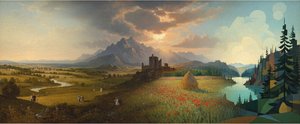
Explore the rich history of landscape art with BuyPopArt. Discover renowned artists, movements like Impressionism & Romanticism, and expert guidance for collecting timeless pieces. Find your perfect serene escape today!


最新の美術ニュース、限定オファー、そしてインテリアのアイデアをいち早くお届けします。
お客様のプロジェクトについてお聞かせください。当社の美術専門家が、お客様に合わせた3つのパーソナライズされた芸術提案をご提供いたします。
あなたにぴったりの3作品を無料で厳選いたします


 プレビュー
プレビュー
 シェアする
シェアする シェアする
シェアする
 詳細を見る
詳細を見る

 ダウンロード
 似ている作品
 X線調査
X線調査 スライドショー
 詳細を見る
詳細を見る






































 ガラスオプションは、110cm未満のサイズでのみご利用いただけます。


