A Symphony of Sunset and Surrealist Vision
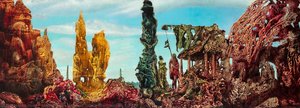
Max Ernst’s “Paysage jaune” (Landscape Yellow) stands as a testament to the artist's unwavering commitment to exploring the subconscious realm while simultaneously capturing the breathtaking beauty of nature. Painted circa 1960, this gouache on paper piece embodies Ernst’s signature style—a blend of meticulous observation and fantastical imagination that firmly establishes it within the canon of Surrealism.
The Artist's Intellectual Landscape
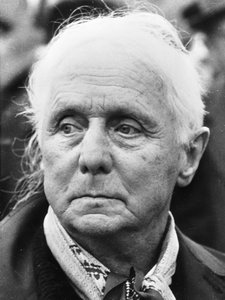
Born Maximilian Maria Ernst in Brühl, Germany, in 1891, Ernst wasn’t merely a painter; he was an intellectual adventurer. His formative years at Bonn University instilled in him a profound appreciation for philosophy and psychology alongside artistic pursuits. This multidisciplinary approach profoundly shaped his worldview and fueled his desire to depict not just what he *saw*, but what he *felt*. He interrogated the very nature of perception, questioning how our minds construct reality.
Technique and Texture: Frottage and Collage
Ernst’s distinctive technique—primarily frottage and collage—served as crucial tools in his artistic arsenal. Frottage involved rubbing a textured surface (often paper) with wax crayons or charcoal, transferring the impressions onto another sheet of paper to create unexpected patterns and textures. This process deliberately disrupted conventional representation, mirroring Ernst's fascination with chance and spontaneity. Collage further enhanced this textural element by layering disparate materials—paper scraps, fabric remnants, and found objects—to build complex visual narratives.
Symbolism Within the Landscape
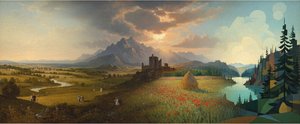
"Paysage jaune" isn’t simply a depiction of a sunset; it's laden with symbolic resonance. The dominant yellow hue evokes warmth, optimism, and perhaps even a hint of melancholy – mirroring the transient beauty of dusk. The towering mountains in the background represent stability and permanence against which the ephemeral sky unfolds. Ernst’s masterful use of color contributes to an overall atmosphere of dreamlike serenity, inviting contemplation on themes of transformation and inner reflection.
A Legacy of Surrealist Innovation
Ernst's contribution to Surrealism extended beyond his artistic practice; he actively championed the movement's ideals. Alongside Yves Tanguy and Urs Fischer, Ernst engaged in dialogues about exploring the unconscious mind and rejecting rational thought. “Paysage jaune” exemplifies this ethos—a captivating artwork that transcends literal depiction to communicate profound emotional and intellectual ideas. Its enduring appeal lies in its ability to transport viewers into a realm where imagination reigns supreme, mirroring Ernst’s lifelong pursuit of artistic truth.


 プレビュー
プレビュー
 プリントを購入
 シェアする
シェアする シェアする
シェアする
 詳細を見る
詳細を見る

 ダウンロード
 似ている作品
 X線調査
X線調査 スライドショー
 詳細を見る
詳細を見る






































 ガラスオプションは、110cm未満のサイズでのみご利用いただけます。