A Surrealist Encounter: Exploring Max Ernst’s “Untitled (607)”
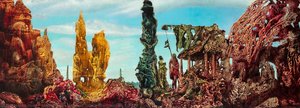
Max Ernst’s “Untitled (607),” painted circa 1938, stands as a cornerstone of Surrealism—a movement born from the anxieties and intellectual ferment of post-World War I Europe. More than just an image; it's a carefully constructed puzzle designed to provoke contemplation about the subconscious mind and challenge conventional perceptions of reality.
The painting depicts a woman devoid of head, positioned centrally amidst a landscape populated by enigmatic figures—some bearing faces, others obscured—and dominated by a boat-like object drifting on water. Ernst’s signature style is immediately recognizable: meticulous detail juxtaposed with dreamlike distortions. He employs a technique rooted in automatism – a method championed by André Breton and his Surrealist circle – where artists attempt to bypass conscious thought and allow the subconscious to dictate their creative process.
Automatism wasn't merely about chance; it was underpinned by Freudian psychoanalysis, which posits that repressed desires and anxieties reside beneath the surface of consciousness. Ernst’s method aimed to liberate artistic expression from rational constraints, tapping into primal instincts and fantasies. The resulting imagery is often unsettling yet undeniably captivating—a deliberate disruption of visual harmony intended to unsettle the viewer.
Symbolism permeates every element of “Untitled (607).” The headless woman represents a fragmented psyche—a loss of identity and control—reflecting the psychological trauma experienced by many artists during this period. The boat symbolizes escape from societal pressures, but also suggests vulnerability and precariousness. Ernst’s masterful use of color – muted tones punctuated by splashes of vibrant hues – contributes to the painting's emotional resonance.
Beyond its formal qualities, “Untitled (607)” speaks to broader themes of existential questioning and artistic rebellion. It embodies Surrealism’s conviction that art should confront uncomfortable truths and explore the hidden realms of human experience. The painting continues to inspire artists and collectors alike, serving as a testament to Ernst's enduring legacy as one of the most influential figures in modern art.


 プレビュー
プレビュー
 手描きの絵画を購入
 シェアする
シェアする シェアする
シェアする
 詳細を見る
詳細を見る

 ダウンロード
 似ている作品
 X線調査
X線調査 スライドショー
 詳細を見る
詳細を見る






































 ガラスオプションは、110cm未満のサイズでのみご利用いただけます。