Roy Lichtenstein’s “Bread in Bag”: A Pop Art Snapshot of Everyday Life
Roy Lichtenstein's "Bread in Bag," painted in 1961, isn’t merely a depiction of a loaf of bread; it’s a carefully constructed commentary on the burgeoning world of consumerism and the shift towards mass-produced imagery that defined the Pop Art movement. This deceptively simple work, rendered in oil on canvas with his signature Ben-Day dots, captures a moment of quiet domesticity—a seemingly mundane task elevated to an artistic statement. Measuring 72 x 144 cm, the painting invites us into a world where the ordinary becomes extraordinary through Lichtenstein’s deliberate choices of subject matter and execution.
The Genesis of a Pop Visionary: Context and Influences
Born in Manhattan in 1923, Roy Fox Lichtenstein's artistic journey was shaped by a unique blend of influences. Initially drawn to realistic drawing and painting, he found himself increasingly fascinated by the visual language of comic books and advertising – sources that would become central to his Pop Art style. His early exposure to museums and jazz music fostered an appreciation for both formal technique and expressive rhythm, which he later translated into his bold, graphic compositions. The post-war era, marked by economic prosperity and a growing fascination with mass culture, provided the fertile ground for Pop Art’s emergence, and Lichtenstein was perfectly positioned to capture its spirit. His upbringing in an upper-middle-class Jewish family instilled a cultural awareness that informed his critical engagement with American society.
Decoding the Technique: Ben-Day Dots and Compositional Simplicity
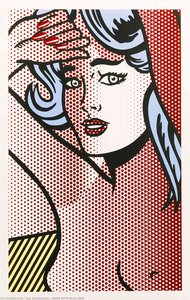
Lichtenstein’s masterful use of Ben-Day dots—small, colored squares that mimic the look of halftone printing—is instantly recognizable. These dots create a vibrant, textured surface, mimicking the appearance of commercial print while simultaneously distancing the image from traditional painting techniques. The composition itself is remarkably simple: two hands reaching into a bag containing a loaf of bread. This deliberate reduction to essential elements forces the viewer to focus on the act of grasping and securing—a gesture that speaks to both practicality and a subtle sense of control. The limited color palette – primarily browns, yellows, and whites – further emphasizes the painting’s starkness and reinforces its connection to advertising imagery. The careful arrangement of the hands and the bag creates a dynamic tension, drawing the eye across the canvas.
Symbolism and Emotional Resonance: Beyond the Mundane
While seemingly straightforward, “Bread in Bag” carries deeper symbolic weight. It can be interpreted as a commentary on the increasing standardization of daily life under consumer capitalism. The act of securing the bread—a task once performed with greater care and attention—is now reduced to a mechanical process, mirroring the broader trends of automation and mass production. Yet, there’s also an undeniable sense of comfort and familiarity in this image. It evokes memories of home, family, and simple pleasures. Lichtenstein wasn't simply documenting a scene; he was prompting us to consider the relationship between art, commerce, and our everyday experiences. The painting’s quiet intensity suggests that even the most ordinary moments can hold profound meaning when viewed through an artistic lens.
BuyPopArt offers meticulously hand-painted reproductions of Roy Lichtenstein's "Bread in Bag," allowing you to bring this iconic work into your home or office with exceptional quality and authenticity. Explore our collection today!


 プレビュー
プレビュー
 プリントを購入
 シェアする
シェアする シェアする
シェアする
 詳細を見る
詳細を見る

 ダウンロード
 似ている作品
 X線調査
X線調査 スライドショー


 詳細を見る
詳細を見る






































 ガラスオプションは、110cm未満のサイズでのみご利用いただけます。