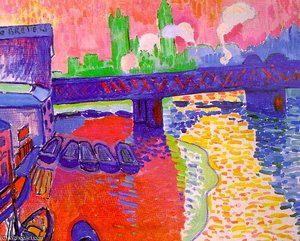
The early 20th century was a transformative period for modern art, with the emergence of various movements that challenged traditional techniques and aesthetics. One such movement was
Fauvism, characterized by its bold, vibrant colors and energetic brushstrokes. At the forefront of this movement were artists like
André Derain and
Henri Matisse, who revolutionized the art world with their innovative styles.
The Painting: Collioure
Collioure by
André Derain is a quintessential example of Fauvist art, created in 1905. This oil on canvas painting measures and is a colorful representation of people on a boat in the water. The scene is filled with activity and movement as the individuals on the boat seem to be enjoying their time together, creating a sense of camaraderie and shared adventure. The colors used in this painting are vibrant and bold, with a mix of reds, blues, yellows, and greens, giving the scene a lively and energetic atmosphere.
Characteristics of Fauvism
Fauvism was an early 20th-century modern art movement that emphasized painterly qualities and strong color over realistic values. The style began around 1904 and continued beyond 1910, with the movement itself lasting only a few years, from 1905 to 1908. Some key characteristics of Fauvism include:
- Use of bold, vibrant colors
- Energetic brushstrokes
- Emphasis on painterly qualities over realistic values
For more information on Fauvism, visit
Fauvism Art Movement.
Other Notable Works by Derain and Matisse
Both
André Derain and
Henri Matisse created numerous notable works during their careers. Some examples include
The Cypresses at Cassis by
André Derain, housed at the
Musee de Grenoble, and
Open Window, Collioure by
Henri Matisse. For more information on these paintings, visit
The Cypresses at Cassis and
Open Window, Collioure.
To learn more about the use of light in painting, visit
Light in Painting. For information on landscape painting, see
Landscape Painting.