프린트 구매하기 프린트 구매하기이미지 구매하기 이미지 구매하기 공유하기공유하기
상세 정보상세 정보 즐겨찾기에 추가 즐겨찾기에 추가 다운로드다운로드 유사 작품유사 작품 X-레이X-레이 슬라이드 쇼슬라이드 쇼

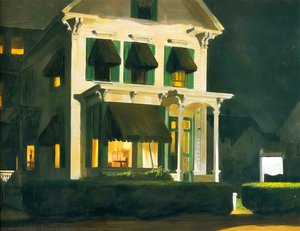
Intermission

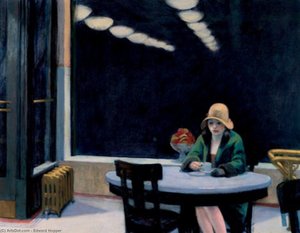
Edward Hopper's 'Intermission' captures a solitary woman in a theater aisle, evoking quiet contemplation and the poignant beauty of modern isolation. A timeless masterpiece.

에드워드 호퍼는 미국 사실주의의 거장으로 도시 생활과 빛과 그림자의 표현력으로 유명합니다. 니하크스와 같은 상징적인 작품들을 통해 그의 예술적 유산을 탐구해보세요.

수제 유화 복제품

원하는 크기와 액자로 주문 제작되는, 작가들이 직접 캔버스에 손으로 그린 유화 작품입니다.

P118B $10
P118H $10
P118W $10
P438Z $10
P508JH $12
P508YH $12
P805H $10
P805Z $10
P919BZ $10
P919G $10
P919XJ $10
P959ZH $10
P968JZ $12
W106C $8
W218G $10
W218JH $8
W218Y $10
W307PJ $10
W316G $10
W316PJ $8
W316Y $10
W398PJ $8
W4111J $10
W500HY $15
W500JH $15
W692G $12
W849H $8
W940BG $15
W953PJ $8

Standard
custom
CM
INCH

작품의 원본 비율을 유지하는 미리 설정된 크기 중에서 선택하세요.

가로 너비
세로 길이

특정 프레임이나 공간에 맞도록 직접 크기를 입력할 수 있습니다. 선택하신 크기가 원본 이미지의 비율과 일치하지 않는 경우, 작품을 자르거나 추가적인 손으로 그린 요소를 사용하여 그림을 확장합니다. 제작 시작 전 승인을 위해 디지털 목업을 보내드립니다.
화면 미리 보기는 실제 자르기 또는 확장을 반영하지 않습니다. 최종 구성은 목업을 통해서만 정확하게 확인하실 수 있습니다.
맞춤 크기 제작도 가능하지만, 원본 비율을 유지하기 위해 사전 정의된 목록에서 크기를 선택하시는 것을 권장합니다.

변경 가능한 예시: 얼굴을 고객의 사진으로 교체, 반려동물 추가(예: 고양이를 강아지로 변경), 배경에 숨겨진 메시지 삽입, 배경 풍경 또는 요소 변경 등
주문 후 BuyPopArt.com 팀에서 상세 안내를 위해 고객님께 이메일을 보내드리며, 미리보기 시안을 제공해 드립니다.

전 세계 배송()은 표준 5주 대신 3~4주 내에 완료됩니다. (18 7월). 품질에는 어떠한 타협도 하지 않습니다.

why_choose_icon
전 세계 무료 특급 배송
why_choose_icon
프리미엄 린넨 캔버스
why_choose_icon
전체 배송 보험 보장
why_choose_icon
관세 환불 보장
why_choose_icon
실제 색상 일치 보장
why_choose_icon
60일 이내 반품 정책 (제조 결함 시)
why_choose_icon
100% 환불 보장
why_choose_icon
다량 구매 할인 혜택

총 합계 금액

-

reproduction

Intermission

재현 기법

복제본 크기

-

최종 결제 금액

-

작품 정보 요약

  • Location: San Francisco MoMA
  • Year: 1963
  • Dimensions: 40 × 60 in
  • Artist: Edward Hopper
  • Title: Intermission
  • Notable elements: Theater scene, aisle seat
  • Subject or theme: Isolation, theater

예술 상식 퀴즈

각 질문의 정답은 하나뿐입니다.

질문 1:
What is the primary subject depicted in Edward Hopper’s ‘Intermission’?
질문 2:
The muted color palette of ‘Intermission’ primarily consists of which hues?
질문 3:
What architectural element is prominently featured in the composition of ‘Intermission’ to convey a sense of stillness?
질문 4:
Edward Hopper was known for his exploration of what recurring theme in his art?
질문 5:
Based on the image description, what is a key characteristic of the room depicted in ‘Intermission’?

작품 상세 설명

The Quiet Drama of a Waiting Room

Edward Hopper’s Intermission, painted in 1963, isn't merely a depiction of a theater lobby; it’s a meticulously crafted tableau of human isolation and the poignant beauty of unspoken moments. The painting immediately draws the viewer into a scene steeped in a muted, almost melancholic atmosphere – a stark contrast to the vibrant energy typically associated with theatrical performances. Hopper masterfully employs his signature style, characterized by simplified forms, precise lines, and an astute observation of light and shadow, to create a space that feels both familiar and profoundly unsettling.
Intermission by Edward Hopper

The composition itself is a study in restraint and suggestion. A woman, seated alone in a green aisle seat, dominates the foreground, her posture conveying a quiet contemplation that invites speculation about her thoughts and experiences. The surrounding chairs, arranged in neat rows, contribute to a sense of impersonal order, emphasizing her solitude within this public space. Hopper’s use of horizontal lines – the walls, the floor, the seats – creates a feeling of stillness, while subtle variations in tone and texture hint at the underlying complexity of the scene.

A Masterclass in Light and Shadow

Hopper's technical skill is evident in his precise rendering of light. The diffused illumination emanating from the unseen stage casts soft shadows that subtly define the forms, creating a sense of depth without resorting to dramatic contrasts. This delicate handling of light isn’t merely aesthetic; it serves to heighten the painting’s emotional impact, suggesting both vulnerability and resilience. Notice how the light catches the woman's dress, highlighting her form while simultaneously obscuring details, adding to the air of mystery surrounding her.

The color palette—predominantly muted greens, grays, and blacks—further reinforces the painting’s somber mood. The subtle shifts in tone within these hues create a sense of visual richness, preventing the scene from feeling flat or lifeless. Hopper's choice of colors is deliberate, evoking the atmosphere of a late-night theater lobby – a space often associated with anticipation, reflection, and perhaps even a touch of melancholy.

Symbolism and the Poetics of Modern Life

Intermission resonates deeply because it taps into universal themes of loneliness, isolation, and the passage of time. The woman’s solitary presence in the theater lobby speaks to the human condition—the feeling of being present yet detached, observing life from a distance. The clock visible in the background subtly reinforces this sense of temporal awareness, reminding us that time continues to move forward even as we remain suspended in these moments of quiet contemplation.

Hopper’s work is often interpreted as a reflection on the alienation and anonymity of modern urban life. The theater itself can be seen as a metaphor for the human drama—a stage upon which we all play our roles, often feeling like solitary figures amidst a vast audience. The painting's enduring appeal lies in its ability to capture these complex emotions with remarkable subtlety and grace.

A Legacy of Quiet Observation

Intermission stands as a testament to Edward Hopper’s extraordinary talent for capturing the essence of American life—its beauty, its loneliness, and its quiet moments of introspection. Painted in his later years, it represents a culmination of his artistic vision, demonstrating his mastery of light, composition, and symbolism. Reproductions of this iconic work continue to captivate viewers, inviting us to pause, reflect, and contemplate the universal themes that resonate within its carefully constructed scene.
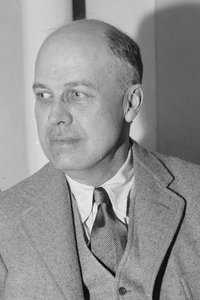

작가 약력

Edward Hopper: A Master of American Realism

Edward Hopper, a name inextricably linked to the quietude and subtle melancholy that permeated 20th-century American life, wasn’t simply a painter of scenes; he was a poet of light and shadow, a chronicler of modern isolation. Born in Nyack, New York, in 1882, to middle-class parents of Dutch ancestry, Hopper's early years provided a stable upbringing that nurtured his artistic inclinations. From childhood sketches meticulously dated and signed, it became evident that keen observation and an innate talent for drawing were central to his being. Though initially encouraged towards commercial illustration – a pragmatic suggestion from his parents – Hopper’s ambitions leaned toward fine art, leading him to the New York School of Art where he studied under William Merritt Chase and Robert Henri. These formative years instilled not only technical skill but also an appreciation for realism and a commitment to depicting the world as he saw it—unvarnished and honest. The writings of Ralph Waldo Emerson resonated deeply with Hopper, reinforcing his sense of individualism and acute observation – qualities that would become hallmarks of his artistic vision. Early travels to Paris exposed him to Impressionism, yet Hopper quickly diverged from its fleeting brushstrokes, forging a path uniquely his own.

Early Life and Artistic Beginnings

Hopper’s formative years were marked by a quiet determination to pursue his passion for art despite familial reservations about pursuing a less lucrative profession. He demonstrated exceptional drawing skills from a young age, capturing landscapes and portraits with remarkable accuracy—a testament to his innate talent and disciplined practice. His father, George Hopper, encouraged him to develop his artistic abilities, recognizing the importance of formal training in achieving creative excellence. Josephine Nivison Hopper, his wife, became an invaluable collaborator and muse, providing inspiration for many of his paintings and embodying the idealized feminine figure that frequently appeared in his work. Their shared apartment in Nyack served as a constant backdrop to Hopper’s artistic endeavors—a space imbued with understated elegance and reflecting his meticulous attention to detail. He honed his skills through diligent studio practice, experimenting with various mediums before settling on oil paint—a choice that allowed him to achieve the tonal richness and textural complexity characteristic of his style.

Realism and Influences: Embracing Impressionistic Roots

Despite rejecting Impressionism’s ephemeral qualities, Hopper's artistic sensibilities were undeniably shaped by its influence. He absorbed the lessons of Impressionist masters like Claude Monet and Pierre-Auguste Renoir, recognizing their pioneering use of light and color to convey emotion—though he ultimately rejected their stylistic conventions in favor of a more restrained approach. Robert Henri’s teachings at the New York School of Art instilled in Hopper a belief in artistic freedom and encouraged him to depict the world with uncompromising honesty. William Merritt Chase championed realism as a means of capturing psychological truth, guiding Hopper's early explorations into portraiture and landscape painting. These mentors recognized the importance of observation—a cornerstone of Hopper’s artistic vision—and urged him to strive for accuracy without sacrificing expressive power. The Symbolist poets of Baudelaire and Verlaine captivated Hopper with their exploration of darkness and melancholy—themes that would permeate his oeuvre and reflect his profound understanding of human psychology.

Iconic Visions: Nighthawks and Beyond

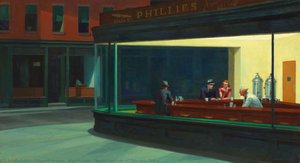
While Hopper’s career unfolded gradually, certain works catapulted him to widespread recognition. Nighthawks (1942), arguably his most famous painting, became an instant icon of American culture. The late-night diner scene, bathed in stark fluorescent light, perfectly encapsulates the alienation and anonymity of modern urban life. The figures within are lost in their own thoughts, disconnected from one another despite their proximity—a poignant commentary on the human condition. Hopper’s meticulous rendering of light and shadow—particularly its ability to convey mood—became a defining characteristic of his style. He wasn't interested in grand historical narratives or allegorical symbolism; he focused on the mundane, elevating it through careful observation and emotional resonance. House by the Railroad (1925) exemplifies this approach—a seemingly simple composition radiating a profound sense of isolation and mystery. His printmaking, often overlooked, ran parallel to his painting, sharing similar themes and stylistic qualities, demonstrating his mastery across mediums. He possessed an extraordinary ability to capture the psychological states of his subjects, hinting at narratives without explicitly stating them.

Legacy and Influence: An Enduring Artistic Voice

Edward Hopper’s influence on subsequent artists is undeniable. His unique style has inspired countless painters, including Pierre Sanford Ross, and continues to resonate with contemporary artists seeking to capture the essence of human experience. His paintings remain highly sought after by collectors and are exhibited in major museums worldwide, solidifying his place as a pivotal figure in American art history. More than just an artist, Hopper was a visual philosopher, offering profound insights into the human condition through his masterful use of light, shadow, and composition. He left behind a body of work that transcends time—a testament to his enduring artistic vision and his unwavering commitment to portraying the world as he saw it—with honesty, sensitivity, and an unforgettable aesthetic. Hopper’s legacy extends beyond the realm of art; his paintings have become iconic representations of American culture, often used to symbolize the anxieties and aspirations of the 20th century—and beyond.
에드워드 호퍼

에드워드 호퍼

1931 - 1967 , 미국

주요 정보

  • Artistic Movement Or Style: 사실주의
  • Artists Who Influenced This Artist:
    • 윌리엄 메리트 체이스
    • 로버트 한리
  • Date Of Birth: 1882년 7월 22일
  • Date Of Death: 1967년 5월 15일
  • Full Name: Edward Hopper
  • Nationality: 미국인
  • Notable Artworks:
    • 나이트호크스
    • 기차 옆 집
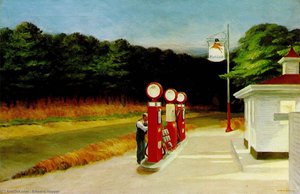
    • 가스 주유소
  • Place Of Birth: 뉴욕주 니악 시
테마, 스타일 및 특징별로 분류된 작품들을 만나보세요.