




























당신의 작품 판매하기
x
미리보기미리보기 AR 미리보기AR 미리보기 프린트 구매 프린트 구매이미지 구매 이미지 구매 공유하기공유하기
상세 정보상세 정보 즐겨찾기에 추가 즐겨찾기에 추가 다운로드다운로드 유사 작품유사 작품 X-레이X-레이 슬라이드 쇼슬라이드 쇼

untitled (6645)

A haunting black and white exploration of human connection and existential dread, this Expressionist masterpiece by Egon Schiele captures raw vulnerability and invites you to experience his profound artistic vision.

에곤 실레는 표현주의 화가로 독특한 기법과 심리적 깊이를 통해 인간 내면의 불안과 고통을 드러냈습니다. 클림트의 영향 아래 그의 작품은 예술계에 혁명적인 변화를 가져왔으며, 오늘날까지도 관객들에게 깊은 감동을 선사합니다.

수제 유화 복제품

원하는 크기와 액자로 주문 제작되는, 작가들이 직접 캔버스에 손으로 그린 유화 작품입니다. (프린트 구매 프린트 구매이미지 구매 이미지 구매)

P118B $10
P118H $10
P118W $10
P438Z $10
P508JH $12
P508YH $12
P805H $10
P805Z $10
P919BZ $10
P919G $10
P919XJ $10
P959ZH $10
P968JZ $12
W106C $8
W218G $10
W218JH $8
W218Y $10
W307PJ $10
W316G $10
W316PJ $8
W316Y $10
W398PJ $8
W4111J $10
W500HY $15
W500JH $15
W692G $12
W849H $8
W940BG $15
W953PJ $8

Standard
custom
CM
INCH

작품의 원본 비율을 유지하는 미리 설정된 크기 중에서 선택하세요.

가로 너비
세로 길이

특정 프레임이나 공간에 맞도록 직접 크기를 입력할 수 있습니다. 선택하신 크기가 원본 이미지의 비율과 일치하지 않는 경우, 작품을 자르거나 추가적인 손으로 그린 요소를 사용하여 그림을 확장합니다. 제작 시작 전 승인을 위해 디지털 목업을 보내드립니다.
화면 미리 보기는 실제 자르기 또는 확장을 반영하지 않습니다. 최종 구성은 목업을 통해서만 정확하게 확인하실 수 있습니다.
맞춤 크기 제작도 가능하지만, 원본 비율을 유지하기 위해 사전 정의된 목록에서 크기를 선택하시는 것을 권장합니다.

변경 가능한 예시: 얼굴을 고객의 사진으로 교체, 반려동물 추가(예: 고양이를 강아지로 변경), 배경에 숨겨진 메시지 삽입, 배경 풍경 또는 요소 변경 등
주문 후 BuyPopArt.com 팀에서 상세 안내를 위해 고객님께 이메일을 보내드리며, 미리보기 시안을 제공해 드립니다.

전 세계 배송()은 표준 5주 대신 3~4주 내에 완료됩니다. (18 8월). 품질에는 어떠한 타협도 하지 않습니다.

why_choose_icon
전 세계 무료 특급 배송
why_choose_icon
프리미엄 린넨 캔버스
why_choose_icon
전체 배송 보험 보장
why_choose_icon
관세 환불 보장
why_choose_icon
실제 색상 일치 보장
why_choose_icon
60일 이내 반품 정책 (제조 결함 시)
why_choose_icon
100% 환불 보장
why_choose_icon
다량 구매 할인 혜택

총 합계 금액

$ 288

reproduction

untitled (6645)

재현 기법

복제본 크기

-

최종 결제 금액

$ 288

작품 정보 요약

  • Location: AllPaintingsStore.com Collection
  • Medium: Oil Painting Reproduction
  • Subject or theme: Human Figure
  • Movement: Expressionism
  • Influences: Austrian Art Scene
  • Artistic style: Psychological Expressionism

예술 상식 퀴즈

각 질문의 정답은 하나뿐입니다.

질문 1:
What artistic movement is Egon Schiele’s ‘untitled (6645)’ primarily associated with?
질문 2:
The painting depicts two figures seated on the ground. What is a notable characteristic of their posture that reflects Expressionist artistic principles?
질문 3:
What element contributes to the dramatic intensity conveyed by ‘untitled (6645)’?
질문 4:
The painting’s minimalist composition focuses primarily on what aspect of the human form?
질문 5:
Why is Schiele's use of black and white considered significant in conveying the painting’s mood?

작품 상세 설명

A Haunting Encounter with Expressionist Rawness

To stand before Egon Schiele’s untitled (6645) is to enter a realm where the boundaries between the physical body and the psychological soul dissolve into a singular, breathless moment. This striking black and white composition serves as a profound testament to the anxieties of the early 20th century, capturing a scene that feels less like a captured moment and more like an unearthed memory. At its heart, the painting presents two figures seated upon the earth, locked in an embrace that is simultaneously intimate and fraught with an unspoken tension. Schiele, a master of the Austrian Expressionist movement, eschews the comfort of traditional beauty to instead offer a visual distillation of existential dread and human vulnerability.

The composition is masterfully orchestrated to direct the viewer’s gaze through a landscape of stark contrasts. While the central figures command our attention with their raw, naked presence, Schiele subtly anchors the scene with a solitary chair positioned in the upper left corner. This element introduces a sense of domesticity that feels strangely displaced, heightening the feeling of isolation within a minimal, almost void-like environment. The presence of other figures, partially obscured or receding into the background, adds layers of complexity to the narrative, suggesting a world that is watching, yet remains fundamentally disconnected from the central intimacy.

The Language of Line and Distorted Form

Schiele’s technique is nothing short of revolutionary, characterized by an expressive line that seems to vibrate with nervous energy. Eschewing the soft, blended transitions of his contemporaries, he utilizes bold, jagged contours to define the anatomy of his subjects. The bodies are often rendered with a deliberate distortion—elongated limbs and exaggerated musculature that amplify the emotional weight of the piece. This is not mere anatomical inaccuracy; it is a purposeful use of form to convey internal psychological states. The skin tones, even when interpreted through the monochrome lens, suggest a sickly pallor, hinting at the fragility of life and the pervasive presence of mortality that haunted Schoup’s personal history.

For the discerning collector or interior designer, this piece offers a sophisticated interplay of light and shadow. The absence of color forces the eye to focus on the structural integrity of the drawing and the dramatic tension created by the heavy blacks against the stark whites. This monochromatic palette lends the work a timeless, archival quality, making it an ideal centerpiece for spaces that value intellectual depth and avant-garde elegance. It is a work that does not merely decorate a wall; it commands the atmosphere of a room, inviting contemplation and deep emotional resonance.

Symbolism in an Age of Uncertainty

Created during the turbulent years surrounding 1916-1918, this work is deeply embedded in the historical zeitgeist of World War I. The pervasive sense of instability and the looming shadow of death are woven into the very fabric of the painting. Schiele’s obsession with the intersection of Eros and Thanatos—sexuality and death—finds its most potent expression here. The nakedness of the figures represents a total lack of defense, a stripping away of societal pretenses to reveal the primal truth of human existence. In an era defined by the collapse of old empires and the rise of psychoanalysis, Schiele’s work mirrors the collective psyche of a generation grappling with loss and the fragmentation of identity.

Investing in a high-quality reproduction of this masterpiece allows one to bring this profound dialogue between beauty and anguish into a modern setting. Whether placed in a curated gallery-style living room or a quiet study, untitled (6645) serves as a window into the turbulent heart of Modernism. It remains an enduring icon for those who find inspiration in the raw, unvarnished truth of the human condition and seek art that challenges, moves, and lingers in the mind long after the first encounter.

작가 약력

Egon Schiele: Austrian Expressionist Painter

Egon Schiele’s life was a poignant chronicle of artistic passion intertwined with personal tragedy, etching itself into the annals of Viennese Modernism as one of its most unsettling and influential voices. Born in Tulln an der Donau, Austria-Hungary on June 12, 1890—a region steeped in baroque grandeur yet shadowed by encroaching industrialization—Schiele’s early years were marked by profound illness and loss, shaping his artistic sensibility from the outset. His father, Adolf Schiele, was a stationmaster whose own struggles with syphilis cast a pall over the family's wellbeing, leaving Egon orphaned at just fourteen – an experience that would fuel his lifelong preoccupation with mortality and decay. Raised initially by his mother and subsequently under the guardianship of his uncle Leopold Czihaczek—a man known for his rigid moral standards—Schiele’s childhood lacked conventional stability but nurtured within him a spirit of defiant independence, propelling him toward artistic exploration despite societal pressures.
  • Early Artistic Inclination: From a young age, Schiele demonstrated an extraordinary aptitude for drawing and painting, though these pursuits were met with disapproval from his father who viewed them as distractions from more pragmatic endeavors.
  • Formal Training & Dissatisfaction: He enrolled at the Kunstgewerbeschule in Vienna, seeking formal artistic training—however, he quickly became disillusioned with its conservative approach and abandoned it altogether, prioritizing self-discovery over academic conventions.
  • The Klimt Influence: Recognizing Gustav Klimt’s stylistic brilliance and embracing his mentorship, Schiele absorbed Klimt's influence during these formative years, adopting a decorative style infused with symbolism and eroticism—a divergence that would ultimately propel him toward forging his own distinctive artistic path.

Vienna Secession & Artistic Breakthrough

Schiele’s decision to leave the Akademie der bildenden Künste solidified his commitment to artistic autonomy, aligning him with a cohort of avant-garde artists who challenged Viennese bourgeois sensibilities and championed radical innovation. He cofounded the Neues Wiener Kunstgruppe (New Viennese Art Group) in 1909—a collective dedicated to exploring psychological themes and rejecting traditional aesthetic norms—marking a pivotal moment in his artistic evolution. His early canvases—often unsettling portraits and self-portraits—were imbued with an arresting honesty and emotional intensity, featuring distorted figures and conveying palpable vulnerability—reflecting the profound impact of personal trauma on his creative process. These paintings weren’t merely representations of physical form but explorations of the inner landscape—the anxieties, desires, and fears that haunted the human psyche—demonstrating Schiele's unwavering conviction in confronting uncomfortable truths through art.
  • Symbolism & Expressionism: Schiele embraced Symbolist principles alongside Expressionist techniques—resulting in a distinctive visual language characterized by elongated figures, contorted poses, and expressive lines that conveyed psychological tension.
  • The Klimt Connection: His admiration for Klimt’s decorative style served as a catalyst for stylistic experimentation—further enriching his artistic repertoire with influences from Art Nouveau and bolstering his conviction in pursuing unconventional aesthetic visions.

Exploring Sexuality & Mortality

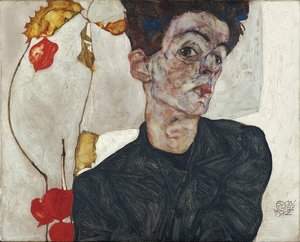
Schiele's oeuvre is profoundly shaped by his preoccupation with themes of sexuality, death, anxiety, and isolation—subjects he tackled with uncompromising courage and psychological acuity. His self-portraits stand as poignant meditations on identity and vulnerability—revealing a remarkable level of introspection and confronting existential questions head-on. Beyond self-portraiture, Schiele created numerous portraits capturing the likenesses of others with unsettling realism—penetrating beneath superficial appearances to expose inner turmoil and emotional complexities. Recurring motifs like *The Physalis plant*—symbolizing death and transience with its delicate, papery husk—underscored his artistic preoccupation with mortality—a theme that permeated his canvases and resonated deeply within his creative vision.
  • Psychological Depth: Schiele’s art distinguishes itself through its profound psychological depth—capturing the nuances of human emotion and confronting existential anxieties with unflinching honesty.
  • Formal Innovation: He achieved stylistic breakthroughs by experimenting with elongated figures, contorted poses, and expressive lines—creating visual compositions that conveyed emotional intensity and challenged conventional artistic conventions.

Legacy & Recognition

Despite facing censorship and legal challenges—including a brief imprisonment for allegedly corrupting minors with his art—Schiele garnered recognition within Vienna’s avant-garde circles—establishing himself as one of the most provocative artists of his era. His uncompromising artistic vision resonated powerfully with audiences—inspiring subsequent generations of artists who embraced psychological exploration and defied societal norms. Schiele's paintings—now housed in prominent museum collections worldwide—continue to captivate viewers today—affirming his enduring legacy as a pivotal figure in early 20th-century art—a testament to the transformative power of confronting existential dilemmas with courage, conviction, and unwavering artistic integrity. His contribution to Viennese Modernism remains unparalleled—solidifying his place among the most influential artists of his time.
에곤 실레

에곤 실레

1890 - 1918 , 오스트리아 크로아티아

주요 정보

  • Artistic Movement Or Style: 표현주의
  • Artists Who Influenced This Artist: ['구스타프 클림트']
  • Date Of Birth: 1890년 6월 12일
  • Date Of Death: 1918년 10월 31일 빈스턴 오스트리아헝가리 공국
  • Full Name: Egon Leo Adolf Ludwig Schiele
  • Nationality: 오스트리아
  • Notable Artworks:
    • 자기 초상화와 피질리스 식물
    • 껴안는 커플
    • 크루마우 근처 필드 풍경
  • Place Of Birth: 티른 안 드 돈아우 베오그라드 크로아티아
테마, 스타일 및 특징별로 분류된 작품들을 만나보세요.







