작품의 원본 비율을 유지하는 미리 설정된 크기 중에서 선택하세요.

특정 프레임이나 공간에 맞도록 직접 크기를 입력할 수 있습니다. 선택하신 크기가 원본 이미지의 비율과 일치하지 않는 경우, 작품을 자르거나 추가적인 손으로 그린 요소를 사용하여 그림을 확장합니다. 제작 시작 전 승인을 위해 디지털 목업을 보내드립니다.
화면 미리 보기는 실제 자르기 또는 확장을 반영하지 않습니다. 최종 구성은 목업을 통해서만 정확하게 확인하실 수 있습니다.
맞춤 크기 제작도 가능하지만, 원본 비율을 유지하기 위해 사전 정의된 목록에서 크기를 선택하시는 것을 권장합니다.

untitled (7271)
복제본 크기
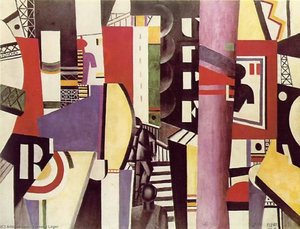
The world of Fernand Léger is one of exhilarating contradiction – a collision between the raw physicality of industrial machinery and an intensely personal, almost spiritual, vision. This particular work, a vibrant exploration of form and movement, exemplifies Léger’s groundbreaking approach to modern art, a departure from purely abstract concerns that sought to capture not just the *look* of the machine age, but its very essence – its energy, its rhythm, and its impact on human experience. It's a piece that demands attention, inviting the viewer into a world where geometric precision dances with organic fluidity.
Léger’s artistic journey began in the early 20th century, a period of unprecedented technological advancement. Witnessing the rise of factories and the proliferation of steel structures profoundly influenced his thinking. He developed what he termed “Tubism,” a style that sought to represent objects – particularly those associated with industry – by breaking them down into their fundamental geometric shapes: cylinders, cones, and cubes. However, Tubism wasn’t simply about replicating mechanical forms; it was an attempt to imbue these shapes with life, with movement, and with a sense of underlying harmony. Notice how the figures aren't static representations but seem poised in perpetual motion, echoing the dynamism of the industrial landscape.
Beyond its purely formal qualities, Léger’s work is rich in symbolic meaning. The figures themselves are often interpreted as representations of humanity – individuals caught within the transformative forces of modernity. Their simplified forms suggest a loss of individuality, yet their vibrant colors and dynamic poses convey a sense of resilience and even joy. The bright palette—bold reds, yellows, and blues—contrasts sharply with the muted tones of the industrial backdrop, highlighting the tension between human aspiration and mechanical constraint.
Léger emerged as a key figure in the Parisian avant-garde scene of the early 20th century, alongside artists like Picasso and Braque. While initially influenced by Cubism, he quickly developed his own distinct style, one that was both intellectually rigorous and deeply expressive. His work anticipated many later developments in art, including Pop Art’s embrace of popular imagery and its exploration of the relationship between art and industry. The Fernand Léger National Museum in Biot, France, houses a comprehensive collection of his works, offering invaluable insight into the evolution of this singular artistic vision.
This reproduction captures not just the visual impact of Léger’s original paintings but also the underlying emotional power. It's a piece that speaks to our fascination with technology, our anxieties about its potential consequences, and our enduring desire for beauty and harmony in a world increasingly dominated by machines. Whether adorning a contemporary interior or serving as a thoughtful addition to an art collection, this artwork offers a compelling dialogue between form, function, and the human spirit – a conversation that continues to resonate today.

1881 - 1955 , 프랑스

Master the high-impact world of contemporary abstraction. Discover how bold colors, textures, and modern movements like Abstract Expressionism can transform your space with premium, high-energy art curated for the design-conscious professional.

Dive into the high-energy world of Lyrical Abstraction. Explore how bold colors, fluid motion, and emotional depth define this modern masterpiece movement. Discover iconic artists and learn to bring this vibrant, soulful energy into your contemporary space.

Discover the power of Neo-Abstract art. Explore how bold geometric forms and high-impact visual energy are redefining modern design. Learn to curate sophisticated, high-energy spaces with the latest trends in contemporary abstraction and structural color.

Dive into the high-energy world of Orphism. Discover how this color revolution broke Cubism's rules to define modern abstraction through light, motion, and pure visual impact. Explore the legacy of the Delaunays and bring bold, vibrant energy to your contemporary space.


최신 미술 뉴스, 특별 혜택 및 인테리어 아이디어를 가장 먼저 만나보세요.
프로젝트에 대해 알려주시면 저희 미술 전문가들이 맞춤형 아트 제안 3가지를 전달해 드립니다.
당신만을 위한 맞춤형 옵션 3가지를 무료로 추천해 드립니다!


 미리보기
미리보기
 프린트 구매
 공유하기
공유하기 공유하기
공유하기
 상세 정보
상세 정보

 다운로드
다운로드
 유사 작품
유사 작품 X-레이
X-레이 슬라이드 쇼

 더 보기
더 보기






































 유리 옵션은 110cm 미만 크기에서만 선택 가능합니다.