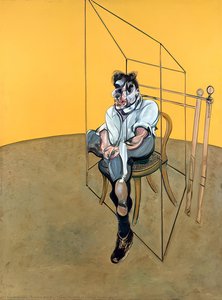
작품 상세 설명
A Portrait of Existential Anxiety: Exploring Francis Bacon’s “Chimpanzee”
Francis Bacon's "Chimpanzee," painted in 1962, stands as a haunting testament to the artist’s preoccupation with themes of vulnerability and psychological torment—a characteristic hallmark of his oeuvre. This deceptively simple monochrome depiction captures a single chimpanzee seated rigidly on a chair, an image that transcends mere representation to embody profound emotional resonance. It's not merely a visual observation; it’s an invitation into Bacon’s intensely personal worldview.
Style and Technique: Brutal Minimalism
Bacon eschewed traditional artistic conventions, prioritizing visceral expression over meticulous detail. His technique—characterized by thick impasto brushstrokes—creates a surface texture that pulsates with energy, mirroring the turbulent inner landscape he sought to convey. The stark black and white palette amplifies this effect, stripping away any illusion of comfort or serenity. Unlike many artists of his time striving for idealized beauty, Bacon deliberately rejected polished surfaces, favoring instead a brutal honesty that confronts viewers with uncomfortable truths about human existence. He achieved this unsettling impact through layering paint—often multiple coats—creating a palpable sense of depth and distortion. This deliberate disregard for conventional aesthetics cemented Bacon’s reputation as an innovator who challenged the boundaries of artistic expression.
Historical Context: The Shadow of Nuclear Anxiety
Painted during the height of Cold War paranoia, “Chimpanzee” reflects the pervasive anxieties surrounding nuclear annihilation that gripped Europe in the early 1960s. Bacon himself was deeply affected by these fears, and this influence is palpable in the painting’s unsettling stillness. The chimpanzee's posture—rigidly seated, arms crossed—suggests a profound sense of confinement and vulnerability, mirroring the psychological pressures experienced by individuals facing imminent danger. Furthermore, the inclusion of a second figure, partially obscured on the left side of the canvas, introduces an element of unease and isolation, hinting at the pervasive fear of being alone in a hostile world. Bacon’s work wasn't simply reacting to political events; it was delving into the fundamental questions of human psychology—questions about mortality, suffering, and the inescapable awareness of our own insignificance.
Symbolism: The Ape as Embodiment of Humanity
The choice of chimpanzee as subject is deliberately provocative. Bacon famously stated that he wanted to depict “the animal within man,” and the ape serves as an ideal vehicle for exploring this concept. Unlike humans, chimps lack the veneer of rationality and social decorum; they are driven by instinctual impulses and prone to violent outbursts. By portraying a chimpanzee in formal attire—a suit and tie—Bacon ironically highlights the absurdity of attempting to impose order onto chaos. The juxtaposition underscores the inherent instability of human existence and exposes the vulnerability beneath our carefully constructed facades. It’s a visual metaphor for confronting uncomfortable realities about ourselves, mirroring Bacon's own artistic mission.
Emotional Impact: Confronting Darkness
“Chimpanzee” is undeniably disturbing—a painting designed to provoke contemplation rather than elicit pleasure. The unsettling stillness of the chimpanzee combined with the oppressive monochrome palette creates an atmosphere of palpable dread. It compels viewers to confront their own anxieties about mortality and isolation, mirroring Bacon’s profound engagement with existential themes. More than just a depiction of an animal, it's a portrait of psychological torment—a visual representation of the darkness that resides within us all. The painting lingers in the mind long after viewing, prompting reflection on the fragility of human existence and the inescapable confrontation with our own inner demons.