작가 약력
A Pioneer of Optical Dynamics: The Life and Art of Getulio Alviani
Getulio Alviani, born in Udine, Italy, in 1939 and passing away in Milan in 2018, stands as a pivotal figure in the evolution of post-war abstract art. He wasn’t merely a painter or sculptor; he was an ‘inventor in plasticity,’ as he described himself—a relentless explorer of visual perception, light, and movement. His early life hinted at his future path, demonstrating a keen aptitude for design and geometric drawing even as a child. While initially enrolled at the Venice Art School, Alviani quickly found traditional academic approaches limiting, preferring instead to immerse himself in the study of classical masterpieces and practical work assisting local architects with technical projects like etchings. This blend of artistic appreciation and hands-on experience laid the foundation for his unique approach. He began working within industrial design, a realm that would profoundly shape his aesthetic sensibilities and provide crucial insights into the relationship between form, function, and perception.
From Industrial Design to Kinetic Exploration
The late 1950s marked a turning point in Alviani’s career as he delved deeper into the complexities of “production” and “construction.” His initial foray into art involved designing electric pipes, winning a competition that showcased his innovative thinking. This led to a position as artistic director for Ave, a prominent company, where he honed his skills in graphic design and visual communication. However, it was during this period that Alviani’s fascination with the interplay of light and reflective surfaces began to take hold. Working within a factory environment, he observed polished aluminum surfaces and recognized their potential to create dynamic visual effects through manipulation—polishing and abrasion became tools for unlocking new perceptual experiences. This experimentation culminated in his landmark series, “Superfici a testura vibratile” (Vibrating Texture Surfaces), which would propel him onto the international art stage. These weren’t static objects but rather carefully constructed surfaces designed to interact with light, shifting and changing depending on the viewer's angle of observation. In 1961, his invitation to the Zagreb exhibition “Nove Tendencije” connected him with a network of like-minded artists exploring optical and kinetic art—Julio Le Parc, François Morellet, and Enrico Castellani among them. This exchange of ideas was crucial in solidifying Alviani’s commitment to a dynamic art that actively engaged the viewer.
The Milan Years: Dialogue with Masters and International Recognition
Alviani's move to Milan in 1962 proved transformative. The city became his base, fostering collaborations and dialogues with some of Italy’s most influential artists—Lucio Fontana, Piero Manzoni, Max Bill, and Bruno Munari. Fontana, particularly, recognized the potential in Alviani’s work, acquiring several “surfaces” and demonstrating a keen understanding of their innovative qualities. This period saw Alviani refine his techniques and explore new avenues within optical art. He wasn't simply interested in creating illusions; he sought to understand *how* perception itself functioned. His participation in the 1964 Venice Biennale, sharing space with Enrico Castellani, further cemented his reputation. The pinnacle of early recognition came in 1965 with an invitation to William C. Seitz’s groundbreaking exhibition “The Responsive Eye” at MoMA in New York. This show, dedicated to Kinetic and Programmed Art, brought Alviani's work to a global audience, and the museum’s acquisition of one of his pieces—used as a poster image for subsequent exhibitions—underscored its significance. His inclusion in Documenta 4 in Kassel in 1968 further solidified his position within the international art community.
A Legacy of Interaction: Beyond Painting and Sculpture
Throughout the 1970s, Alviani expanded his artistic horizons, traveling to South America and accepting a directorship at the Jesús Soto Museum of Modern Art in Ciudad Bolívar, Venezuela. This period broadened his perspective and reinforced his commitment to fostering dynamic art experiences. While primarily known for his “Superfici a testura variabile” – polished aluminum works that reflected light in ever-changing hues – Alviani’s artistic output was remarkably diverse. He explored “chromodynamic surfaces,” investigating primary color interactions, and created mesmerizing “mirrors” with their illusion of rings formed on reflective metal. His work consistently challenged the boundaries between painting, sculpture, and design. Alviani wasn't content to simply create objects; he aimed to create experiences. He authored a book on Josef Albers in 1988, demonstrating his deep engagement with art theory and history, and collaborated with Giancarlo Pauletto on a volume dedicated to Michel Seuphor. His work continues to be actively traded in international auctions, prized for its intellectual rigor, formal precision, and captivating visual effects. Getulio Alviani’s legacy lies not only in his stunning creations but also in his unwavering commitment to exploring the fundamental principles of perception and interaction—a pursuit that continues to inspire artists today.


 36.0 x 36.0 cm
 MAGA - Museo Arte Gallarate
 Switch to Print






 Preview
 공유하기
공유하기 공유하기
공유하기
 상세 정보
상세 정보

 다운로드
다운로드
 유사 작품
유사 작품 X-레이
X-레이 슬라이드 쇼
 더 보기
더 보기
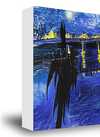
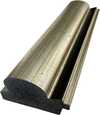
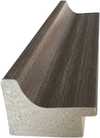
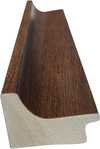
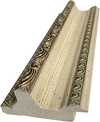
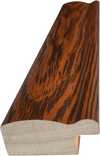
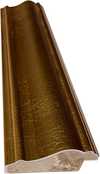
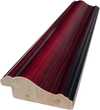
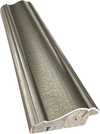
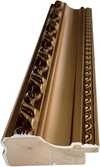
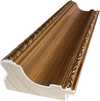
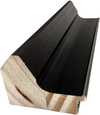
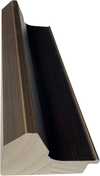


 유리 옵션은 110cm 미만 크기에서만 선택 가능합니다.


