
빠른 제작과 다양한 마감 옵션을 제공하는 박물관 품질의 지클레이 또는 캔버스 프린트. ( 수제 페인팅으로 전환하기 이미지로 전환)
작품의 원본 비율을 유지하는 미리 설정된 크기 중에서 선택하세요.

특정 프레임이나 공간에 맞춰 직접 치수를 입력하실 수 있습니다. 선택하신 사이즈가 원본 이미지의 비율과 일치하지 않을 경우, 작품을 크롭(자르기)하거나 이미지를 대칭 또는 단색 채우기로 확장하여 제작합니다. 제작 시작 전, 최종 확인을 위해 디지털 목업이 전송됩니다.
화면상의 미리보기는 실제 크롭이나 확장 상태를 반영하지 않으므로, 최종 구도는 오직 목업을 통해서만 정확하게 확인하실 수 있습니다.
맞춤 사이즈 제작도 가능하지만, 원본 비율을 유지하기 위해서는 사전 정의된 목록에서 치수를 선택하시는 것을 권장합니다.

Sunset
복제본 크기
Karl Heffner (1849–1925) remains a figure of profound sensitivity, an artist whose work serves as a bridge between the meticulous realism of the German tradition and the emotive, light-drenched possibilities of plein-air painting. Born in Würzburg, Bavaria, Heffner’s early life was shaped by the quiet tensions of a family facing financial hardship, a reality that initially led him toward music studies in Munich. However, the call of the visual world proved irresistible. Guided by the landscape specialists of the Munich school, he began to develop a language not of mere depiction, but of atmosphere. His early training under masters such as Adolf Stademann and Adolf Heinrich Lier instilled in him a rigorous command of composition and an acute awareness of how light interacts with the physical world—a foundation that would allow him to capture the fleeting, ephemeral moments of nature with unparalleled grace.
Heffner’s artistic journey was defined by a restless, wandering spirit that sought out the specific character of different geographies. While his roots were firmly planted in the German landscape, his eyes were often turned toward the dramatic skies of England and the luminous warmth of Italy. In the early 1870s, his travels through the English countryside introduced him to a palette of moody, melancholic tonalities. Unlike many of his contemporaries who sought the idealized brightness of the Mediterranean, Heffner found a deep, resonant beauty in the turbulent British weather—the damp chill of an October morning, the sudden, electric shifts of light during a passing shower, and the heavy, grey textures of the northern moors. This fascination with the "unpredictable" became a hallmark of his style, as he utilized low-key, earthy tones punctuated by sudden, glistening strips of gold to represent a breaking sun.
As his career progressed, Heffner’s palette underwent a transformative evolution, most notably during his time in Southern Europe. His winters in Rome and travels through Tuscany allowed him to absorb the radiant, warm hues of the Mediterranean. The influence of this light is evident in his later works, where the heavy, misty atmospheres of his German and English landscapes began to mingle with the sun-drenched olive groves and cypress trees of Italy. This synthesis created a unique body of work that could transition seamlessly from the somber, moss-covered rocks of a Bavarian moor to the brilliant, high-contrast clarity of a Tuscan afternoon. His technique, whether in oil or watercolor, was characterized by an ability to render texture—the dampness of earth, the translucency of water, and the weight of clouds—with a precision that felt both realistic and deeply poetic.
The significance of Heffner’s contribution to late 19th-century art lies in his refusal to impose an idealized vision upon the natural world. Instead, he acted as a witness to its true, often rugged, character. His works are notable for several key artistic elements:
Though Heffner lived through eras of immense political upheaval—from the unification of Germany to the devastation of World War I—his oeuvre remained steadfastly focused on the enduring solitude of nature. His work did not seek to comment on the political tumult of his time, but rather offered a sanctuary of quiet observation. By documenting the shifting moods of the landscape, he provided a timeless record of the European environment. Today, his works are preserved in prestigious collections, including the Victoria and Albert Museum in London, serving as a testament to his skill as a painter of light. Heffner’s legacy is that of a true luminist, an artist who understood that the true soul of a landscape lies not in its permanent features, but in the transient, beautiful way the light touches them before vanishing forever.

1849 - 1925 , Germany

Discover Johan Hendrik Weissenbruch (1824-1903), a leading Dutch Hague School painter renowned for his atmospheric watercolours & oil landscapes. Explore his beautiful depictions of the Dutch countryside and skies – a master of light & detail.

Explore the emotional depth of Romantic landscape painting (18th-19th century). Discover key artists like Friedrich & Cole, and the concepts of the sublime. Expert insights for art lovers & collectors.

Explore the captivating history of sunset motifs in Western art! Discover iconic paintings by Monet, Van Gogh & Kuindzhi. Learn about Romanticism, Impressionism & collecting these timeless masterpieces. Expert insights at BuyPopArt.

Explore the life & critical work of Alan Clutton-Brock, a leading British art critic renowned for his insights into landscape painting and atmospheric realism. Discover his influence on post-war artistic discourse.
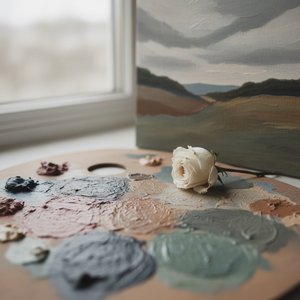
Explore the captivating world of muted colors in art & design! Discover historical context, psychological effects, techniques, and inspiration for creating serene spaces. Elevate your aesthetic with BuyPopArt.


최신 미술 뉴스, 특별 혜택 및 인테리어 아이디어를 가장 먼저 만나보세요.
프로젝트에 대해 알려주시면 저희 미술 전문가들이 맞춤형 아트 제안 3가지를 전달해 드립니다.
당신만을 위한 맞춤형 옵션 3가지를 무료로 추천해 드립니다!


 미리보기
미리보기
 공유하기
공유하기 공유하기
공유하기
 상세 정보
상세 정보

 다운로드
다운로드
 유사 작품
유사 작품 X-레이
X-레이 슬라이드 쇼
 더 보기
더 보기






































 유리 옵션은 110cm 미만 크기에서만 선택 가능합니다.


