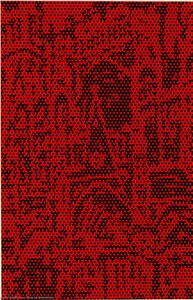
220.0 x 116.0 cm
 Viafarini
빠른 제작과 다양한 마감 옵션을 제공하는 박물관 품질의 지클레이 또는 캔버스 프린트. ( 손으로 그린 그림 구매 이미지 구매)
작품의 원본 비율을 유지하는 미리 설정된 크기 중에서 선택하세요.

특정 프레임이나 공간에 맞춰 직접 치수를 입력하실 수 있습니다. 선택하신 사이즈가 원본 이미지의 비율과 일치하지 않을 경우, 작품을 크롭(자르기)하거나 이미지를 대칭 또는 단색 채우기로 확장하여 제작합니다. 제작 시작 전, 최종 확인을 위해 디지털 목업이 전송됩니다.
화면상의 미리보기는 실제 크롭이나 확장 상태를 반영하지 않으므로, 최종 구도는 오직 목업을 통해서만 정확하게 확인하실 수 있습니다.
맞춤 사이즈 제작도 가능하지만, 원본 비율을 유지하기 위해서는 사전 정의된 목록에서 치수를 선택하시는 것을 권장합니다.

Red Screen
복제본 크기
In the quiet intersection where light meets shadow, and where the visible dissolves into the invisible, lies the profound creative universe of Silvio Wolf Busch. Born in Milan in 1952, an artist whose work serves as a bridge between the tangible world and the ephemeral realms of memory and perception, Wolf Busch has spent a lifetime investigating the very essence of the image. His journey is not merely one of technical mastery but a philosophical quest to understand how we witness time. By blending the rigorous discipline of photography with the expansive possibilities of installation art, he invites his audience to step beyond the frame and inhabit a space where presence and absence coexist in a delicate, haunting dance.
The foundations of his intellectual approach were laid in the classrooms of Italy, where he immersed himself in the study of Philosophy and Psychology. This academic grounding provided him with the conceptual tools to treat the photographic medium not as a tool for documentation, but as a vessel for metaphor. Seeking to refine his technical language, he moved to London, studying at the London College of Printing. It was here that he earned his Higher Diploma in Advanced Photography, a period that allowed him to marry his deep-seated interest in human consciousness with the structural complexities of lens-based art. This dual identity—as both thinker and maker—is what allows his work to transcend simple representation, turning every photograph into a site of psychological inquiry.
To understand the soul of Wolf Busch’s work, one must look toward the legacy of Spatialism. Growing up in the shadow of Milanese masters like Lucio Fontana, the artist was profoundly moved by the movement's ambition to break the two-dimensional constraints of the canvas. Just as Fontana used perforations and cuts to introduce a new dimension of space, Wolf Busch utilizes the photographic medium to explore voids, openings, and the "elsewhere." His early explorations focused on the limits of the photographic plane, often creating large-format works and polyptychs that challenged the traditional, narrative expectations of photography. He moved away from the idea of the photograph as a testimonial record, instead seeking a subjective reality where light could obscure as much as it revealed.
This fascination with the threshold—the boundary between what is seen and what is felt—became the hallmark of his evolving style. In his celebrated "Icons of Light" series, for instance, he utilized reflected light to wipe out imagery, leaving behind an evocative emptiness that provoked a deep desire in the viewer to see beyond the instant of blindness. Through this technique, he transformed the act of looking into an act of meditation, forcing the spectator to confront the absence of the subject as a powerful form of presence in itself.
As his career progressed from the mid-1980s onward, Wolf Busch’s artistic vocabulary expanded far beyond the borders of the printed photograph. He began to integrate moving images, projections, light, and sound into complex, site-specific installations. These multi-media projects are designed to engage with the architectural and social history of their locations, turning galleries and public spaces into living, breathing ecosystems of sensory experience. His work does not merely sit upon a wall; it inhabits a room, responding to the cultural personality of the space and establishing a symbolic relationship with its history.
The significance of his contribution to contemporary art is reflected in his global footprint and academic influence:
Today, living and working between the vibrant art scenes of Milan and New York, Silvio Wolf Busch continues to push the boundaries of what it means to perceive. His work remains a testament to the power of the image to act as a threshold—a place where we can encounter the simultaneous existence of the past and the present, the here and the elsewhere, and the beautiful mystery of the unseen.

1952 - , Italy


최신 미술 뉴스, 특별 혜택 및 인테리어 아이디어를 가장 먼저 만나보세요.
프로젝트에 대해 알려주시면 저희 미술 전문가들이 맞춤형 아트 제안 3가지를 전달해 드립니다.
당신만을 위한 맞춤형 옵션 3가지를 무료로 추천해 드립니다!


 미리보기
미리보기
 공유하기
공유하기 공유하기
공유하기
 상세 정보
상세 정보

 다운로드
다운로드
 유사 작품
유사 작품 X-레이
X-레이 슬라이드 쇼
 더 보기
더 보기






































 유리 옵션은 110cm 미만 크기에서만 선택 가능합니다.