
 Contemporary Realism
 1945
1945 41.0 x 56.0 cm
빠른 제작과 다양한 마감 옵션을 제공하는 박물관 품질의 지클레이 또는 캔버스 프린트. ( 수제 페인팅으로 전환하기 이미지로 전환)
작품의 원본 비율을 유지하는 미리 설정된 크기 중에서 선택하세요.

특정 프레임이나 공간에 맞춰 직접 치수를 입력하실 수 있습니다. 선택하신 사이즈가 원본 이미지의 비율과 일치하지 않을 경우, 작품을 크롭(자르기)하거나 이미지를 대칭 또는 단색 채우기로 확장하여 제작합니다. 제작 시작 전, 최종 확인을 위해 디지털 목업이 전송됩니다.
화면상의 미리보기는 실제 크롭이나 확장 상태를 반영하지 않으므로, 최종 구도는 오직 목업을 통해서만 정확하게 확인하실 수 있습니다.
맞춤 사이즈 제작도 가능하지만, 원본 비율을 유지하기 위해서는 사전 정의된 목록에서 치수를 선택하시는 것을 권장합니다.

Mobile Radar Unit
복제본 크기
Sir Walter Thomas Monnington (1902–1976) remains a towering figure in the landscape of British art, a painter whose career was defined by an extraordinary ability to navigate between the classical grandeur of the past and the turbulent realities of the twentieth century. Born in Westminster, his early years were deeply influenced by the pastoral serenity of the Sussex countryside. This connection to the natural world provided a foundational layer of observation and craftsmanship that would later inform even his most dynamic wartime compositions. His formal journey began at the Slade School of Fine Art, where he refined a technical prowess that would eventually lead him to the prestigious British School in Rome. It was during this Italian sojourn that Monnington encountered the enduring echoes of the Renaissance, an experience that instilled in him a lifelong fascination with classical ideals, balanced proportions, and the monumental scale of historical narrative.
The emergence of Monnington as a significant voice in modern British art was cemented by his early triumphs in academic competition. His work Allegory, which earned him recognition at the British School of Fine Art, remains a testament to his ability to blend realism with idealized forms. The acquisition of this piece by the Tate Collection served as a definitive milestone, signaling the arrival of an artist capable of translating complex, symbolic concepts into visually arresting oil paintings. As he moved into the professional sphere in London, Monnington’s versatility became his hallmark. He was not merely a painter of canvases but a creator of environments, collaborating on ambitious decorative schemes for institutions such as the Bank of England and St Stephen’s Hall in Westminster Palace. These mural projects demonstrated his capacity to handle large-scale narratives, weaving together history and artistry to serve the public consciousness.
The trajectory of Monnington’s life was irrevocably altered by the onset of World War II, a period that transitioned his focus from the serene and the allegorical to the visceral and the urgent. Serving with the Directorate of Camouflage at Leamingly Spa, he applied his keen eye for detail and spatial awareness to the innovative task of designing camouflage for airfields and factories. This period of service was not a departure from his artistry but an evolution of it. The tension of wartime Britain found its way onto his canvases through works that captured the mechanical power and the perilous beauty of aerial combat. In masterpieces such as Fortresses and Southern England Spitfires Attacking Flying Bombs, one can witness the artist’s ability to use bold, expressive brushstrokes to convey motion, energy, and the heavy atmosphere of a world at war.
Beyond the battlefield, Monnington’s repertoire expanded to include evocative landscapes and intimate portraits, proving that his technical mastery could scale from the vastness of a sky filled with aircraft to the quietude of a secluded grove. His work The Orchard exemplifies this softer, impressionistic side, where light and shadow dance across a landscape to evoke a sense of peace and timelessness. This duality—the ability to capture both the roar of engines and the whisper of leaves—is what makes his body of work so profoundly human.
In the later stages of his career, Monnington’s influence reached the highest echelons of the art establishment when he served as President of the Royal Academy. His leadership and dedication to the craft ensured that his commitment to excellence and historical continuity remained central to British artistic identity. To look upon a Monnington painting is to witness a life lived at the intersection of duty and wonder, a career that successfully bridged the gap between the classical traditions of the Old Masters and the modern complexities of a changing world.

1902 - 1976 , United Kingdom

Explore the captivating landscapes & portraits of Brian Hatton (1887-1916), a promising British artist lost too soon. Discover his unique style, Herefordshire roots, and lasting legacy in early 20th-century art.
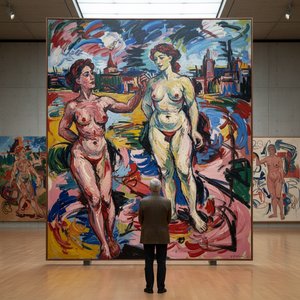
Explore the evolution of Willem de Kooning's iconic Abstract Expressionist paintings. Discover his signature style, key themes & investment potential with expert insights for discerning art collectors.

Explore the captivating maritime art of Thomas Butterworth (1768–1842). Discover his stunning depictions of Napoleonic naval battles and life at sea, commissioned works for the East India Company, and enduring legacy. Learn more today!

호안 미로의 최고 걸작 25선을 만나보세요. 꿈과 상상의 세계를 담은 추상 미술 작품들의 탄생 비화와 예술적 의미를 탐구합니다. BuyPopArt.com에서 고품질 미로 그림을 감상하고, 공간에 특별한 색채를 더해보세요! 지금 바로 컬렉션을 확인하세요.

BuyPopArt에서 고품질 유화 복제 및 맞춤형 작품을 만나보세요. 장인의 손길로 되살아난 명작과 당신의 이야기를 담은 특별한 예술 작품을 합리적인 가격에 소장하세요. 100% 만족 보장!


최신 미술 뉴스, 특별 혜택 및 인테리어 아이디어를 가장 먼저 만나보세요.
프로젝트에 대해 알려주시면 저희 미술 전문가들이 맞춤형 아트 제안 3가지를 전달해 드립니다.
당신만을 위한 맞춤형 옵션 3가지를 무료로 추천해 드립니다!


 미리보기
미리보기
 공유하기
공유하기 공유하기
공유하기
 상세 정보
상세 정보

 다운로드
다운로드
 유사 작품
유사 작품 X-레이
X-레이 슬라이드 쇼
 더 보기
더 보기






































 유리 옵션은 110cm 미만 크기에서만 선택 가능합니다.


