
빠른 제작과 다양한 마감 옵션을 제공하는 박물관 품질의 지클레이 또는 캔버스 프린트. ( 손으로 그린 그림 구매 이미지 구매)
작품의 원본 비율을 유지하는 미리 설정된 크기 중에서 선택하세요.

특정 프레임이나 공간에 맞춰 직접 치수를 입력하실 수 있습니다. 선택하신 사이즈가 원본 이미지의 비율과 일치하지 않을 경우, 작품을 크롭(자르기)하거나 이미지를 대칭 또는 단색 채우기로 확장하여 제작합니다. 제작 시작 전, 최종 확인을 위해 디지털 목업이 전송됩니다.
화면상의 미리보기는 실제 크롭이나 확장 상태를 반영하지 않으므로, 최종 구도는 오직 목업을 통해서만 정확하게 확인하실 수 있습니다.
맞춤 사이즈 제작도 가능하지만, 원본 비율을 유지하기 위해서는 사전 정의된 목록에서 치수를 선택하시는 것을 권장합니다.

John Sancroft Holmes
복제본 크기
Born around 1843 in the heart of London’s Bedford Square, William Carter was a painter whose brief, luminous life captured the very essence of a transitioning England. As a British landscape artist, his work serves as a poignant window into the Victorian era—a period defined by a profound reverence for the natural world and an burgeoning fascination with scientific precision. Though his career was tragically truncated by his death at the young age of twenty-one, Carter managed to weave a distinctive thread into the tapestry of 19t-century art, creating a synthesis of Romantic idealism and the emerging realist tendencies that would come to define the age.
The foundations of Carter’s artistic journey were laid by his privileged upbringing. The son of John Thornton Carter, a prominent coal and iron baron, William was raised amidst the symbols of Britain's industrial ascendancy. This background provided him with the means to pursue an elite education, blending classical scholarship with rigorous artistic training. His development was shaped by the mentorship of two vastly different masters: the Symbolist George Frederic Watts, who instilled in him a sense of spiritual depth and thematic complexity, and John Goss, whose commitment to realism influenced Carter’s meticulous observational skills. This duality—the tension between the ethereal and the tangible—became the hallmark of his creative vision.
While many of his contemporaries sought to capture the sweeping, tempestuous grandeur of the sublime in the tradition of Turner, Carter found his voice in the intimate and the serene. His canvases often eschewed the dramatic storm for the quiet dignity of the English countryside. One might find himself wandering through rolling hillsides dotted with grazing sheep or standing before a still, reflective lake that mirrored the soft light of a summer afternoon. These were not merely topographical studies; they were atmospheric meditations designed to evoke a sense of peace and contemplative depth.
Carter’s technique was characterized by an extraordinary attention to detail and a mastery of subtle tonal harmonies. He possessed a keen ability to render textures with such conviction that the viewer could almost feel the coarseness of wool or the dampness of earth. His use of light and shadow was never merely decorative; it served to create volume and a sense of lived-in reality, grounding his more poetic landscapes in a palpable, physical world. Through this careful application of oil on canvas, he bridged the gap between the dreamlike qualities of Romanticism and the grounded truth of Realism.
The historical significance of William Carter lies in his ability to capture a specific cultural moment: the intersection of Victorian faith and the dawn of modern observation. His work reflects a society that was simultaneously looking backward toward pastoral innocence and forward toward an era of empirical discovery. Even though his total output remains modest due to his untimely passing in 1864, the impact of his aesthetic remains visible in the way he treated the landscape as both a spiritual sanctuary and a subject of scientific interest.
Today, Carter’s paintings are cherished not only for their technical merit but as historical artifacts that preserve the atmosphere of a lost era. His ability to imbue quiet scenes with profound emotional weight ensures that his name remains etched in the annals of British art history. To view a Carter landscape is to experience a moment of stillness, a brief respite from the industrial roar of the 19th century, inviting the modern observer to rediscover the beauty found in the subtle and the overlooked.

1843 - 1864
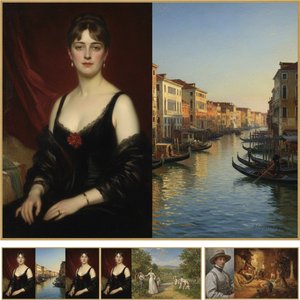
존 싱어 사전트의 대표작 25선을 만나보세요. 인상주의 초상화부터 빛과 색채가 아름다운 유화까지, 그의 예술 세계를 탐험하고 BuyPopArt에서 고품질 아트 프린트로 거실 장식을 완성하세요. 지금 온라인 컬렉션을 확인하세요!
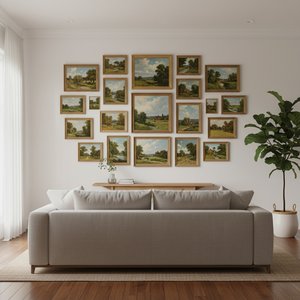
존 컨스터블 대표작 25선을 만나보세요. 영국 풍경화 거장의 자연주의 회화, 데담 밸리의 아름다움과 헤이 웨인의 정취를 담은 명화를 감상하세요. BuyPopArt에서 고품질 예술 작품 복제본을 소장하고 특별한 인테리어를 완성해보세요. 지금 바로 컬렉션을 탐험하세요!

Explore the captivating world of John William Waterhouse, a master of Pre-Raphaelite painting. Discover his iconic depictions of mythology and female identity in this expert guide.

Explore the captivating world of Gwen John, a pioneering Welsh artist renowned for her intimate portraits & subtle style. Discover her life, legacy, and how to bring her timeless beauty into your home with BuyPopArt.

Explore the captivating world of Penry Williams (1802-1885), a Welsh artist renowned for his evocative Impressionistic landscapes and scenes of Italy. Discover his life, style & legacy with BuyPopArt.


최신 미술 뉴스, 특별 혜택 및 인테리어 아이디어를 가장 먼저 만나보세요.
프로젝트에 대해 알려주시면 저희 미술 전문가들이 맞춤형 아트 제안 3가지를 전달해 드립니다.
당신만을 위한 맞춤형 옵션 3가지를 무료로 추천해 드립니다!


 미리보기
미리보기
 공유하기
공유하기 공유하기
공유하기
 상세 정보
상세 정보

 다운로드
다운로드
 유사 작품
유사 작품 X-레이
X-레이 슬라이드 쇼


 더 보기
더 보기






































 유리 옵션은 110cm 미만 크기에서만 선택 가능합니다.


