Užsisakyti kopiją Užsisakyti kopijąPirkti skaitmeninį paveikslą Pirkti skaitmeninį paveikslą PasidalintiPasidalinti
IšsamiauIšsamiau Pridėti į mėgstamiausius Pridėti į mėgstamiausius AtsisiųstiAtsisiųsti Panašūs eksponataiPanašūs eksponatai Rentgeno nuotraukaRentgeno nuotrauka Automatinė dioramaAutomatinė diorama

Capron House

Experience the quiet beauty of Edward Hopper's 'Capron House,' a watercolor capturing rural solitude and American realism with masterful light and shadow. Explore BuyPopArt’s exquisite reproductions.

Edwardas Hoperis – amerikietis ekspresionistinis tapytojas, garsiai išgarsintas savo ikoninėmis drobėmis, tokiomis kaip „Nighthawks“ ir „Monhegan Houses“, kurių stiliumi įvyko XX a. Amerikos meno revoliucija.

Giclée / Meno spausdinimas

Muziejų lygio „giclée“ arba drobos spausdinimas: greita gamyba ir lankstios apdailos parinktys.

P118B $10
P118H $10
P118W $10
P438Z $10
P508JH $12
P508YH $12
P805H $10
P805Z $10
P919BZ $10
P919G $10
P919XJ $10
P959ZH $10
P968JZ $12
W106C $8
W218G $10
W218JH $8
W218Y $10
W307PJ $10
W316G $10
W316PJ $8
W316Y $10
W398PJ $8
W4111J $10
W500HY $15
W500JH $15
W692G $12
W849H $8
W940BG $15
W953PJ $8

Standard
custom
CM
INCH

Pasirinkite iš mūsų nustatytų dydžių, atitinkančių originalaus meno kūrinio proporcijas.

plotis
aukštis

Galite nurodyti savo matmenis, kad vaizdas atitiktų konkretų rėmą ar erdvę. Jei pasirinktas dydis nesutaps su originalaus paveikslėlio proporcijomis, mes arba apkirpsime kūrinį, arba išplėsime vaizdą naudojant veideliu atspindėtą arba vientisą šoną. Skaitmeninis maketas bus išsiųstas jums patvirtinti prieš pradedant gamybą.
Atkreipkite dėmesį, kad ekrane matomas vaizdinys neatspindi tikrojo apkirpimo ar išplėtimo. Tik maketas tiksliai parodytų galutinę kompoziciją.
Nors galima rinktis ir individualius dydžius, rekomenduojame pasirinkti vieną iš išanksti nustatytų matmenų, kad būtų išlaikytos originalios proporcijos.

Pristatymas visame pasaulyje () per 2 weeks, o ne įprastas 4/5 savaičių laikotarpis. (21 liepa)

why_choose_icon
Nemokamas greitasis pristatymas visame pasaulyje
why_choose_icon
Aukštos kokybės lininis drobė
why_choose_icon
Pilnas siuntimo draudimas
why_choose_icon
Muitinės mokesčių grąžinimo garantija
why_choose_icon
Tikro spalvų atitikimo garantija
why_choose_icon
60 dienų grąžinimo politika (tik esant gamyklinėms defektams)
why_choose_icon
100% pinigų grąžinimo garantija
why_choose_icon
Nuolaida už kelias reprodukcijas

Visų darbų kaina

-

reproduction

Capron House

Giclée / Meno spausdinimas

Reprodukcijos matmenys

-

Galutinė kaina

-

Trumpos informacija

  • Influences: Realism
  • Artistic style: Minimalist
  • Location: Private Collection
  • Medium: Watercolor
  • Notable elements or techniques: Evocative light & shadow
  • Title: Capron House

Karo viktorina

Kiekviename klausime yra tik vienas teisingas atsakymas.

Klausimas 1:
What is the predominant artistic style employed by Edward Hopper in ‘Capron House’?
Klausimas 2:
The painting depicts a scene primarily set in what type of environment?
Klausimas 3:
What prominent architectural element is featured prominently in the composition?
Klausimas 4:
The inclusion of vehicles like trucks and cars contributes to what overarching thematic element within the artwork?
Klausimas 5:
Considering Hopper’s artistic approach, how would you describe the mood conveyed by ‘Capron House’?

Kolekcinio eksponato aprašymas

A Snapshot of Quietude: Examining Edward Hopper’s “Capron House”

Edward Hopper's "Capron House," painted in 1931, transcends mere depiction; it embodies the very essence of American modernism—a poignant meditation on solitude and unspoken narratives within a meticulously observed domestic scene. This watercolor captures a rural farmhouse bathed in diffused light, instantly establishing a mood of contemplative stillness that defines Hopper’s signature style. The composition is deceptively simple: a modest white clapboard house with a vibrant red roof sits alongside a weathered barn, anchoring the eye to the central focus. Two figures stand on the porch, their postures conveying a sense of detachment and observation—perhaps contemplating the day's tasks or simply absorbing the tranquility of the surroundings. Adding to the visual richness is a parked truck and several vehicles scattered across the lawn, subtly hinting at the realities of rural life and hinting at Hopper’s fascination with capturing everyday moments.

The Painterly Technique: Hopper’s Mastery of Light and Shadow

Hopper's technique—characterized by precise watercolor washes combined with subtle gradations of tone—is instrumental in conveying his artistic vision. He eschewed dramatic color palettes, favoring muted hues that heighten the emotional impact of the scene. The artist skillfully utilizes light to sculpt form, casting shadows that delineate architectural details and subtly emphasizing the figures’ isolation. Hopper's meticulous attention to detail isn’t merely decorative; it serves as a conduit for conveying psychological depth—the way light falls upon surfaces speaks volumes about mood and atmosphere. This careful rendering of texture contributes significantly to the painting's palpable sense of realism, grounding it in tangible observation.

Historical Context: Hopper and the Spirit of Depression Era America

“Capron House” emerged during the Great Depression, a period marked by economic hardship and pervasive anxiety. Hopper’s work reflects this societal climate, capturing not just physical spaces but also the psychological landscape of individuals grappling with uncertainty and loneliness. The painting speaks to the anxieties of a nation confronting profound social change—the decline of traditional values and the rise of urban alienation. Hopper's artistic choices align perfectly with the prevailing aesthetic sensibilities of the time, prioritizing understated emotion and conveying a sense of melancholy that resonates powerfully even today. It’s a portrait not just of a house but of an emotional state – one of quiet contemplation amidst a world undergoing transformation.

Symbolism Beyond Surface Appearance

While seemingly straightforward, “Capron House” is laden with symbolic significance. The solitary figures represent humanity's inherent yearning for connection within the confines of isolation—a theme recurrent throughout Hopper’s oeuvre. The house itself symbolizes domesticity and stability, yet its emptiness underscores the absence of companionship. Even the truck serves as a visual reminder of external forces intruding upon personal space, highlighting the tension between individual experience and societal pressures. Hopper's masterful use of visual language invites viewers to contemplate deeper questions about human existence and the complexities of modern life.

Emotional Resonance: Capturing the Essence of Melancholy

Ultimately, “Capron House” succeeds in evoking a profound emotional response—a feeling of quiet melancholy that lingers long after viewing it. Hopper’s ability to distill complex psychological states into visual form is remarkable. The painting's subdued palette and careful composition contribute to its contemplative atmosphere, prompting viewers to consider themes of solitude, observation, and the beauty found within simple moments. Like many of Hopper’s works, “Capron House” doesn’t offer easy answers but rather invites introspection—a testament to his enduring legacy as one of America's most perceptive artists.

Autoriaus biografija

A Solitude Observed: The Life and Art of Edward Hopper

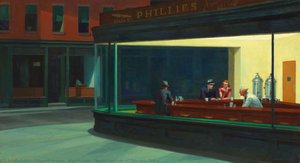
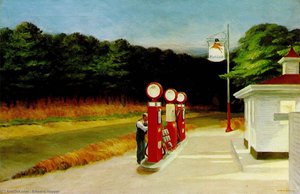
Edward Hopper, a name inextricably linked to the quietude and subtle melancholy that permeated 20th-century American life, wasn’t simply a painter of scenes; he was a poet of light and shadow, a chronicler of modern isolation. Born in Nyack, New York, in 1882, to middle-class parents of Dutch ancestry, Hopper's early years provided a stable upbringing that nurtured his artistic inclinations. From childhood sketches meticulously dated and signed, it became evident that keen observation and an innate talent for drawing were central to his being. Though initially encouraged towards commercial illustration – a pragmatic suggestion from his parents – Hopper’s ambitions leaned toward fine art, leading him to the New York School of Art where he studied under William Merritt Chase and Robert Henri. These formative years instilled not only technical skill but also an appreciation for realism and a commitment to depicting the world as he saw it—unvarnished and honest. The writings of Ralph Waldo Emerson resonated deeply with Hopper, reinforcing his sense of individualism and acute observation – qualities that would become hallmarks of his artistic vision. Early travels to Paris exposed him to Impressionism, yet Hopper quickly diverged from its fleeting brushstrokes, forging a path uniquely his own. Early Life and Artistic Beginnings Edward Hopper’s formative years were marked by a quiet determination to pursue his passions for art. Born in Nyack, New York, on July 22nd, 1882, he descended from Dutch settlers who had established themselves in the Hudson Valley region centuries earlier. His parents, William Hopkins Hopper and Berthe Melville Hopper, were educators—a profession that instilled in him a love of learning and intellectual curiosity. From an early age, Hopper demonstrated exceptional drawing skills, meticulously documenting his surroundings with detailed sketches. These drawings weren’t merely exercises in technique; they reflected a profound engagement with the world around him—a fascination for capturing its textures, colors, and moods. Recognizing his talent, his father encouraged him to study art formally, enrolling him at the New York School of Art where he honed his skills under William Merritt Chase and Robert Henri – influential figures who championed realism and championed artistic experimentation. Realism and Artistic Style Hopper’s artistic style developed gradually, influenced by Impressionist painters like Claude Monet and Pierre-Auguste Renoir but ultimately rejecting their emphasis on fleeting impressions. Instead, he sought to distill the essence of reality—to capture its underlying emotional truths without resorting to decorative embellishments. His paintings often depict solitary figures inhabiting unremarkable spaces—houses, diners, offices—creating atmospheres that are simultaneously familiar and unsettling. Hopper’s masterful use of light and shadow became central to his artistic vision—not merely as descriptive elements but as expressive tools that conveyed mood and psychological tension. He meticulously rendered surfaces with painstaking detail, capturing the subtle nuances of texture and color—a technique that distinguishes him from many other artists of his time. House by the Railroad (1925) exemplifies this approach—a seemingly simple composition radiating a profound sense of isolation and mystery. Iconic Visions: Nighthawks and Beyond While Hopper’s career unfolded gradually, certain works catapulted him to widespread recognition. Nighthawks (1942), arguably his most famous painting, became an instant icon of American culture. The late-night diner scene, bathed in stark fluorescent light, perfectly encapsulates the alienation and anonymity of modern urban life. The figures within are lost in their own thoughts, disconnected from one another despite their proximity—a poignant commentary on the human condition. Hopper’s printmaking, often overlooked, ran parallel to his painting, sharing similar themes and stylistic qualities, demonstrating his mastery across mediums. He wasn't interested in grand historical narratives or allegorical symbolism; he focused on the mundane, elevating it through careful observation and emotional resonance. Gas (1940) showcases Hopper’s fascination with American landscapes and the burgeoning automobile culture—a scene rendered with remarkable precision and imbued with a palpable sense of loneliness. Legacy and Influence Edward Hopper's influence on subsequent artists is undeniable. His unique style has inspired countless painters, including Pierre Sanford Ross, and continues to resonate with contemporary artists seeking to capture the essence of human experience. His paintings remain highly sought after by collectors and are exhibited in major museums worldwide, solidifying his place as a pivotal figure in American art history. More than just an artist, Hopper was a visual philosopher, offering profound insights into the human condition through his masterful use of light, shadow, and composition. He left behind a body of work that transcends time—a testament to his unwavering commitment to realism, his perceptive observation of human psychology, and his ability to evoke emotion with understated elegance. Hopper’s legacy lies not only in the beauty of his paintings but also in their enduring ability to provoke thought, evoke emotion, and remind us of the quiet solitude that often defines our lives—a reminder that even amidst the bustle of modern existence, moments of profound introspection can still illuminate the human spirit.
Edvardas Hoperis

Edvardas Hoperis

1931 - 1967 , JAV

Trumpa informacija

  • Artistic Movement Or Style: Realizmas
  • Artists Who Influenced This Artist:
    • William Merritt Chase
    • Robert Henri
  • Date Of Birth: Liepos 22 d.
  • Date Of Death: Gegužės 15 d.
  • Full Name: Edward Hopper
  • Nationality: Amerikalietis
  • Notable Artworks:
    • Nighthawks
    • House by the Railroad
    • Gas
  • Place Of Birth: Niujorkas, USA
Tyrinėkite meno kūrinius, suskirstytus pagal temas, stilius ir savybes.