

Rankiniu būdu tapytas aliejus ant droblio jūsų pageidaujamame dydį ir rėmuose – mūsų menininkų darbas pagal užsakymą. ( Pirkti spaudinį Pirkti vaizdą)





























Pasirinkite iš mūsų nustatytų dydžių, atitinkančių originalaus meno kūrinio proporcijas.

Galite įvesti savo matmenis, kad jie atitiktų konkretų rėmą ar erdvę. Jei pasirinktas dydis neatitinka originalaus paveikslėlio proporcijų, mes arba apkropsime meno kūrinį, arba papildysime tapybą rankomis dažytい elementais. Prieš pradėdami gamybą, jūsų patvirtinimui atsiųsime skaitmeninį maketą.
Atkreipkite dėmesį, kad ekrane rodomas vaizdas neatspindi tikrojo apkarpymo ar papildymo. Tik maketas tiksliai parodys galutinę kompoziciją.
Nors galima rinktis ir individualius dydžius, rekomenduojame pasirinkti matmenis iš nustatytos sąrašo, kad būtų išlaikytos originalios proporcijos.
Pristatymas visame pasaulyje () per 3–4 savaites, o ne įprastai – per 5 savaites. (13 rugpjūtis). Kokybė lieka nepakeičiama.


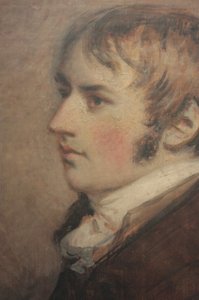
maria bicknell (mrs. john constable) -
Reprodukcijos matmenys
John Constable’s Maria Bicknell (Mrs. John Constable) stands as a poignant emblem of the Romantic era’s preoccupation with emotion and personal experience—a stark contrast to the grand narratives favored by earlier artistic movements.
Painted in 1816 during a period marked by societal disapproval surrounding Constable’s relationship with Maria Bicknell, this portrait transcends mere likeness; it embodies the profound affection that bound him to his beloved. Their union defied convention, fueled by an unwavering commitment despite familial objections and social pressures—a narrative woven into the very fabric of the artwork.
Constable’s masterful technique employs oil paint on canvas, prioritizing subtle tonal gradations to evoke a sense of serenity. The muted palette—dominated by earthy browns and creams—creates an atmosphere of intimacy and introspection. Maria Bicknell is depicted in repose, her gaze directed slightly to the left, conveying thoughtfulness and vulnerability. Her long brown hair cascades gracefully around her shoulders, framing her face with elegance, while her white dress subtly ornamented with a delicate necklace underscores her refinement.
Constable’s meticulous attention to detail captures the nuances of human expression—the subtle curve of her lips, the gentle tilt of her head. These elements contribute to the painting's emotional resonance, inviting viewers to contemplate the complexities of love and devotion amidst societal constraints.
The portrait emerged during a time when Romanticism championed subjective experience and idealized beauty—a reaction against Enlightenment rationalism’s emphasis on reason. Constable’s depiction aligns perfectly with this aesthetic sensibility, prioritizing emotional truth over formal conventions. The inclusion of supporting figures—presumably Maria Bicknell's family—adds layers to the narrative, hinting at the societal disapproval faced by the couple.
Furthermore, the clock in the background serves as a visual reminder of time’s passage and the inevitability of change—a motif prevalent throughout Romantic art. It underscores the fragility of human relationships and the bittersweet beauty of fleeting moments.
While Maria Bicknell (Mrs. John Constable) is undeniably a portrait in the traditional sense—a celebration of beauty and grace—it represents something far deeper: Constable’s unwavering devotion to Maria Bicknell and his profound connection with nature.
Like Constable's celebrated landscapes, such as The Hay Wain, this painting speaks to universal themes of love, longing, and the human condition—solidifying Constable’s place as one of the foremost artists of his era.
For those seeking inspiration or contemplating acquiring a stunning reproduction, John Constable: Portrait of Maria Bicknell offers an unparalleled glimpse into the artist’s artistic vision and emotional depth.
1776 - 1837 , Jungtinė Karalystė
Atraskite 25 įspūdingiausius Džono Konsteblio paveikslus! Romantizmo meistro gamtos vaizdai, Dedham Vale peizažai ir meno istorijos šedevrai. Meno reprodukcijos jūsų interjerui – BuyPopArt.com

Atraskite 10 legendinių romantinio peizažo kūrinių! Pasinerkite į Claude Lorrain, Caspar David Friedrich ir J.M.W. Turner genijaus pasaulį. Išmokite apie tapybos meistriškumą bei gamtos grožį. Aukščiausios kokybės meno reprodukcijos – BuyPopArt.com. Tyrinėkite kolekciją!

Journey through 10 breathtaking landscape paintings by Monet, Van Gogh & more! Explore iconic artworks, artistic techniques & find inspiration for your home decor. Museum-quality reproductions at BuyPopArt.com. Discover all masterpieces on BuyPopArt.com
Explore 25 iconic John Singer Sargent paintings – from dazzling portraits to Impressionist landscapes. Discover the stories behind Madame X, El Jaleo & more! Find museum-quality art reproductions and elevate your home decor with BuyPopArt.com.

Explore the life & art of John Constable, the Romantic painter who revolutionized landscape with emotive scenes of rural England. Discover his techniques, legacy, and key works – perfect for collectors & enthusiasts.


Sekite naujausias meno naujienas, išskirtinius pasiūlymus ir dekoravimo idėjas.
Pasakokite mums apie savo projektą, o mūsų meno ekspertai parengs jums 3 asmeniškus meno pasiūlymus.
Leiskite mums parinkti 3 variantus būtent jums – nemokamai!


 Peržiūrėti realybėje
 Pasidalinti
 Dalintis
 Išsamiau

 Atsisiųsti
 Panašūs eksponatai
 Rentgeno nuotrauka
 Automatinė diorama

 Skaityti daugiau







 Stiklo variantas prieinamas tik pasirinkus dydį iki 110 cm


