Autoriaus biografija
A Life Sculpted in Resilience: The World of Kurt Gebauer
Kurt Gebauer, born in Hradec nad Moravicí, Czech Republic, in 1941, is a sculptor whose life and work are inextricably linked to the tumultuous history of his homeland. His artistic journey began not within the sheltered walls of academia—though he would eventually find his place there—but in self-taught explorations of drawing and painting during a childhood marked by hardship. The shadow of World War II loomed large; his father, a Bohemian German, was drafted into the Wehrmacht and tragically died under mysterious circumstances early in Gebauer’s life. This early experience instilled a profound sensitivity to the fragility of existence and perhaps fueled an inherent desire to create enduring forms amidst impermanence. His formal training commenced at the School of Arts and Crafts in Brno, followed by studies at the Sculpture and Stonework School of Arts and Crafts in Hořice, laying the groundwork for his mastery of materials. However, initial attempts to gain admission to the prestigious Academy of Fine Arts in Prague were repeatedly thwarted—a testament to the political climate and a rejection of his artistic vision. It wasn’t until after four determined applications that he was finally accepted, studying under the guidance of Vincenc Makovský and Karel Lidický from 1963 to 1969.
Navigating Censorship and Finding a Voice
The late 1960s in Czechoslovakia were a period of both burgeoning artistic freedom and increasing political repression. Gebauer’s early work, even as a student, began to challenge conventional norms. A pivotal moment came with his internship at the Académie des Beaux-Arts in Paris in 1972, where he worked alongside César Baldaccini. This exposure broadened his perspective and solidified his commitment to abstract and figurative sculpture. The subsequent years were defined by a delicate dance between artistic expression and the constraints of the communist regime. In 1968, Gebauer joined the Union of Czech Visual Artists, but it was in 1987 that he truly found his voice as a founding member of the alternative artist grouping “12/15, Better Late than Never.” This collective represented a bold act of defiance against the official stances of the Association of Czech Visual Artists, providing a platform for artists whose work didn’t conform to socialist realism. His sculptures during this period often carried subtle yet powerful critiques of societal norms and political absurdity, relying on humor and playful form as a means of circumventing censorship.
The Language of Form: Bronze, Steel, and Concrete
Gebauer's artistic vocabulary is rich and diverse, primarily revolving around abstract and figurative sculpture crafted from bronze, steel, and concrete. His work isn’t easily categorized; it exists in the liminal space between representation and abstraction. He often imbues his figures with a sense of movement and dynamism, capturing fleeting moments of human experience. The choice of materials is deliberate—bronze lending itself to intricate detail and timelessness, steel offering strength and industrial edge, and concrete grounding his sculptures in the physicality of the urban landscape. His sculptures are not merely objects; they are embodiments of ideas, emotions, and social commentary. A recurring theme is the exploration of the human body—often fragmented, distorted, or suspended in mid-air—reflecting a fascination with vulnerability, resilience, and the complexities of existence. He doesn’t shy away from irony and satire, often using humor to expose the pretentiousness and rigidity of conventional memorials and societal structures.
Public Spaces as Canvas: A Legacy in Prague and Beyond
Gebauer's impact extends far beyond gallery walls; his sculptures are integral parts of public spaces throughout Prague and other Czech cities. This deliberate placement is crucial to understanding his artistic intent—he views the urban environment as a canvas for engaging with the broader community and prompting dialogue. His work isn’t meant to be passively observed but actively experienced, challenging viewers to question their surroundings and preconceived notions. The “Trumpet” series, particularly the sculpture placed in Franz von Sonnenfels Park in Mikulov, exemplifies this engagement—a powerful statement against aggression and a call for peace. His sculptures often interact with the architecture and landscape, creating a dynamic interplay between form and environment.
A Professor's Influence: Shaping Future Generations
Beyond his own artistic practice, Gebauer has dedicated himself to education, serving as a professor at the Academy of Arts, Architecture and Design in Prague since 1990. For twenty-two years he led an atelier, nurturing countless young artists and fostering a spirit of experimentation and critical thinking. His influence extends beyond the academy through consultations with graduate students as a professor emeritus. He embodies a rare combination of artistic talent, intellectual rigor, and unwavering commitment to social engagement—a legacy that continues to shape the Czech art scene. The National Gallery Prague’s comprehensive exhibition in 2020 underscored his significance as one of the great figures of 20th-century sculpture, recognizing his ability to embody “the characteristic features of the ‘little great man’”—artists who change history not through force but through storytelling, humor, and profound humanity.


 1981
1981 95.0 x 90.0 cm
 Museum Kampa
 Switch to Print






 Preview
 Pasidalinti
 Dalintis
 Išsamiau

 Atsisiųsti
 Panašūs eksponatai
 Rentgeno nuotrauka
 Automatinė diorama
 Skaityti daugiau
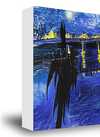
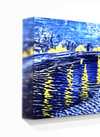
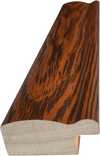
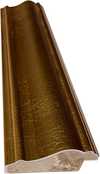
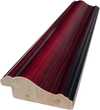
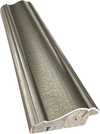
 Stiklo variantas prieinamas tik pasirinkus dydį iki 110 cm


