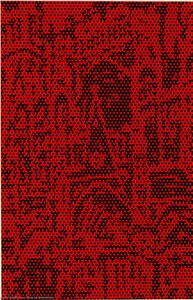
220.0 x 116.0 cm
 Viafarini
Įsigykite aukštos skiriamosios raiškos, patobulintą skaitmeninį vaizdą, gerokai pranašesnį už internetinę peržiūrą.
Kiekvieną failą mūsų specialistai kruopščiai paruošia naudojant pažangias technologijas ir profesionalų rankinį retušavimą. Užtikriname, kad kiekvienas vaizdas pasižymėtų išskirtiniu aiškumu, tikslia spalvų atspalviu ir smulkiomis detalėmis.
Baigiamas failas el. paštu pristatomas per 72 valandas; jis optimizuotas nedelsiant naudojimui profesionalioje, redakcinėje ir spausdinimo aplinkoje. Tai ta pati kokybė, kuria pasitiki aukščiausios klasės dizaino studijos, leidyklos ir galerijos.
Atsisiųskite didelės raiškos failą asmeniniam naudojimui, spausdinimui ir kūrybiniams projektams. ( Pirkti spaudinį Pirkti rankomis tapytą paveikslą)
Pasirinkę BuyPopArt.com, jūs ne tik gaunate paveikslėlį – jūs gaunate profesionaliai patobudintą skaitmeninį kūrinį, sukurtą itin tikniai ir užtikrinantį pasitenkinimą. Štai viską, kas automatiškai pritékia jūsų užsakymui:

Jūsų aukštos raiškos skaitmeninis vaizdo failas bus išsiųstas jums el. paštu per 72 valaudas nuo užsakymo – paruoštas naudojimui be jokių papildomų veiksmų.

Jūsų meno kūrinys profesionaliai optimizuojamas naudojant pažangius dirbtinio intelekto įrankius ir rankinį redagavimą, užtikrinant maksimalią detalę, aiškumą ir spalvų tikslumą.

Atsitiktinai ištrytikote ar praradote savo failą? Nebijokite – bet kuriuo metu atsiųsime jį jums vėl nemokamai.

Mėgaukitės savo meno kūriniu akimirka – skaitiniai failai visada yra neapmokestinami, todėl nereikės mokėti muitinės, mokesčių ar pristatymo mokesčių.

Naudodami profesionalią įrangą ir spalvų valdymo sistemas, užtikriname, kad jūsų skaitmeninis vaizdas kuo tiksliau atspindėtų originalias spalvas.

Jei nebuvate patenkinti savo skaitinio vaizdo, per 60 dienų jį pertaisysime arba grąkinsime 100% sumą – be jokių klausimų.

Nepat 만족inti? Gaukite visą sumokėtą sumą per 60 dienų nuo skaitmeninio failo gavimo – be jokių papildomų klausimų.

Pirkti 3 nuotraukas – pasiūla 10% - Pirkti 5 – pasiūla 15% - Pirkti 10 ir daugiau – pasiūla 20%. Puikiai tinka kūrybiniams projektams, galerijoms bei agentūroms.
In the quiet intersection where light meets shadow, and where the visible dissolves into the invisible, lies the profound creative universe of Silvio Wolf Busch. Born in Milan in 1952, an artist whose work serves as a bridge between the tangible world and the ephemeral realms of memory and perception, Wolf Busch has spent a lifetime investigating the very essence of the image. His journey is not merely one of technical mastery but a philosophical quest to understand how we witness time. By blending the rigorous discipline of photography with the expansive possibilities of installation art, he invites his audience to step beyond the frame and inhabit a space where presence and absence coexist in a delicate, haunting dance.
The foundations of his intellectual approach were laid in the classrooms of Italy, where he immersed himself in the study of Philosophy and Psychology. This academic grounding provided him with the conceptual tools to treat the photographic medium not as a tool for documentation, but as a vessel for metaphor. Seeking to refine his technical language, he moved to London, studying at the London College of Printing. It was here that he earned his Higher Diploma in Advanced Photography, a period that allowed him to marry his deep-seated interest in human consciousness with the structural complexities of lens-based art. This dual identity—as both thinker and maker—is what allows his work to transcend simple representation, turning every photograph into a site of psychological inquiry.
To understand the soul of Wolf Busch’s work, one must look toward the legacy of Spatialism. Growing up in the shadow of Milanese masters like Lucio Fontana, the artist was profoundly moved by the movement's ambition to break the two-dimensional constraints of the canvas. Just as Fontana used perforations and cuts to introduce a new dimension of space, Wolf Busch utilizes the photographic medium to explore voids, openings, and the "elsewhere." His early explorations focused on the limits of the photographic plane, often creating large-format works and polyptychs that challenged the traditional, narrative expectations of photography. He moved away from the idea of the photograph as a testimonial record, instead seeking a subjective reality where light could obscure as much as it revealed.
This fascination with the threshold—the boundary between what is seen and what is felt—became the hallmark of his evolving style. In his celebrated "Icons of Light" series, for instance, he utilized reflected light to wipe out imagery, leaving behind an evocative emptiness that provoked a deep desire in the viewer to see beyond the instant of blindness. Through this technique, he transformed the act of looking into an act of meditation, forcing the spectator to confront the absence of the subject as a powerful form of presence in itself.
As his career progressed from the mid-1980s onward, Wolf Busch’s artistic vocabulary expanded far beyond the borders of the printed photograph. He began to integrate moving images, projections, light, and sound into complex, site-specific installations. These multi-media projects are designed to engage with the architectural and social history of their locations, turning galleries and public spaces into living, breathing ecosystems of sensory experience. His work does not merely sit upon a wall; it inhabits a room, responding to the cultural personality of the space and establishing a symbolic relationship with its history.
The significance of his contribution to contemporary art is reflected in his global footprint and academic influence:
Today, living and working between the vibrant art scenes of Milan and New York, Silvio Wolf Busch continues to push the boundaries of what it means to perceive. His work remains a testament to the power of the image to act as a threshold—a place where we can encounter the simultaneous existence of the past and the present, the here and the elsewhere, and the beautiful mystery of the unseen.

1952 - , Italy


Sekite naujausias meno naujienas, išskirtinius pasiūlymus ir dekoravimo idėjas.
Pasakokite mums apie savo projektą, o mūsų meno ekspertai parengs jums 3 asmeniškus meno pasiūlymus.
Leiskite mums parinkti 3 variantus būtent jums – nemokamai!


 Peržiūrėti realybėje
 Pasidalinti
 Dalintis
 Išsamiau

 Atsisiųsti
 Panašūs eksponatai
 Rentgeno nuotrauka
 Automatinė diorama
 Skaityti daugiau