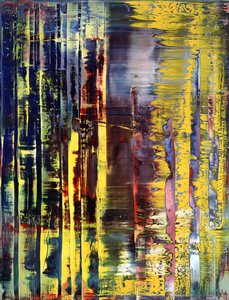
Muziejų lygio „giclée“ arba drobos spausdinimas: greita gamyba ir lankstios apdailos parinktys. ( Pirkti rankomis tapytą paveikslą Pirkti vaizdą)
Pasirinkite iš mūsų nustatytų dydžių, atitinkančių originalaus meno kūrinio proporcijas.

Galite nurodyti savo matmenis, kad vaizdas atitiktų konkretų rėmą ar erdvę. Jei pasirinktas dydis nesutaps su originalaus paveikslėlio proporcijomis, mes arba apkirpsime kūrinį, arba išplėsime vaizdą naudojant veideliu atspindėtą arba vientisą šoną. Skaitmeninis maketas bus išsiųstas jums patvirtinti prieš pradedant gamybą.
Atkreipkite dėmesį, kad ekrane matomas vaizdinys neatspindi tikrojo apkirpimo ar išplėtimo. Tik maketas tiksliai parodytų galutinę kompoziciją.
Nors galima rinktis ir individualius dydžius, rekomenduojame pasirinkti vieną iš išanksti nustatytų matmenų, kad būtų išlaikytos originalios proporcijos.
Pristatymas visame pasaulyje () per 2 weeks, o ne įprastas 4/5 savaičių laikotarpis. (18 rugpjūtis)


Untitled
Reprodukcijos matmenys

In the vibrant tapestry of twentieth-century British abstraction, few threads are as strikingly colored or structurally daring as those woven by Trevor Bell. Born in Leeds in 1930, Bell emerged from the industrial heart of England to become a transformative force within the prestigious St Ives School. His journey was one of profound metamorphosis, moving from the structured academic training of his youth toward a radical reimagining of what a painting could be. To encounter a Bell original is to step into a world where the boundaries of the frame dissolve, replaced by a rhythmic dance of geometry and light that continues to captivate the modern eye.
The trajectory of Bell’s career was irrevocably altered in 1955 when, drawn by the magnetic pull of the Cornish coast and encouraged by his contemporary Terry Frost, he relocated to Cornwall. This move was far more than a change in geography; it was an immersion into a crucible of creative innovation. Surrounded by the rugged landscapes and the pioneering spirits of artists like Peter Lanyon and Barbara Hepworth, Bell began to move away from representational echoes toward a pure exploration of Abstract Expressionism. The salt-sprayed light and undulating topography of St Ives provided the essential catalyst for his fascination with how color and shape could evoke the essence of nature without mimicking its literal form.
As Bell’s artistic consciousness deepened, he began to challenge the very architecture of the medium. He grew dissatisfied with the traditional rectangular window of the canvas, viewing it as a restrictive container that imposed an artificial limit on the energy of his compositions. This dissatisfaction birthed one of his most significant contributions to modern art: the shaped canvas. By manipulating the physical edges of his work, Bell allowed the painted forms to bleed into the surrounding space, creating an organic continuity between the artwork and its environment.
These experimental formats were not merely aesthetic whims but profound structural statements. Through these non-traditional boundaries, he achieved several artistic breakthroughs:
The historical significance of Trevor Bell lies in his ability to marry the visceral emotion of abstraction with a rigorous, almost architectural precision. While many of his contemporaries focused on the gestural spontaneity of action painting, Bell sought a more structured equilibrium. His work stands as a testament to a period when British art was bravely redefining itself on the global stage, moving away from pastoral traditions toward a sophisticated, international language of form.
Throughout his decades of experimentation, Bell remained a steadfast explorer of the relationship between color and perception. His legacy is preserved not just in museum collections, but in the very way we perceive the limits of the frame. He taught us that art need not be contained by borders, but can instead exist as an expansive, breathing entity. Today, his influence persists in the works of contemporary abstract artists who continue to push the boundaries of shape and space, forever indebted to the bold, geometric courage of this Leeds-born pioneer.

1930 - 2017 , United Kingdom

Master the high-impact world of contemporary abstraction. Discover how bold colors, textures, and modern movements like Abstract Expressionism can transform your space with premium, high-energy art curated for the design-conscious professional.

Dive into the high-voltage world of Abstract Expressionism. Explore the raw energy of Action Painting and the legendary masters of the New York School through a visual journey of pure chaos and color. Discover how to bring bold, high-impact abstract art into your modern space.

Dive into the raw power of Abstract Expressionism. Explore the high-octane energy of action painting and color field mastery. Discover how these bold, visceral movements redefine modern interiors with high-impact, premium abstract art for the contemporary collector.

Dive into the high-energy world of Lyrical Abstraction. Explore how bold colors, fluid motion, and emotional depth define this modern masterpiece movement. Discover iconic artists and learn to bring this vibrant, soulful energy into your contemporary space.

Master the power of Color Field painting. Discover how bold, immersive color transforms modern spaces through this expert guide to one of art's most impactful movements. Elevate your interior design with high-impact, contemporary abstract aesthetics.


Sekite naujausias meno naujienas, išskirtinius pasiūlymus ir dekoravimo idėjas.
Pasakokite mums apie savo projektą, o mūsų meno ekspertai parengs jums 3 asmeniškus meno pasiūlymus.
Leiskite mums parinkti 3 variantus būtent jums – nemokamai!


 Peržiūrėti realybėje
 Pasidalinti
 Dalintis
 Išsamiau

 Atsisiųsti
 Panašūs eksponatai
 Rentgeno nuotrauka
 Automatinė diorama

 Skaityti daugiau




































 Stiklo variantas prieinamas tik pasirinkus dydį iki 110 cm