

 Contemporary Realism
 1945
1945 41.0 x 56.0 cm
Rankiniu būdu tapytas aliejus ant droblio jūsų pageidaujamame dydį ir rėmuose – mūsų menininkų darbas pagal užsakymą. ( Perejti prie spausdinimo Perjungti į vaizdą)
Pasirinkite iš mūsų nustatytų dydžių, atitinkančių originalaus meno kūrinio proporcijas.

Galite įvesti savo matmenis, kad jie atitiktų konkretų rėmą ar erdvę. Jei pasirinktas dydis neatitinka originalaus paveikslėlio proporcijų, mes arba apkropsime meno kūrinį, arba papildysime tapybą rankomis dažytい elementais. Prieš pradėdami gamybą, jūsų patvirtinimui atsiųsime skaitmeninį maketą.
Atkreipkite dėmesį, kad ekrane rodomas vaizdas neatspindi tikrojo apkarpymo ar papildymo. Tik maketas tiksliai parodys galutinę kompoziciją.
Nors galima rinktis ir individualius dydžius, rekomenduojame pasirinkti matmenis iš nustatytos sąrašo, kad būtų išlaikytos originalios proporcijos.
Pristatymas visame pasaulyje () per 3–4 savaites, o ne įprastai – per 5 savaites. (8 rugpjūtis). Kokybė lieka nepakeičiama.


Mobile Radar Unit
Reprodukcijos matmenys
Sir Walter Thomas Monnington (1902–1976) remains a towering figure in the landscape of British art, a painter whose career was defined by an extraordinary ability to navigate between the classical grandeur of the past and the turbulent realities of the twentieth century. Born in Westminster, his early years were deeply influenced by the pastoral serenity of the Sussex countryside. This connection to the natural world provided a foundational layer of observation and craftsmanship that would later inform even his most dynamic wartime compositions. His formal journey began at the Slade School of Fine Art, where he refined a technical prowess that would eventually lead him to the prestigious British School in Rome. It was during this Italian sojourn that Monnington encountered the enduring echoes of the Renaissance, an experience that instilled in him a lifelong fascination with classical ideals, balanced proportions, and the monumental scale of historical narrative.
The emergence of Monnington as a significant voice in modern British art was cemented by his early triumphs in academic competition. His work Allegory, which earned him recognition at the British School of Fine Art, remains a testament to his ability to blend realism with idealized forms. The acquisition of this piece by the Tate Collection served as a definitive milestone, signaling the arrival of an artist capable of translating complex, symbolic concepts into visually arresting oil paintings. As he moved into the professional sphere in London, Monnington’s versatility became his hallmark. He was not merely a painter of canvases but a creator of environments, collaborating on ambitious decorative schemes for institutions such as the Bank of England and St Stephen’s Hall in Westminster Palace. These mural projects demonstrated his capacity to handle large-scale narratives, weaving together history and artistry to serve the public consciousness.
The trajectory of Monnington’s life was irrevocably altered by the onset of World War II, a period that transitioned his focus from the serene and the allegorical to the visceral and the urgent. Serving with the Directorate of Camouflage at Leamingly Spa, he applied his keen eye for detail and spatial awareness to the innovative task of designing camouflage for airfields and factories. This period of service was not a departure from his artistry but an evolution of it. The tension of wartime Britain found its way onto his canvases through works that captured the mechanical power and the perilous beauty of aerial combat. In masterpieces such as Fortresses and Southern England Spitfires Attacking Flying Bombs, one can witness the artist’s ability to use bold, expressive brushstrokes to convey motion, energy, and the heavy atmosphere of a world at war.
Beyond the battlefield, Monnington’s repertoire expanded to include evocative landscapes and intimate portraits, proving that his technical mastery could scale from the vastness of a sky filled with aircraft to the quietude of a secluded grove. His work The Orchard exemplifies this softer, impressionistic side, where light and shadow dance across a landscape to evoke a sense of peace and timelessness. This duality—the ability to capture both the roar of engines and the whisper of leaves—is what makes his body of work so profoundly human.
In the later stages of his career, Monnington’s influence reached the highest echelons of the art establishment when he served as President of the Royal Academy. His leadership and dedication to the craft ensured that his commitment to excellence and historical continuity remained central to British artistic identity. To look upon a Monnington painting is to witness a life lived at the intersection of duty and wonder, a career that successfully bridged the gap between the classical traditions of the Old Masters and the modern complexities of a changing world.

1902 - 1976 , United Kingdom

Explore the captivating landscapes & portraits of Brian Hatton (1887-1916), a promising British artist lost too soon. Discover his unique style, Herefordshire roots, and lasting legacy in early 20th-century art.
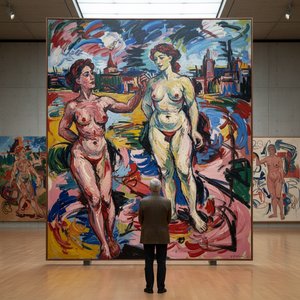
Explore the evolution of Willem de Kooning's iconic Abstract Expressionist paintings. Discover his signature style, key themes & investment potential with expert insights for discerning art collectors.

Explore the captivating maritime art of Thomas Butterworth (1768–1842). Discover his stunning depictions of Napoleonic naval battles and life at sea, commissioned works for the East India Company, and enduring legacy. Learn more today!

Atraskite 25 įspūdingiausius Džoano Miro kūrinius! Sužinokite apie jo surrealizmą, spalvingus paveikslus ir katalonų meninę viziją. Meno reprodukcijos jūsų interjerui – BuyPopArt.com
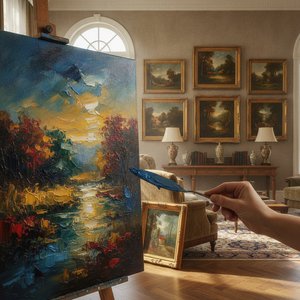
Užsisakykite aukštos kokybės rankomis tapytus aliejinius paveikslus iš BuyPopArt! Senųjų meistrų technikos, individualūs užsakymai, portretai pagal nuotrauką. Investicija į amžinybę ir šeimos palikimą. Patikima kokybė ir greitas pristatymas.


Sekite naujausias meno naujienas, išskirtinius pasiūlymus ir dekoravimo idėjas.
Pasakokite mums apie savo projektą, o mūsų meno ekspertai parengs jums 3 asmeniškus meno pasiūlymus.
Leiskite mums parinkti 3 variantus būtent jums – nemokamai!


 Peržiūrėti realybėje
 Pasidalinti
 Dalintis
 Išsamiau

 Atsisiųsti
 Panašūs eksponatai
 Rentgeno nuotrauka
 Automatinė diorama
 Skaityti daugiau




































 Stiklo variantas prieinamas tik pasirinkus dydį iki 110 cm


