

Met de hand geschilderd in olieverf op canvas in uw gewenste maat en lijst, op bestelling gemaakt door onze kunstenaars. ( Bestel print Koop afbeelding)





























Kies uit onze vooraf ingestelde maten die overeenkomen met de originele verhoudingen van het kunstwerk.

U kunt uw eigen afmetingen invoeren om in een specifieke lijst of ruimte te passen. Als de door u gekozen maat niet overeenkomt met de verhoudingen van het originele beeld, zullen we het kunstwerk bijsnijden of het schilderij uitbreiden met extra handgeschilderde elementen. Een digitale mockup wordt ter goedkeuring naar u verzonden voordat de productie begint.
Houd er rekening mee dat de preview op het scherm niet de werkelijke uitsnede of uitbreiding weergeeft. Alleen de mockup toont de uiteindelijke compositie nauwkeurig.
Hoewel aangepaste afmetingen mogelijk zijn, raden we aan een maat uit de vooraf gedefinieerde lijst te selecteren om de originele verhoudingen te behouden.
Wereldwijde levering () binnen 3 tot 4 weken in plaats van de standaard 5 weken. (16 augustus). Zonder concessies aan de kwaliteit.


Het hoofd
Afmetingen reproductie
In the quiet, evocative landscapes of Lithuania, where the echoes of a complex Soviet past still linger in the architecture and the atmosphere, the work of Deimantas Narkevičius emerges as a profound meditation on time itself. Born in 1964 in Utena, Narkevičius began his artistic journey not with the lens of a camera, but with the tactile discipline of a sculptor. This foundational training at the Vilnius Art Institute instilled in him a unique sensitivity to form, space, and materiality—a sensibility that would later breathe life into his cinematic explorations. While many artists use film merely as a medium for documentation, Narkevičius treats the moving image as a sculptural element, carving out narratives from the raw materials of historical footage, found photographs, and the heavy silence of abandoned industrial sites.
His transition from the physical weight of sculpture to the ephemeral nature of video and film was not a departure, but an evolution. As Lithuania navigated the turbulent disintegration of the Soviet Union and its subsequent rebirth as a democratic state, Narkeyičius found himself at the intersection of personal recollection and political upheaval. He became a chronicler of the "rupture"—that delicate, often painful space between what was lived and what is remembered. His work does not simply present history; it interrogates the very mechanisms by which we construct myths from reality, using techniques such as voice-overs, interviews, and carefully staged re-enactments to blur the lines between documentary truth and cinematic imagination.
The brilliance of Narkevičius’s practice lies in his ability to transform historical trauma into a poetic inquiry. He often directs his gaze toward the remnants of the Soviet era—monumental structures, decommissioned missile bases, and industrial hubs like the town of Elektrėnai. In works such as Energy Lithuania, he explores the symbiotic relationship between human vitality and the mechanical energy of power plants, treating these sites not merely as relics of a failed ideology, but as melancholic monuments to an era of vanished utopias. Through his lens, the decay of an industrial landscape becomes a metaphor for the fragility of political structures and the enduring persistence of cultural identity.
Influenced by the atmospheric depth of filmmakers like Andrei Tarkovsky and the structural experimentation of Peter Watkins, Narkevičius employs a visual language that is both intimate and expansive. He frequently utilizes close-ups to capture the nuances of human expression, grounding his larger political critiques in the lived experiences of individuals. This approach allows him to navigate the tension between the macro-history of nations and the micro-histories of the soul. His films act as a bridge, connecting the viewer to a past that may feel unrecognizable, yet remains fundamentally intertwined with the present through the persistent pull of collective memory.
The international recognition of Deimantas Narkevičius has solidified his position as one of the most significant voices in contemporary moving-image art. His presence on the global stage is marked by participation in the world's most prestigious cultural institutions, where his work challenges audiences to confront the fluidity of truth. His achievements include:
Ultimately, the significance of Narkevičius’s oeuvre lies in its refusal to offer easy answers. He does not seek to provide a definitive record of history, but rather to highlight the cracks and shadows where memory resides. By treating history as both material and methodology, he invites us to witness the ongoing process of creation—the way we constantly mold our past to make sense of our present. His work remains a vital, haunting testament to the power of art to navigate the complexities of time, identity, and the enduring human spirit.

1964 - , Lithuania

Ontdek de majesteit van ruimte met monumentale kunstreproducties. BuyPopArt biedt handgeschilderde kunst, gepersonaliseerd advies & professionele integratie voor een luxueus interieur. Expertise en kwaliteit gegarandeerd.

Explore the rich history of allegory in Western art! Discover hidden meanings in masterpieces from Giotto to Bosch & beyond. Expert insights for collectors and enthusiasts at BuyPopArt.

Explore the life & art of Karl Bryullov, a pivotal figure in Russian Romanticism. Discover his iconic paintings like 'The Last Day of Pompeii' and delve into his lasting influence on 19th-century art history.

Ontdek de rijke geschiedenis en het duurzame erfgoed van bronzen beeldhouwkunst. Van klassieke technieken tot hedendaagse interpretaties, een gids voor verzamelaars en kunstliefhebbers.
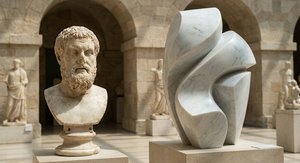
Explore the captivating history of marble sculpture from ancient Greece to modern art. Discover renowned artists like Canova & Michelangelo, carving techniques, and investment insights at BuyPopArt.


Blijf op de hoogte van het laatste kunstnieuws, exclusieve aanbiedingen en decoratie-ideeën.
Vertel ons over uw project en onze kunstexperts geven u 3 gepersonaliseerde kunstsuggesties.
Wij stellen drie opties speciaal voor u samen – gratis!


 Voorvertoning
 Verstuur
 Delen
Delen
 Details bekijken

 Download
 Vergelijkbare items
 Röntgenonderzoek
 Diavoorstelling

 Lees meer







 De optie voor glas is alleen beschikbaar bij een formaat kleiner dan 110 cm.


