Acrylic On CanvasWallArtContemporary Realism
 1933
1933 92.0 x 127.0 cm
Met de hand geschilderd in olieverf op canvas in uw gewenste maat en lijst, op bestelling gemaakt door onze kunstenaars. ( Bestel print Koop afbeelding)





























Kies uit onze vooraf ingestelde maten die overeenkomen met de originele verhoudingen van het kunstwerk.

U kunt uw eigen afmetingen invoeren om in een specifieke lijst of ruimte te passen. Als de door u gekozen maat niet overeenkomt met de verhoudingen van het originele beeld, zullen we het kunstwerk bijsnijden of het schilderij uitbreiden met extra handgeschilderde elementen. Een digitale mockup wordt ter goedkeuring naar u verzonden voordat de productie begint.
Houd er rekening mee dat de preview op het scherm niet de werkelijke uitsnede of uitbreiding weergeeft. Alleen de mockup toont de uiteindelijke compositie nauwkeurig.
Hoewel aangepaste afmetingen mogelijk zijn, raden we aan een maat uit de vooraf gedefinieerde lijst te selecteren om de originele verhoudingen te behouden.
Wereldwijde levering () binnen 3 tot 4 weken in plaats van de standaard 5 weken. (21 augustus). Zonder concessies aan de kwaliteit.


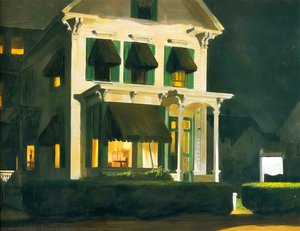
Ryder's House
Afmetingen reproductie
Edward Hopper’s “Ryder’s House,” completed in 1933, stands as a quintessential emblem of American Realism during the Depression era. More than just a depiction of a simple farmhouse nestled within a tranquil field, it's a masterful exploration of solitude and unspoken emotion—themes that would become hallmarks of Hopper’s oeuvre and continue to resonate with audiences today.
Painted during the Great Depression, “Ryder’s House” reflects the pervasive anxieties and uncertainties of the time. Hopper's depiction of rural life—characterized by quiet desperation and unspoken longing—captures a mood that mirrored the experiences of many Americans grappling with economic hardship and social displacement. The painting speaks to a broader cultural preoccupation with themes of alienation and detachment.
The dominant use of light in “Ryder’s House” is particularly significant. Hopper illuminates the interior space with a cool, diffused glow that casts long shadows across the walls—creating an atmosphere of profound stillness and hinting at hidden narratives. The absence of human figures contributes to the painting's sense of isolation, prompting viewers to contemplate the unspoken emotions conveyed by the scene.
"Ryder’s House" transcends mere visual representation; it invites contemplation and introspection. Hopper’s masterful composition—coupled with his subtle manipulation of light and shadow—elicits a feeling of melancholy and yearning, capturing the essence of human experience in its most vulnerable form. It remains a powerful reminder that beauty can reside in quietude and that art possesses the capacity to illuminate the complexities of the human condition.

1931 - 1967 , Verenigde Staten van Amerika

Explore the profound depth of American Realism. From the gritty Ashcan School to poignant social landscapes, discover how masters captured the raw soul of a nation through evocative oil paintings and timeless art history.


Blijf op de hoogte van het laatste kunstnieuws, exclusieve aanbiedingen en decoratie-ideeën.
Vertel ons over uw project en onze kunstexperts geven u 3 gepersonaliseerde kunstsuggesties.
Wij stellen drie opties speciaal voor u samen – gratis!


 Voorvertoning
 Verstuur
 Delen
Delen
 Details bekijken

 Download
 Vergelijkbare items
 Röntgenonderzoek
 Diavoorstelling
 Lees meer







 De optie voor glas is alleen beschikbaar bij een formaat kleiner dan 110 cm.