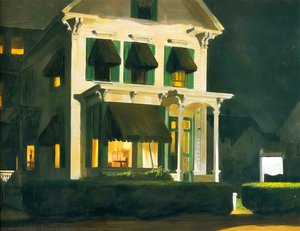
Contemporary Realism
 1922
1922 20.0 x 25.0 cm
 Smithsonian American Art Museum
Giclée- of canvasafdruk van museumkwaliteit met een snelle productie en flexibele afwerkingsmogelijkheden. ( Bestel handgeschilderde reproductie Koop afbeelding)





























Kies uit onze vooraf ingestelde maten die overeenkomen met de originele verhoudingen van het kunstwerk.

U kunt uw eigen afmetingen opgeven om in een specifieke lijst of ruimte te passen. Als de door u gekozen maat niet overeenkomt met de proporties van het originele kunstwerk, zullen wij de afbeelding bijsnijden of uitbreiden met een gespiegelde of effen rand. Een digitaal mockup wordt ter goedkeuring naar u verzonden voordat de productie begint.
Houd er rekening mee dat de preview op het scherm de werkelijke bijsneding of uitbreiding niet weergeeft. Alleen de mockup toont de uiteindelijke compositie nauwkeurig.
Hoewel aangepaste maten beschikbaar zijn, raden wij aan een afmeting uit de vooraf bepaalde lijst te kiezen om de originele proporties te behouden.
Wereldwijde levering () binnen 2 weken in plaats van de standaard 4/5 weken. (15 augustus)


The Cat Boat
Afmetingen reproductie
Edward Hopper's “The Cat Boat,” created in 1922, stands as a quintessential emblem of American Modernism—a deceptively simple scene imbued with profound psychological depth. More than just depicting a sailboat gliding along the New England coast, it’s a masterful distillation of Hopper’s signature style: realism tempered by an unsettling stillness that invites contemplation and subtly underscores themes of isolation and melancholy.
The artwork's composition centers around the sailboat itself—a dominant presence in the foreground—whose angled sail creates a dynamic diagonal line, pulling the viewer’s eye across the canvas. A smaller boat appears in the background to provide context and subtly heighten the sense of distance. Hopper skillfully employs etching techniques, utilizing hatching and cross-hatching extensively to render textures – from the rough surface of the water to the solidity of the boat's structure—achieving remarkable tonal variation without resorting to color.
The diffused lighting contributes significantly to the artwork’s mood. Soft shadows and highlights suggest an overcast day, avoiding harshness and emphasizing Hopper’s preference for capturing atmospheric conditions that heighten emotional resonance. Careful attention to perspective—overlapping elements and tonal gradations—creates a convincing illusion of depth, grounding the viewer in the landscape while simultaneously conveying a feeling of detachment. The figures aboard the sailboat are rendered with minimal detail, almost as if viewed from afar, furthering this sense of isolation.
Created during a period of rapid urbanization and social upheaval in America—the aftermath of World War I— “The Cat Boat” reflects Hopper's fascination with the quiet corners of modern life. He was returning from Paris after his artistic studies, where he had absorbed influences from Impressionism and Cubism, yet he steadfastly adhered to realism as a means of conveying emotion and capturing the essence of human experience. The etching medium itself—chosen by Hopper in response to challenges faced by artists during this era—underscores his commitment to meticulous observation and precise execution.
Ultimately, “The Cat Boat” transcends its visual description; it evokes a powerful emotional response. The image speaks to the human desire for connection amidst solitude, capturing a fleeting moment of leisure that simultaneously conveys a sense of melancholy and contemplative awareness. Hopper’s masterful use of light and shadow—combined with his understated compositional choices—transforms what appears as a straightforward seascape into an enduring symbol of American Modernism's preoccupation with psychological nuance.

1931 - 1967 , Verenigde Staten van Amerika

Explore the profound depth of American Realism. From the gritty Ashcan School to poignant social landscapes, discover how masters captured the raw soul of a nation through evocative oil paintings and timeless art history.


Blijf op de hoogte van het laatste kunstnieuws, exclusieve aanbiedingen en decoratie-ideeën.
Vertel ons over uw project en onze kunstexperts geven u 3 gepersonaliseerde kunstsuggesties.
Wij stellen drie opties speciaal voor u samen – gratis!


 Voorvertoning
 Verstuur
 Delen
Delen
 Details bekijken

 Download
 Vergelijkbare items
 Röntgenonderzoek
 Diavoorstelling
 Lees meer







 De optie voor glas is alleen beschikbaar bij een formaat kleiner dan 110 cm.