

Giclée- of canvasafdruk van museumkwaliteit met een snelle productie en flexibele afwerkingsmogelijkheden. ( Bestel handgeschilderde reproductie Koop afbeelding)





























Kies uit onze vooraf ingestelde maten die overeenkomen met de originele verhoudingen van het kunstwerk.

U kunt uw eigen afmetingen opgeven om in een specifieke lijst of ruimte te passen. Als de door u gekozen maat niet overeenkomt met de proporties van het originele kunstwerk, zullen wij de afbeelding bijsnijden of uitbreiden met een gespiegelde of effen rand. Een digitaal mockup wordt ter goedkeuring naar u verzonden voordat de productie begint.
Houd er rekening mee dat de preview op het scherm de werkelijke bijsneding of uitbreiding niet weergeeft. Alleen de mockup toont de uiteindelijke compositie nauwkeurig.
Hoewel aangepaste maten beschikbaar zijn, raden wij aan een afmeting uit de vooraf bepaalde lijst te kiezen om de originele proporties te behouden.
Wereldwijde levering () binnen 2 weken in plaats van de standaard 4/5 weken. (18 augustus)


untitled (6596)
Afmetingen reproductie
This profoundly moving work by Egon Schiele is a masterclass in Expressionist portraiture, capturing a raw and unsettling depiction of childhood vulnerability. More than just a representation, it’s an evocation of feeling – fragility, isolation, and perhaps even suffering – rendered with striking honesty.
The artwork centers on a young child, seated and posed in a manner that suggests both resignation and physical exhaustion. The figure’s emaciated form is immediately arresting, hinting at hardship, illness, or profound deprivation. This isn't merely a portrait of a person; it’s a symbolic representation of innocence lost, the impact of societal struggles, and the universal experience of human suffering. The simplicity of the composition – focusing solely on the child against a stark background – amplifies this emotional weight, forcing direct engagement with their plight.
Schiele’s signature Expressionist style is powerfully evident in this piece. He rejects traditional representational techniques in favor of distorted forms and emotionally charged lines. Executed primarily in pastel or chalk on paper, the artwork showcases a visible texture that adds to its immediacy and intensity. Loose, gestural strokes define the figure, prioritizing emotional impact over precise detail. The angularity of the body contrasts with softer facial features, creating a dynamic tension that reflects the subject’s inner turmoil.
The limited color palette – dominated by earthy tones of ochre, orange-brown, and pale flesh tones – reinforces the somber mood. These muted hues avoid distraction, drawing all attention to the child's physical state and emotional expression. The composition itself is deliberately unbalanced; the figure’s off-center placement contributes to a sense of instability mirroring their precarious condition. Diagonal lines created by the extended arm and leg add dynamism but also heighten the feeling of unease.
Created during a period of significant social and political upheaval, Schiele's work reflects the anxieties and disillusionment of early 20th-century Europe. As a pivotal figure in Austrian Expressionism, alongside Gustav Klimt and Oskar Kokoschka, he challenged artistic conventions and explored taboo subjects with unflinching honesty. His bold exploration of psychological themes and unique line work continue to influence artists today.
This artwork is more than just a visual statement; it’s an invitation for contemplation. A reproduction of this piece would serve as a powerful focal point in any interior, adding depth, complexity, and emotional resonance. Its muted palette complements both modern and traditional settings, while its thought-provoking subject matter sparks conversation and introspection. Ideal for collectors seeking impactful works or designers aiming to create spaces that evoke feeling, this Schiele masterpiece offers enduring artistic value.
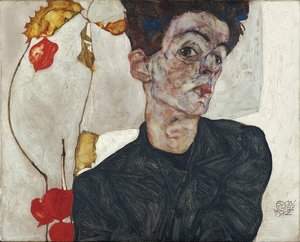
1890 - 1918 , Oostenrijk

Master the art of texture with our ultimate guide to pastel art. Discover how to select high-impact, soft-textured pieces that transform modern interiors, from hand-painted masterpieces to custom AI-remixed portraits. Elevate your space with expert curation and bold design.

Explore the most iconic melancholy figures in contemporary art. From Schiele's raw expressionism to Munch's emotional depth, discover how moody, soulful masterpieces can transform your modern space with high-impact, hand-painted aesthetic excellence.

Unleash raw emotion in your space. Explore the high-impact world of Expressionism through BuyPopArt.com’s premium hand-painted oil reproductions and custom photo transformations. Bold, confident, and curated for those who live for visual impact. Shop the revolution today!

Dive into the raw, visceral world of Figurative Expressionism. Explore how icons like Schiele and Bacon use bold textures and intense human forms to redefine modern aesthetics. Discover high-impact art that brings unapologetic energy and emotional depth to your contemporary space.


Blijf op de hoogte van het laatste kunstnieuws, exclusieve aanbiedingen en decoratie-ideeën.
Vertel ons over uw project en onze kunstexperts geven u 3 gepersonaliseerde kunstsuggesties.
Wij stellen drie opties speciaal voor u samen – gratis!


 Voorvertoning
 Verstuur
 Delen
Delen
 Details bekijken

 Download
 Vergelijkbare items
 Röntgenonderzoek
 Diavoorstelling

 Lees meer







 De optie voor glas is alleen beschikbaar bij een formaat kleiner dan 110 cm.


