

 LithografieWanddecoratieEl Lissitzky's 'Wendingen' exemplifies Cubist prin
 1921Moderne tijd
 Museum of Modern Art
Koop een digitale afbeelding in hoge resolutie met verbeterde kwaliteit, die veel superieur is aan de online voorvertoning.
Elk bestand wordt met uiterste precisie voorbereid door onze interne specialisten, met behulp van geavanceerde tools en deskundige handmatige retouche. Wij garanderen dat elke afbeelding een uitzonderlijke helderheid, nauwkeurige kleurweergave en verfijnde details bezit.
Het uiteindelijke bestand wordt binnen 72 uur per e-mail geleverd, geoptimaliseerd voor direct gebruik in professionele, redactionele en printomgevingen. Dit is dezelfde kwaliteit waarop vooraanstaande designstudio's, uitgevers en galerieën vertrouwen.
Download een bestand met hoge resolutie voor persoonlijke weergave, afdrukken en creatieve projecten. ( Bestel print Bestel handgeschilderde reproductie)
Wanneer u kiest voor BuyPopArt.com, ontvangt u niet alleen een afbeelding – u krijgt een professioneel verbeterd digitaal kunstwerk, met precisie vervaardigd en voorzien van een tevredenheidsgarantie. Dit is alles wat automatisch bij uw bestelling is inbegrepen:

Uw hoogwaardige digitale afbeeldingsbestand wordt binnen 72 uur na bestelling naar u gemaild – klaar voor direct gebruik.

Uw kunstwerk wordt professioneel geoptimaliseerd met behulp van geavanceerde AI-tools en handmatige bewerkingen, waardoor maximale details, helderheid en kleurnauwkeurigheid worden gegarandeerd.

Je bestand per ongeluk verwijderd of kwijtgeraakt? Geen zorgen – we sturen het u op elk gewenst moment gratis opnieuw toe.

Geniet direct van uw kunstwerk zonder invoerrechten, belastingen of verzendkosten – digitale downloads zijn altijd belastingvrij.

Met behulp van professionele hulpmiddelen en kleurbeheer zorgen wij ervoor dat uw digitale afbeelding de originele kleuren zo nauwkeurig mogelijk weergeeft.

Als u niet tevreden bent met uw digitale afbeelding, passen wij deze aan of storten wij 100% terug binnen 60 dagen – zonder vragen gesteld.

Niet tevreden? Ontvang binnen 60 dagen na ontvangst van uw digitale bestand uw volledige aankoopbedrag terug – zonder vragen te stellen.

Koop 3 afbeeldingen, bespaar 10% - Koop 5, bespaar 15% - Koop 10+, bespaar 20%. Ideaal voor creatieve projecten, galerieën en bureaus.
El Lissitzky’s “Wendingen,” created in 1921, is a striking example of early abstract art, deeply rooted in the Constructivist and Suprematist movements. This artwork isn't merely a painting but a cover design for the Dutch magazine "Wendingen," dedicated to modern architecture and design. It embodies Lissitzky’s vision of “Proun,” a concept aiming to synthesize architecture, engineering, and art into a dynamic visual language.
The artwork eschews representational imagery, instead presenting a purely abstract composition of geometric forms. Sharp angles, intersecting lines, and flat planes dominate the canvas, creating a sense of structured dynamism. Rectangles, circles, and diagonal lines interact to generate spatial tension and visual pathways.
“Wendingen” clearly reflects the principles of Constructivism, emphasizing functional design and geometric abstraction. It also draws from Suprematism, Malevich’s movement focused on pure artistic feeling through basic geometric forms. Lissitzky's unique approach integrates these influences, creating a style that is both rigorously structured and emotionally resonant.
The piece was designed as a cover for a magazine dedicated to modern architecture. This context highlights the artwork’s purpose: not just aesthetic beauty but also communication and visual impact within a design-focused publication. The stylized lettering of “WENDINGEN” integrated into the composition further emphasizes this functional aspect.
Lissitzky employed lithography, a printing technique that allows for precise lines and tonal variations. This method was ideal for reproducing the artwork’s sharp geometric forms and limited color palette.
The color scheme is deliberately restrained, featuring strong contrasts between red, gray, black, and beige against a neutral background. This simplicity enhances the clarity of the geometric shapes and prevents visual clutter. The texture appears smooth and flat, characteristic of a printed surface.
Created in 1921, “Wendingen” emerged from the aftermath of World War I and the Russian Revolution. It reflects the era’s desire for radical change and innovation across all fields – art, architecture, and society.
“Proun” concept aimed to transcend traditional artistic boundaries by uniting art, technology, and architecture. “Wendingen” serves as a visual manifestation of this ambition, suggesting a harmonious integration of these disciplines.
The artwork’s geometric forms can be interpreted as symbols of progress, order, and the potential for a new, rational world. The dynamic arrangement of shapes suggests movement and energy, reflecting the optimism and forward-looking spirit of the early 20th century.
Despite its abstract nature, “Wendingen” evokes a sense of visual harmony and balance. The carefully arranged geometric forms create a pleasing composition that is both intellectually stimulating and aesthetically satisfying.
Lissitzky’s work has had a lasting impact on graphic design, typography, and architectural aesthetics. “Wendingen” remains an iconic example of early modernism, inspiring generations of artists and designers.
Photo Description: --Overall Impression-- The artwork is a geometric abstract composition dominated by sharp angles and flat planes. It’s a square format painting with a predominantly beige background that serves as a neutral stage for the bold shapes and colors. The piece exemplifies Cubist and Constructivist influences, prioritizing form and structure over realistic representation. Compositionally, it's highly structured, utilizing intersecting lines and right angles to create a sense of dynamism and spatial tension. The subject matter is purely abstract; there are no recognizable objects or figures. Lines are used extensively – straight, diagonal, and slightly curved – defining the edges of the shapes and creating visual pathways across the canvas. Shapes are primarily rectangular and circular, with a strong emphasis on geometric precision. The texture appears smooth and flat, indicative of a printed surface rather than a sculpted one. Lighting is even and diffused, lacking any dramatic shadows or highlights. Perspective is deliberately flattened, eliminating traditional depth cues. Depth is achieved through overlapping planes and the suggestion of receding lines, but it’s not realistically rendered. The color palette is limited yet impactful, featuring strong contrasts between red, gray, black, and beige. The lettering ‘WENDINGEN’ in a stylized serif font is integrated into the composition on the left side. Symbolically, the artwork likely represents an exploration of form, structure, and spatial relationships – core tenets of early 20th-century abstraction. The technique appears to be primarily brushwork with a focus on clean lines and precise shapes. Materials used are likely oil paints on canvas. Size: Unknown Date: 1921 ARTIST INFORMATION: ================== Artist: El Lissitzky Birth Year: 1890 Death Year: 1941 Birth City: Pochinki Birth Country: Russia Biography: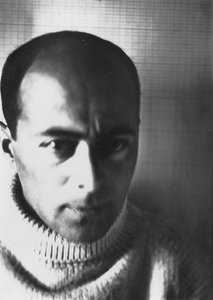
1890 - 1941 , Rusland


Blijf op de hoogte van het laatste kunstnieuws, exclusieve aanbiedingen en decoratie-ideeën.
Vertel ons over uw project en onze kunstexperts geven u 3 gepersonaliseerde kunstsuggesties.
Wij stellen drie opties speciaal voor u samen – gratis!


 Voorvertoning
 Verstuur
 Delen
Delen
 Details bekijken

 Download
 Vergelijkbare items
 Röntgenonderzoek
 Diavoorstelling
 Lees meer