Giclée- of canvasafdruk van museumkwaliteit met een snelle productie en flexibele afwerkingsmogelijkheden. ( Bestel een handgeschilderde reproductie van dit verzamelobject Naar afbeelding wisselen)





























Kies uit onze vooraf ingestelde maten die overeenkomen met de originele verhoudingen van het kunstwerk.

U kunt uw eigen afmetingen opgeven om in een specifieke lijst of ruimte te passen. Als de door u gekozen maat niet overeenkomt met de proporties van het originele kunstwerk, zullen wij de afbeelding bijsnijden of uitbreiden met een gespiegelde of effen rand. Een digitaal mockup wordt ter goedkeuring naar u verzonden voordat de productie begint.
Houd er rekening mee dat de preview op het scherm de werkelijke bijsneding of uitbreiding niet weergeeft. Alleen de mockup toont de uiteindelijke compositie nauwkeurig.
Hoewel aangepaste maten beschikbaar zijn, raden wij aan een afmeting uit de vooraf bepaalde lijst te kiezen om de originele proporties te behouden.
Wereldwijde levering () binnen 2 weken in plaats van de standaard 4/5 weken. (11 augustus)


Roofs
Formaat reproductie
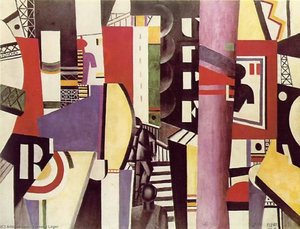
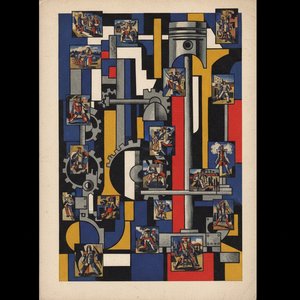
Fernand Léger's "Roofs," painted during a period of profound societal transformation, is more than just a depiction of a city scene; it’s a visceral embodiment of the anxieties and aspirations surrounding the rise of industrial modernity. The painting immediately commands attention with its dramatic composition – buildings choked by billowing smoke, figures scattered amidst the chaos, and two birds seemingly adrift in this turbulent landscape. Léger, born Joseph Fernand Henri Léger in 1881 in Argentan, Normandy, was a key figure in the development of Cubism, yet his work transcends simple geometric abstraction. He sought to translate the impact of the machine age – its raw power, its fragmented forms, and its unsettling influence on human life – into a powerfully expressive visual language.
Léger’s artistic journey began with an interest in architecture, but his relocation to Paris around 1900 proved transformative. He quickly immersed himself in the burgeoning avant-garde scene, rejecting purely abstract approaches that distanced art from reality. Instead, he embraced a method of “analytical cubism,” meticulously dissecting objects and figures into geometric components – cylinders, cones, and planes – before reassembling them in a fragmented yet dynamic composition. In "Roofs," this technique is evident in the angular forms of the buildings, rendered with a deliberate sense of distortion that reflects their mechanical nature. The smoke itself isn’t merely atmospheric; it's a visual representation of the industrial processes churning at the heart of the city, a tangible manifestation of its relentless energy.
The inclusion of two birds within the composition is particularly significant. Often interpreted as symbols of freedom and escape, their presence amidst the urban turmoil suggests a yearning for respite from the pressures of modern life. The scattered figures, rendered with varying degrees of detail, contribute to the painting’s sense of unease and urgency. They are not heroic or idealized; rather, they represent ordinary individuals grappling with the consequences of rapid industrialization – perhaps overwhelmed by its scale, or searching for meaning within its disorienting landscape. Léger masterfully evokes a feeling of both fascination and apprehension, inviting the viewer to contemplate the complex relationship between humanity and technology.
Léger’s technique in “Roofs” is characterized by bold brushstrokes and a deliberate use of color. While the palette leans towards muted tones – grays, browns, and ochres – punctuated by flashes of red and yellow within the smoke, this restraint amplifies the painting's dramatic impact. The artist employed a layering technique, building up the composition through multiple applications of paint, creating a textured surface that adds to the sense of depth and dynamism. This meticulous approach is characteristic of Léger’s commitment to capturing the essence of form and texture, reflecting his fascination with the physicality of industrial materials.
"Roofs" stands as a powerful testament to Fernand Léger's pioneering vision. It is a painting that speaks directly to our contemporary concerns about urbanization, technological advancement, and the human condition in an age of rapid change. Its enduring appeal lies not only in its formal qualities – its masterful use of cubist principles – but also in its profound emotional resonance. A hand-painted reproduction of this artwork offers a unique opportunity to experience Léger’s artistic genius firsthand, bringing a touch of modernist drama and intellectual depth to any interior space.
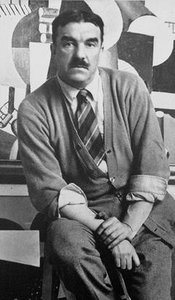
1881 - 1955 , Frankrijk

Explore the rich history of figure painting from antiquity to the Renaissance! Discover iconic artworks, masterful techniques & enduring symbolism. Find museum-quality reproductions at BuyPopArt.
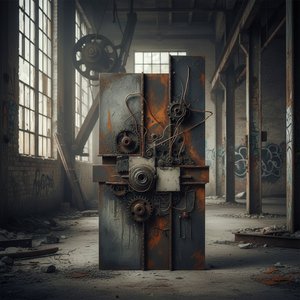
Explore the captivating world of industrial aesthetics in modern art. Discover key movements, influential artists & collecting insights at BuyPopArt.com – your source for museum-quality reproductions and expert art guidance.

Ontdek 10 iconische kunstwerken die de rauwe schoonheid van industriële landschappen en stadsgezichten vastleggen. Van impressionisme tot abstracte kunst – laat je inspireren door meesterwerken & koop museumkwaliteit reproducties op BuyPopArt.com.

Ontdek de 10 baanbrekende meesterwerken van het Cubisme, met iconische werken van Picasso & Braque. Leer over kunstgeschiedenis en vind museumkwaliteit reproducties voor uw interieur op BuyPopArt.com.
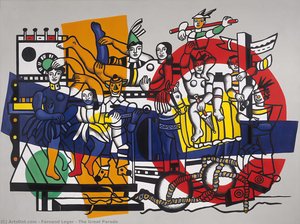
Ontdek de 25 meest iconische werken van Fernand Léger! Duik in zijn kubistische wereld, machine esthetiek & kleurrijke composities. Vind museumkwaliteit kunst reproducties en interieur inspiratie op BuyPopArt.com.


Blijf op de hoogte van het laatste kunstnieuws, exclusieve aanbiedingen en inspirerende interieurideeën.
Vertel ons over uw project en onze kunstexperts geven u 3 gepersonaliseerde kunstsuggesties.
Wij stellen 3 opties speciaal voor u samen – Gratis!


 Bekijk op ware grootte
 Verstuur
 Delen
Delen
 Details bekijken

 Download
 Vergelijkbare werken
 Röntgenonderzoek
 Diavoorstelling

 Lees meer







 De optie voor glas is alleen beschikbaar bij een formaat kleiner dan 110 cm.