Met de hand geschilderd in olieverf op canvas in uw gewenste maat en lijst, op bestelling gemaakt door onze kunstenaars. ( Bestel print Koop afbeelding)





























Kies uit onze vooraf ingestelde maten die overeenkomen met de originele verhoudingen van het kunstwerk.

U kunt uw eigen afmetingen invoeren om in een specifieke lijst of ruimte te passen. Als de door u gekozen maat niet overeenkomt met de verhoudingen van het originele beeld, zullen we het kunstwerk bijsnijden of het schilderij uitbreiden met extra handgeschilderde elementen. Een digitale mockup wordt ter goedkeuring naar u verzonden voordat de productie begint.
Houd er rekening mee dat de preview op het scherm niet de werkelijke uitsnede of uitbreiding weergeeft. Alleen de mockup toont de uiteindelijke compositie nauwkeurig.
Hoewel aangepaste afmetingen mogelijk zijn, raden we aan een maat uit de vooraf gedefinieerde lijst te selecteren om de originele verhoudingen te behouden.
Wereldwijde levering () binnen 3 tot 4 weken in plaats van de standaard 5 weken. (17 augustus). Zonder concessies aan de kwaliteit.


untitled (749)
Afmetingen reproductie
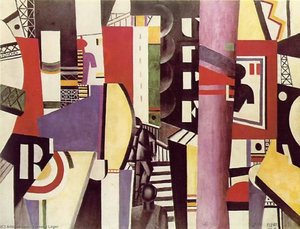
Fernand Léger's "untitled (749)," a captivating monochrome drawing, isn’t merely a depiction of figures on bicycles; it’s a vibrant snapshot of the burgeoning modernity that gripped Europe in the early 20th century. Created around 1930, this piece embodies Léger’s signature “Tubism,” a style he pioneered – a bold departure from traditional representation that sought to capture the essence of industrial life and its impact on human experience. The drawing pulsates with an energy born from simplified forms, geometric precision, and a deliberate fragmentation of perspective, inviting viewers into a world where the familiar is subtly transformed.
Léger’s approach to Cubism wasn't about replicating reality; it was about distilling it. He moved beyond Picasso and Braque’s initial explorations of fractured planes, developing a more streamlined aesthetic. “untitled (749)” exemplifies this with its flattened perspective – figures are presented simultaneously from multiple viewpoints, creating an illusion of depth through overlapping forms rather than traditional spatial relationships. The bicycles themselves aren't rendered realistically; instead, they become stylized machines, their wheels and frames reduced to essential geometric shapes. This deliberate simplification isn’t a rejection of detail, but a conscious choice to highlight the underlying structure and mechanics of the scene.
More than just an observation of urban life, “untitled (749)” speaks to the transformative power of industrialization. Léger was deeply fascinated by machines and their impact on society, viewing them as both a source of progress and a potential threat to traditional ways of life. The figures interacting with the bicycles can be interpreted as representing humanity’s adaptation to this new reality – embracing the speed and efficiency of modern transportation while grappling with its implications for social interaction and individual identity. The monochrome palette further emphasizes this industrial theme, evoking the cold steel and functional surfaces of factories and machines.
The drawing's composition suggests a sense of hurried movement, mirroring the pace of life in an increasingly mechanized world.Fernand Léger was a pivotal figure in the transition from early Cubism to more accessible forms of modern art. His work paved the way for Pop Art, demonstrating that everyday subjects—like bicycles and urban scenes—could be elevated to the level of artistic expression. His exploration of industrial themes resonated with a generation grappling with rapid technological advancements and societal change. Léger’s influence extends beyond painting; his distinctive style has been adopted by designers, architects, and filmmakers, solidifying his place as a key innovator in 20th-century art. Reproductions of “untitled (749)” offer a tangible connection to this groundbreaking artist and his enduring vision.
Today, "untitled (749)" stands as a testament to Léger’s unique ability to capture the spirit of an era—a dynamic blend of mechanization, movement, and human interaction that continues to resonate with audiences today.
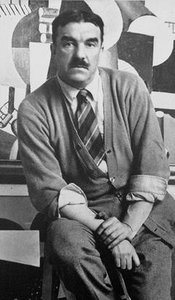
1881 - 1955 , Frankrijk

Ontdek de subtiele kracht van zwart, wit en grijs in hoteldesign. Expert tips voor licht, textuur & moderne architectuur. Creëer rustgevende, luxe ruimtes met BuyPopArt.

Explore the revolutionary world of Early Modernism! Discover key artists like Picasso & Léger, pivotal movements, and lasting philosophical influences. Uncover the seeds of change that shaped 20th-century art.

Ontdek de 10 meest invloedrijke kubistische meesterwerken van Picasso, Braque & meer. Leer over kunstgeschiedenis en technieken achter deze iconische werken. Museumkwaliteit reproducties op BuyPopArt.com!

Ontdek de 10 baanbrekende meesterwerken van het Cubisme, met iconische werken van Picasso & Braque. Leer over kunstgeschiedenis en vind museumkwaliteit reproducties voor uw interieur op BuyPopArt.com.
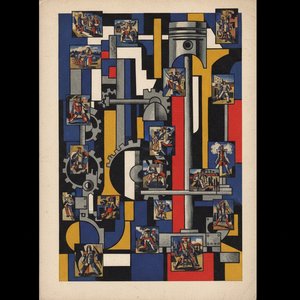
Ontdek de 25 meest iconische werken van Fernand Léger! Duik in zijn kubistische wereld, machine esthetiek & kleurrijke composities. Vind museumkwaliteit kunst reproducties en interieur inspiratie op BuyPopArt.com.


Blijf op de hoogte van het laatste kunstnieuws, exclusieve aanbiedingen en decoratie-ideeën.
Vertel ons over uw project en onze kunstexperts geven u 3 gepersonaliseerde kunstsuggesties.
Wij stellen drie opties speciaal voor u samen – gratis!


 Voorvertoning
 Verstuur
 Delen
Delen
 Details bekijken

 Download
 Vergelijkbare items
 Röntgenonderzoek
 Diavoorstelling

 Lees meer







 De optie voor glas is alleen beschikbaar bij een formaat kleiner dan 110 cm.