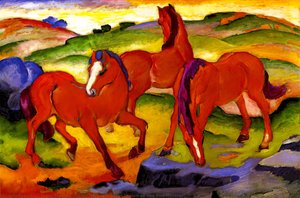
Woodblock PrintGerman Expressionism
 33.0 x 30.0 cm
 Franz Marc Museum
Giclée- of canvasafdruk van museumkwaliteit met een snelle productie en flexibele afwerkingsmogelijkheden. ( Bestel handgeschilderde reproductie Koop afbeelding)





























Kies uit onze vooraf ingestelde maten die overeenkomen met de originele verhoudingen van het kunstwerk.

U kunt uw eigen afmetingen opgeven om in een specifieke lijst of ruimte te passen. Als de door u gekozen maat niet overeenkomt met de proporties van het originele kunstwerk, zullen wij de afbeelding bijsnijden of uitbreiden met een gespiegelde of effen rand. Een digitaal mockup wordt ter goedkeuring naar u verzonden voordat de productie begint.
Houd er rekening mee dat de preview op het scherm de werkelijke bijsneding of uitbreiding niet weergeeft. Alleen de mockup toont de uiteindelijke compositie nauwkeurig.
Hoewel aangepaste maten beschikbaar zijn, raden wij aan een afmeting uit de vooraf bepaalde lijst te kiezen om de originele proporties te behouden.
Wereldwijde levering () binnen 2 weken in plaats van de standaard 4/5 weken. (16 augustus)


Tiger
Afmetingen reproductie
Franz Marc’s “Tiger,” a striking woodcut print from 1912, isn’t merely a depiction of an animal; it’s a profound meditation on the interconnectedness of nature and the spiritual realm. Created during a period of intense personal and artistic exploration for the German Expressionist painter, this work embodies Marc's lifelong fascination with animals as symbols of primal instinct, intuition, and ultimately, a connection to something larger than the human ego. The image immediately commands attention – a powerful, almost overwhelming presence of the tiger rendered in stark black ink against a subtly textured cream-colored background. It’s a visual statement that transcends simple representation, inviting viewers into a world where form and feeling are inextricably linked.
Marc's mastery lies in his deliberate manipulation of line – a defining characteristic of woodcut printing. The bold, graphic lines delineate the tiger’s muscular form with an almost brutal honesty, yet they are simultaneously softened by the artist’s expressive hand. Notice how he employs hatching and cross-hatching to suggest texture and volume, creating a sense of depth without relying on traditional shading techniques. This technique isn't about replicating reality; it’s about conveying the *essence* of the tiger – its power, its wildness, its vital energy – through the controlled application of line. The deliberate flatness of the image, a consequence of the woodcut process, contributes to a feeling of immediacy and raw emotion, pulling the viewer directly into the heart of the scene.
“Tiger” is deeply rooted in Marc’s spiritual beliefs. He viewed animals as embodiments of divine qualities – courage, strength, instinct, and a connection to the earth. The tiger itself represents primal energy, untamed spirit, and the forces of nature. The surrounding elements—birds circling overhead, a snake slithering through the undergrowth—further amplify this symbolism, creating a microcosm of the natural world teeming with life and interconnectedness. Marc’s choice of monochrome – black ink on cream paper – is crucial to understanding the work's emotional impact. It strips away any distractions, focusing solely on form, line, and the inherent drama of the subject matter. The limited palette evokes a sense of timelessness and universality, suggesting that this primal scene transcends specific time or place.
“Tiger” is a quintessential example of German Expressionism, a movement characterized by its subjective interpretation of reality and its emphasis on emotional expression. Unlike academic art that sought to represent the world accurately, Expressionists aimed to convey their inner feelings and perceptions through distorted forms, jarring colors (though Marc’s work avoids color), and emotionally charged imagery. Marc's exploration of spirituality within his art is a hallmark of this movement. He wasn’t interested in simply depicting a tiger; he was trying to capture its *spirit*, its essence – the feeling it evokes within him. The image resonates with a sense of both power and vulnerability, reflecting Marc’s own complex relationship with nature and the human condition. It's a work that invites contemplation, prompting viewers to consider their own connection to the natural world and the deeper mysteries of existence.
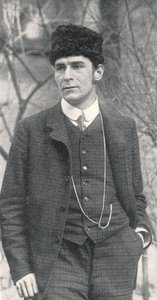
1880 - 1916 , Duitsland

Ontdek de 10 meest iconische Expressionistische meesterwerken! Duik in de emotionele wereld van Kirchner, Kandinsky & Nolde. Museumkwaliteit kunst reproducties voor uw interieur. Exploreer de collectie op BuyPopArt.com.

Ontdek de top 25 meesterwerken van Marc Chagall! Duik in zijn kleurrijke wereld vol dromen, symbolisme & Joodse folklore. Bekijk kunstgeschiedenis, technieken en vind museumkwaliteit reproducties voor uw interieur op BuyPopArt.com.

Explore the profound world of Franz Marc's Expressionist paintings. Discover his spiritual connection to animals, innovative use of color, and lasting impact on modern art history. Learn more at BuyPopArt.

Ontdek de betekenis en schoonheid van dierenkunst door de eeuwen heen. Laat u inspireren voor uw interieur met onze collectie schilderijen & reproducties bij .
Ontdek de kracht van donker! Verlies jezelf in onze top 10 zwarte schilderijen, van Caravaggio tot Manet. Leer over meesterwerken, technieken & emotie. Museumkwaliteit reproducties op BuyPopArt.com – Kunst voor uw interieur.


Blijf op de hoogte van het laatste kunstnieuws, exclusieve aanbiedingen en decoratie-ideeën.
Vertel ons over uw project en onze kunstexperts geven u 3 gepersonaliseerde kunstsuggesties.
Wij stellen drie opties speciaal voor u samen – gratis!


 Voorvertoning
 Verstuur
 Delen
Delen
 Details bekijken

 Download
 Vergelijkbare items
 Röntgenonderzoek
 Diavoorstelling
 Lees meer







 De optie voor glas is alleen beschikbaar bij een formaat kleiner dan 110 cm.