

 Contemporary Realism
 1920
1920 11.0 x 3.0 cm
 Museo Art Nouveau y Art Déco - Casa Lis
Giclée- of canvasafdruk van museumkwaliteit met een snelle productie en flexibele afwerkingsmogelijkheden. ( Bestel een handgeschilderde reproductie van dit verzamelobject Naar afbeelding wisselen)
Kies uit onze vooraf ingestelde maten die overeenkomen met de originele verhoudingen van het kunstwerk.

U kunt uw eigen afmetingen opgeven om in een specifieke lijst of ruimte te passen. Als de door u gekozen maat niet overeenkomt met de proporties van het originele kunstwerk, zullen wij de afbeelding bijsnijden of uitbreiden met een gespiegelde of effen rand. Een digitaal mockup wordt ter goedkeuring naar u verzonden voordat de productie begint.
Houd er rekening mee dat de preview op het scherm de werkelijke bijsneding of uitbreiding niet weergeeft. Alleen de mockup toont de uiteindelijke compositie nauwkeurig.
Hoewel aangepaste maten beschikbaar zijn, raden wij aan een afmeting uit de vooraf bepaalde lijst te kiezen om de originele proporties te behouden.
Wereldwijde levering () binnen 2 weken in plaats van de standaard 4/5 weken. (5 augustus)


Grasshopper
Formaat reproductie
Franz Xaver Bergmann (July 27, 1861 – January 1, 1936) was a prominent Viennese foundry owner who became renowned for the production of exquisitely detailed and colorful patinated bronze sculptures. Though often mistakenly referred to as a sculptor himself, Bergmann’s true talent lay in his entrepreneurial skill and mastery of the casting process.
Born in Vienna, Austria, Bergmann inherited a family tradition in metalwork. His father, Franz Bergmann, was a skilled chaser who had established a small bronze factory in 1860 after relocating from Gablonz. This foundation provided young Franz Xaver with an early exposure to the intricacies of bronze production and laid the groundwork for his future success.
Franz Xaver Bergmann took over the family business and, in 1900, opened a new and expanded foundry. This marked a significant turning point, allowing him to increase production and diversify the range of bronze objects created. Many early designs continued to draw upon his father’s established workshop repertoire, ensuring a consistent level of quality and artistic merit.
Bergmann's foundry became celebrated for its diverse output, encompassing:
His work is characterized by meticulous detail, vibrant cold-painting techniques, and a playful approach to form. The bronzes often exhibit a remarkable sense of movement and personality.
It’s crucial to understand that Bergmann was not the sculptor in most cases; he was a foundry owner who employed numerous anonymous sculptors on a temporary basis. He expertly managed the casting, patination, and finishing processes, bringing their designs to life with exceptional quality. Bruno Zach, another notable artist, occasionally collaborated with Bergmann, utilizing his foundry for certain works – some of which were signed under the pseudonym ‘Prof. Tuch’.
Bergmann's bronzes are typically marked with either a letter 'B' within an urn-shaped cartouche or 'nam greb' – 'bergman' spelled in reverse. The latter signature was specifically used on erotic pieces to conceal his direct involvement.
Bergmann’s foundry played a significant role in the flourishing of decorative arts during the Art Nouveau period. His bronzes were highly sought after by collectors and remain popular today, representing a unique blend of artistic skill, technical expertise, and entrepreneurial vision. He successfully catered to a growing demand for luxurious and exotic objects, leaving behind a lasting legacy in the world of bronze sculpture.

1861 - 1936 , Austria

Ontdek de subtiele kracht van zwart, wit en grijs in hoteldesign. Expert tips voor licht, textuur & moderne architectuur. Creëer rustgevende, luxe ruimtes met BuyPopArt.

Transform your cherished travel photos into timeless oil paintings with expert artists at BuyPopArt.com. Museum-quality reproductions & custom portraits – preserve your memories beautifully.

Explore the life & art of Franz Xaver Winterhalter, the celebrated court painter of the 19th century. Discover his exquisite portraits of royalty and aristocracy – a symbol of prestige and refined taste.
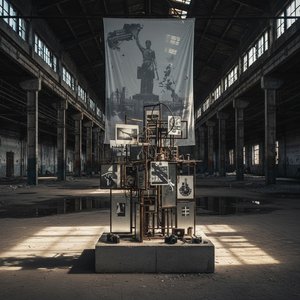
Explore the compelling work of Ukrainian artist Pavlo Makov, renowned for his conceptual photography deconstructing Soviet legacy. Discover his unique artistic process and investment potential.
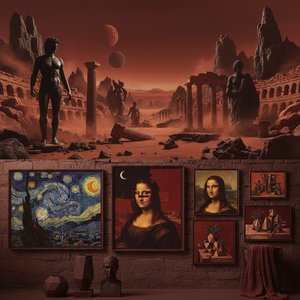
Ontdek de kracht van 'Mars Black' in 10 iconische schilderijen! Van Rembrandt tot Manet, duik in de donkere esthetiek en emotionele diepgang van meesterwerken. Vind museumkwaliteit reproducties & decoratie-inspiratie op BuyPopArt.com.


Blijf op de hoogte van het laatste kunstnieuws, exclusieve aanbiedingen en inspirerende interieurideeën.
Vertel ons over uw project en onze kunstexperts geven u 3 gepersonaliseerde kunstsuggesties.
Wij stellen 3 opties speciaal voor u samen – Gratis!


 Bekijk op ware grootte
 Verstuur
 Delen
Delen
 Details bekijken

 Download
 Vergelijkbare werken
 Röntgenonderzoek
 Diavoorstelling
 Lees meer




































 De optie voor glas is alleen beschikbaar bij een formaat kleiner dan 110 cm.


