

 Oil On CanvasWallArtNeo-Expressionism
 1983Contemporary
 280.0 x 450.0 cm
 Kunsthaus Zürich
Met de hand geschilderd in olieverf op canvas in uw gewenste maat en lijst, op bestelling gemaakt door onze kunstenaars. ( Bestel print Koop afbeelding)
Kies uit onze vooraf ingestelde maten die overeenkomen met de originele verhoudingen van het kunstwerk.

U kunt uw eigen afmetingen invoeren om in een specifieke lijst of ruimte te passen. Als de door u gekozen maat niet overeenkomt met de verhoudingen van het originele beeld, zullen we het kunstwerk bijsnijden of het schilderij uitbreiden met extra handgeschilderde elementen. Een digitale mockup wordt ter goedkeuring naar u verzonden voordat de productie begint.
Houd er rekening mee dat de preview op het scherm niet de werkelijke uitsnede of uitbreiding weergeeft. Alleen de mockup toont de uiteindelijke compositie nauwkeurig.
Hoewel aangepaste afmetingen mogelijk zijn, raden we aan een maat uit de vooraf gedefinieerde lijst te selecteren om de originele verhoudingen te behouden.
Wereldwijde levering () binnen 3 tot 4 weken in plaats van de standaard 5 weken. (17 augustus). Zonder concessies aan de kwaliteit.


Supper in Dresden
Afmetingen reproductie
In the vast, commanding expanse of Supper in Dresden, viewers are invited into a world where reality is turned on its head—quite literally. This monumental oil on canvas, stretching over four meters in length, serves as a profound testament to the genius of Georg Baselitz, one of the most provocative voices of the Neo-Expressionist movement. At first glance, the painting presents a chaotic, almost feverish gathering around a long dining table, yet beneath this surface of disarray lies a deeply layered exploration of identity and artistic heritage. The composition oscillates between recognizable figuration and robust, chromatic harmonies, where striking shades of pink, blue, and black collide to create a sense of restless energy that captures the eye and refuses to let go.
The technique employed by Baselitz in this 1983 masterpiece is nothing short of revolutionary. By famously inverting his subjects, he de-emphasizes the literal content of the scene to bring the raw materiality of painting—the brushstroke, the texture, and the color—to the forefront. This deliberate subversion forces the viewer to look past the "what" of the image and instead experience the "how." The central figure, with eyes and mouth agape in a silent, haunting cry, dominates the canvas, acting as an emotional anchor amidst the surrounding figures who seem to drift toward the edges of the frame. This tension between the central focus and the peripheral movement creates a psychological depth that makes the work feel alive, breathing with a nervous, almost agonized vitality.
Beyond its striking visual impact, Supper in Dresden is steeped in historical symbolism and personal reflection. While the motif of a shared meal evokes the sacred tradition of the Last Supper, Baselitz uses this framework to pay homage to the birth of German Expressionism. The painting serves as a spectral gathering of the Die Brücke group; the agitated figure on the left is widely identified as Ernst Ludwig Kirchner, while the commanding central presence represents Karl Schmidt-Rotluff. In a brilliant display of painterly trickery, the figures of Otto Müller and Erich Heckel are merged into a single, shared body, blurring the lines between individual identity and collective artistic spirit. It is a poignant tribute to the roots of a movement that sought to express raw emotion through distorted forms.
For the discerning collector or interior designer, a high-quality reproduction of this work offers more than just a decorative element; it provides a profound conversational centerpiece. The sheer scale and the dramatic interplay of light and shadow make it an ideal choice for grand spaces, such as contemporary galleries, sophisticated lofts, or stately dining rooms. Owning a piece that captures Baselitz’s unique ability to transform historical trauma and artistic rebellion into breathtaking visual poetry allows one to bring a sense of intellectual depth and avant-garde elegance into any environment. It is a work that does not merely decorate a wall—it commands the room, inviting endless contemplation of the beauty found in the upside-down.
Born Hans-Georg Bruno Kern on January 23, 1938, in the small German village of Deutschbaselitz, the artist who would become known to the world as Georg Baselitz was a child of profound transition and upheaval. Growing up in the Upper Lusatia region amidst the literal and metaphorical rubble of World War II, his early consciousness was inextricably linked to themes of destruction, displacement, and the fractured order of a shattered society. This formative environment—marked by the loss of community and the lingering trauma of occupation—became the bedrock of his artistic vision. The devastation he witnessed did not merely provide subject matter; it instilled in him an urgent, lifelong need to question established conventions and to explore the very nature of perception through the lens of a world that had been turned upside down.
His early artistic inclinations were nurtured by a deep intellectual curiosity and significant cultural encounters. The influence of his father, an elementary school teacher, fostered a disciplined approach to observation, while the profound writings of Jakob Böhme provided a spiritual and philosophical complexity to his worldview. A pivotal moment in his development occurred when he encountered Louis-Ferdinand von Rayski’s Wermsdorfer Wald at a local school assembly. This masterpiece of realism ignited a fascination with capturing visual truth, leading him to produce portraits, religious subjects, and landscapes that, even in his youth, hinted at a more futuristic and unsettling vision.
As the art world moved toward the sterile intellectualism of Minimalism and Conceptual Art in the 1960s, Baselitz staged a visceral rebellion. He became a leading voice of Neo-Expressionism, a movement that sought to reclaim the raw power and emotional intensity of figurative painting. However, his contribution was far from a simple return to tradition. In 1969, Baselitz introduced one of the most radical innovations in modern art: the technique of painting his subjects upside down. This deliberate inversion was not a mere gimmick; it was a profound attempt to strip the subject of its representational, content-driven character. By turning the figure on its head, he forced the viewer to confront the artifice of the painting itself—to look past the "what" of the image and focus instead on the texture, color, and the physical reality of the paint on canvas.
This period saw the emergence of works that challenged the very boundaries of the medium. His compositions often oscillated between recognizable figuration and a chaotic, feverish energy. In monumental pieces like Supper in Dresden, he reimagined historical narratives through a lens of disarray and chromatic collision, using striking shades of pink, blue, and black to create a sense of restless, uncontainable energy. His work during this era functioned as an excavation of the human condition, utilizing distortion to express vulnerability and the inherent instability of memory and identity.
Throughout his prolific career, Baselitz’s artistic language has been a complex tapestry woven from myriad influences, ranging from the starkness of Socialist Realism and the dramatic tension of Mannerism to the primal rhythms of African sculpture. This eclectic synthesis allowed him to create a body of work that feels both deeply rooted in German history and universally resonant in its exploration of existential struggle. Whether through his commanding oil paintings, his evocative sculptures, or his intricate graphic works, Baselitz has remained steadfast in his commitment to a style characterized by unsettling honesty.
The historical significance of Georg Baselitz lies in his ability to transform the trauma of the past into a revolutionary aesthetic for the future. He did not merely document destruction; he used it as a tool to rebuild the language of painting. His achievements include:
Today, Baselitz stands as one of the most influential figures of the twentieth century, a painter whose work remains a powerful testament to the resilience of creativity in the face of chaos.

1938 -
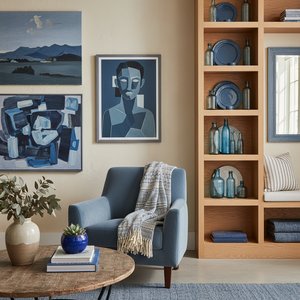
Ontdek 10 beroemde schilderijen gedomineerd door de prachtige tint 'Slate Blue'. Van Monet tot Van Gogh, leer over kunstgeschiedenis & techniek. Museumkwaliteit reproducties voor uw interieur op BuyPopArt.com! Ontdek de collectie online.
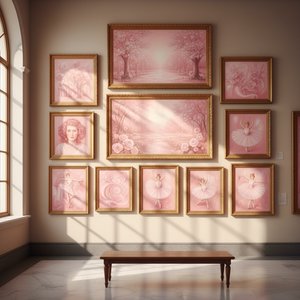
Ontdek de top 10 beroemde schilderijen gedomineerd door zachtroze tinten! Van Monet tot Renoir, bewonder meesterwerken uit het impressionisme & romantiek. Vind kunst reproducties van hoge kwaliteit en decoratie inspiratie op BuyPopArt.com.
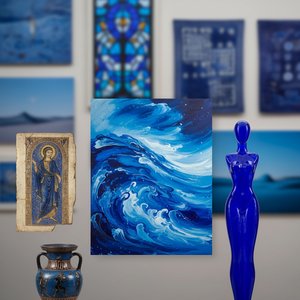
Explore the rich history of blue in art! Discover its symbolism, from ancient pigments to modern masterpieces by Kandinsky & Seurat. Uncover the psychological impact and cultural meanings behind this captivating hue.

Ontdek 10 beroemde schilderijen in warme 'paddestoel' tinten! Van Gogh, Monet & meer. Laat je inspireren door kunstgeschiedenis en creëer een elegante sfeer met museumkwaliteit reproducties op BuyPopArt.com.

Ontdek 10 beroemde schilderijen die baden in zandkleuren! Van Monet tot Rembrandt, leer de verhalen achter deze meesterwerken. Vind museumkwaliteit kunst reproducties & interieurinspiratie op BuyPopArt.com.


Blijf op de hoogte van het laatste kunstnieuws, exclusieve aanbiedingen en decoratie-ideeën.
Vertel ons over uw project en onze kunstexperts geven u 3 gepersonaliseerde kunstsuggesties.
Wij stellen drie opties speciaal voor u samen – gratis!


 Voorvertoning
 Verstuur
 Delen
Delen
 Details bekijken

 Download
 Vergelijkbare items
 Röntgenonderzoek
 Diavoorstelling
 Lees meer




































 De optie voor glas is alleen beschikbaar bij een formaat kleiner dan 110 cm.


