

Giclée- of canvasafdruk van museumkwaliteit met een snelle productie en flexibele afwerkingsmogelijkheden. ( Bestel handgeschilderde reproductie Koop afbeelding)
Kies uit onze vooraf ingestelde maten die overeenkomen met de originele verhoudingen van het kunstwerk.

U kunt uw eigen afmetingen opgeven om in een specifieke lijst of ruimte te passen. Als de door u gekozen maat niet overeenkomt met de proporties van het originele kunstwerk, zullen wij de afbeelding bijsnijden of uitbreiden met een gespiegelde of effen rand. Een digitaal mockup wordt ter goedkeuring naar u verzonden voordat de productie begint.
Houd er rekening mee dat de preview op het scherm de werkelijke bijsneding of uitbreiding niet weergeeft. Alleen de mockup toont de uiteindelijke compositie nauwkeurig.
Hoewel aangepaste maten beschikbaar zijn, raden wij aan een afmeting uit de vooraf bepaalde lijst te kiezen om de originele proporties te behouden.
Wereldwijde levering () binnen 2 weken in plaats van de standaard 4/5 weken. (15 augustus)


Cloître de l
Afmetingen reproductie
Born in Caen, France, in 1845, Henri Magron’s life was a testament to the burgeoning possibilities of photography during a period when the medium was still finding its footing. While not a household name today, Magron deserves recognition as one of the earliest and most innovative figures in French photographic illustration – a crucial bridge between the nascent art form and the rise of illustrated books. His career spanned several decades, marked by a dedication to capturing the beauty of Normandy and experimenting with techniques that anticipated later developments in image-making.
Magron’s early artistic training began under the tutelage of Edmond Bacot and Frédéric Barjot, skilled photographers who instilled in him a foundational understanding of the craft. This initial guidance proved invaluable as he embarked on his own photographic journey. Unlike many of his contemporaries focused solely on portraiture or landscape, Magron quickly recognized the potential of photography to visually narrate stories within printed media. He wasn’t simply documenting; he was actively shaping and directing the image to serve a specific purpose – to enhance and illuminate written text.
Magron's most significant contribution lies in his pioneering work illustrating books with photographs. In 1889, he meticulously crafted images for Alphonse Daudet’s ‘L’Élixir du Révérend Père Gaucher,’ a landmark publication that demonstrated the power of photographic illustration to create atmosphere and deepen the reader's experience. This wasn’t merely pasting in pre-existing photographs; Magron carefully staged scenes, manipulated lighting, and employed techniques like dodging and burning to achieve specific effects – a level of artistic control rarely seen at the time. His work went beyond simple reproduction; he used photography as a tool for storytelling, creating mood and character.
Further solidifying his reputation was his involvement in ‘La Normandie Monumentale et Pittoresque,’ a comprehensive survey of Normandy’s history and landscapes. This ambitious project showcased Magron's ability to capture the region’s diverse beauty – from its dramatic coastlines to its charming villages. He wasn’t just recording; he was presenting a carefully curated vision of Normandy, utilizing photographic techniques to evoke a sense of place and time.
Magron's dedication to photography extended beyond commercial projects. He was an active member of the Société Caennaise de Photographie, a prominent organization dedicated to promoting the art form in Caen. This engagement highlights his commitment to fostering a community of photographers and sharing knowledge.
In 1911, seeking respite from the demands of his career, Magron retired to Dives-sur-Mer. He passed away on January 15, 1927, at the age of 82, leaving behind a legacy as one of France’s earliest and most influential photographic illustrators. While he may not be widely celebrated today, his work remains a valuable testament to the creative potential of photography in the late 19th century – a period when it was still evolving from a technical curiosity into a powerful artistic medium.
Magron's work emerged during a period of rapid technological advancement in photography. The development of dry plate photography made the process more accessible, while advancements in lens technology allowed for sharper images with greater detail. However, Magron’s contribution lies not just in utilizing these new tools but in pushing the boundaries of what was considered possible with photographic illustration. He demonstrated that photography could be used to create artful and evocative images within printed media – a concept that would profoundly influence subsequent generations of illustrators and artists.

1845 - 1927 , France
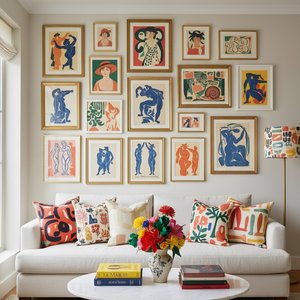
Ontdek de top 25 meesterwerken van Henri Matisse! Duik in de wereld van Fauvisme, kleurrijke composities & expressieve kunst. Vind museumkwaliteit reproducties en decoratie-inspiratie op BuyPopArt.com. Exploreer de collectie online!

Ontdek de 10 meest invloedrijke meesterwerken van documentaire fotografie! Van Robert Capa tot Dorothea Lange, leer het verhaal achter iconische zwart wit foto's. Vind museumkwaliteit reproducties & decoratie inspiratie op BuyPopArt.com.

Explore photography's pivotal role in shaping modern & contemporary art. Discover key movements, influential artists like Stieglitz, and expert collecting advice from BuyPopArt.

Explore the rich history & artistic power of black and white photography. From early techniques to iconic masters like Ansel Adams, discover why monochrome continues to captivate art lovers today. Expert insights for collectors.

Explore the powerful history of documentary photography – from its origins to contemporary masters like Gordon Parks & W. Eugene Smith. Discover how this art form shapes our understanding of society and witness pivotal moments in time.


Blijf op de hoogte van het laatste kunstnieuws, exclusieve aanbiedingen en decoratie-ideeën.
Vertel ons over uw project en onze kunstexperts geven u 3 gepersonaliseerde kunstsuggesties.
Wij stellen drie opties speciaal voor u samen – gratis!


 Voorvertoning
 Verstuur
 Delen
Delen
 Details bekijken

 Download
 Vergelijkbare items
 Röntgenonderzoek
 Diavoorstelling

 Lees meer




































 De optie voor glas is alleen beschikbaar bij een formaat kleiner dan 110 cm.


