PreviewPreview AR previewAR preview Switch to Print Switch to PrintSwitch to hand made Painting Switch to hand made Painting VerstuurVerstuur
Details bekijkenDetails bekijken Toevoegen aan favorieten Toevoegen aan favorieten DownloadDownload Vergelijkbare werkenVergelijkbare werken RöntgenonderzoekRöntgenonderzoek DiavoorstellingDiavoorstelling

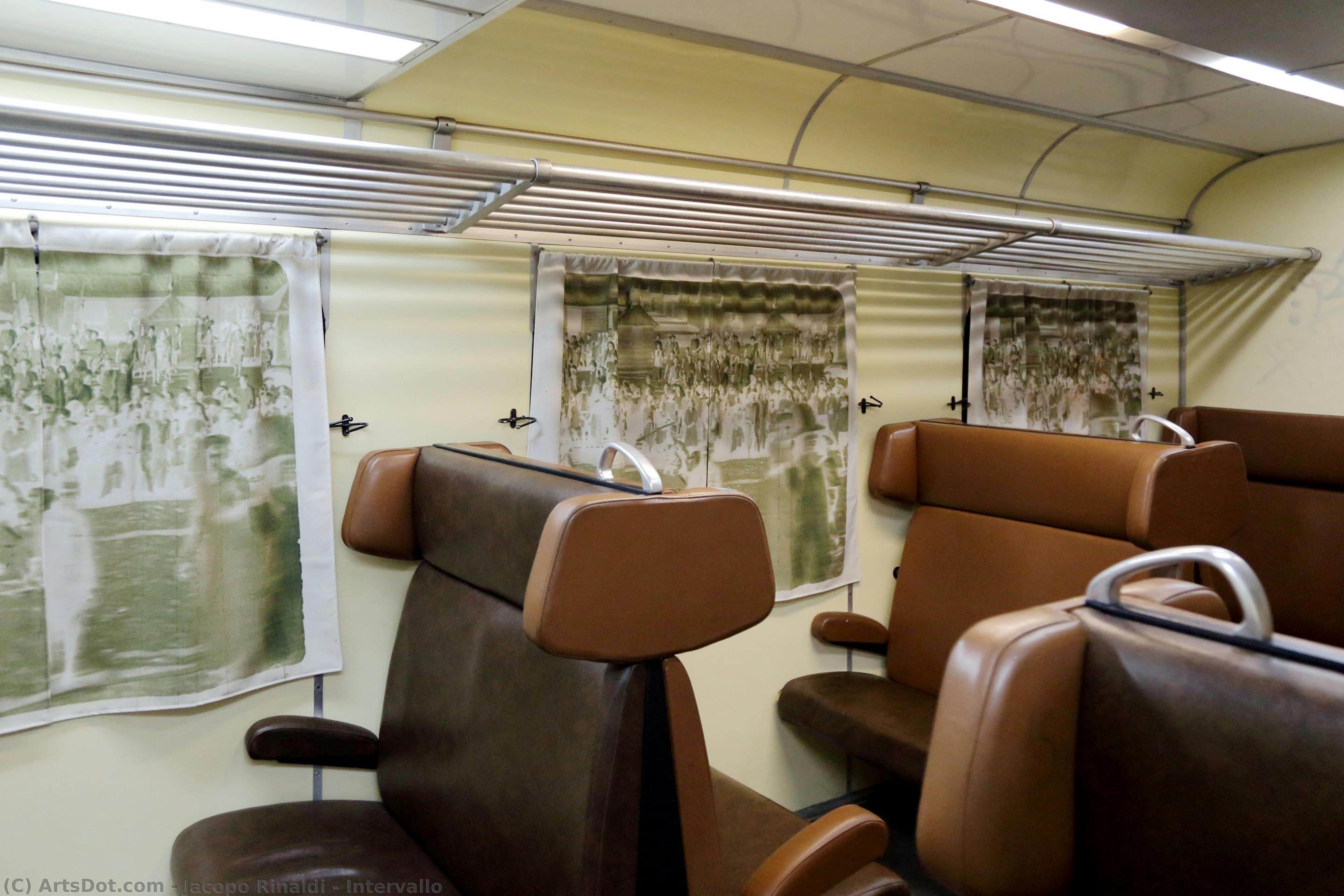
Intervallo

Explore 'Intervallo' by Jacopo Rinaldi – a captivating moving installation blending archive footage & train nostalgia. Italian art, documentary style, evokes travel & memory.

Discover Jacopo Rinaldi, Italian artist exploring memory & time through archive materials. Exhibitions, awards, and residency programs highlight his unique visual arts style.

Koop een digitale afbeelding met hoge resolutie en verbeterde kwaliteit, die veel superieur is aan de online voorvertoning.

Elk bestand wordt met uiterste precisie voorbereid door onze interne specialisten, met behulp van geavanceerde tools en deskundige handmatige retouche. Wij garanderen dat elke afbeelding een uitzonderlijke helderheid, nauwkeurige kleurweergave en verfijnde details bezit.

Het uiteindelijke bestand wordt binnen 72 uur per e-mail geleverd, geoptimaliseerd voor direct gebruik in professionele, redactionele en printomgevingen. Dit is dezelfde kwaliteit waarop topontwerpstudio's, uitgevers en galerieën vertrouwen.

Digitale afbeeldingen

Download een bestand met hoge resolutie voor persoonlijke weergave, afdrukken en creatieve projecten. (Switch to Print Switch to PrintSwitch to hand made Painting Switch to hand made Painting)

Totaalbedrag

$9.99

Inbegrepen bij elke bestelling van een digitale afbeelding

Professionele digitale levering, gegarandeerd

Wanneer u kiest voor BuyPopArt.com, ontvangt u niet alleen een afbeelding – u krijgt een professioneel verbeterd digitaal kunstwerk, met precisie vervaardigd en voorzien van een tevredenheidsgarantie. Dit is alles wat automatisch bij uw bestelling is inbegrepen:

shipping_icon
Snelle digitale levering

Uw hoogwaardige digitale afbeeldingsbestand wordt binnen 72 uur na bestelling naar u gemaild – klaar voor direct gebruik.

canvas_icon
Met AI verbeterd digitaal bestand

Uw kunstwerk wordt professioneel geoptimaliseerd met behulp van geavanceerde AI-tools en handmatige bewerkingen, waardoor maximale details, helderheid en kleurnauwkeurigheid worden gegarandeerd.

insurance_icon
Gratis levenslange herlevering van digitale afbeeldingen

Je bestand per ongeluk verwijderd of kwijtgeraakt? Geen zorgen – we sturen het u op elk gewenst moment gratis opnieuw toe.

tax_icon
Geen invoerkosten - Altijd

Geniet direct van uw kunstwerk zonder invoerrechten, belastingen of verzendkosten – digitale downloads zijn altijd belastingvrij.

color_icon
Garantie op kleurgetrouwheid

Met behulp van professionele hulpmiddelen en kleurbeheer zorgen wij ervoor dat uw digitale afbeelding de originele kleuren zo nauwkeurig mogelijk weergeeft.

return_icon
60 dagen tevredenheidsgarantie

Als u niet tevreden bent met uw digitale afbeelding, passen wij deze aan of storten wij 100% terug binnen 60 dagen – zonder vragen gesteld.

guarantee_icon
100% Geld-terug-garantie

Niet tevreden? Ontvang binnen 60 dagen na ontvangst van uw digitale bestand uw volledige aankoopbedrag terug – zonder vragen te stellen.

discount_icon
Korting bij grote bestellingen

Koop 3 afbeeldingen, bespaar 10% - Koop 5, bespaar 15% - Koop 10+, bespaar 20%. Ideaal voor creatieve projecten, galerieën en bureaus.

Beschrijving verzamelobject

Intervallo is a moving piece on a railcar crossing Salento from Lecce to Gagliano del Capo, southern Italy. The installation consists in the substitution of a train window shades with printed curtains reproducing still shots from a 1935 newsreel. The sequence is a one-second footage divided into the number of the train windows. The original footage is a tracking shot which was caught through the windows of a newly produced Littorina railcar during the fascist regime. Since then “littorina” became an Italian commonly used term indicating railway cars. The train station

Kunstenaarsbiografie

Early Life and Formation in Rome

Jacopo Rinaldi, born in Rome in 1988, emerged from a city steeped in layers of history—a landscape that would profoundly shape his artistic vision. His early exposure to the Eternal City’s complex narrative, its palimpsest of eras and ideologies, instilled within him a fascination with memory, time, and the very nature of representation. This formative period wasn't simply about observing Rome’s grandeur; it was about sensing the echoes beneath the surface, the stories held within its stones and archives. Rinaldi’s academic path reflected this inclination, beginning with studies at the Academy of Fine Arts in Rome before expanding his focus to visual arts and curatorial studies at NABA in Milan. This dual pursuit—the creation of art alongside a critical engagement with its presentation and context—would become a defining characteristic of his practice. The foundational years were crucial in establishing not only his technical skills but also his conceptual framework, setting the stage for an exploration that would increasingly intertwine personal investigation with broader historical inquiries.

The Szeemann Archive and Early Exhibitions

A pivotal moment in Rinaldi’s development came with his involvement at the Szeemann Archive starting in 2011. Working within this repository of art historical documentation—the legacy of the influential curator Harald Szeemann—provided him with unprecedented access to a wealth of materials, methodologies, and perspectives. The archive wasn't merely a collection of objects; it was a living testament to the power of artistic research and critical thinking. This experience profoundly influenced his approach, fostering a deep engagement with archival sources as both subject matter and medium. His early exhibitions began to reflect this sensibility, often incorporating found materials, documents, and ephemera to explore themes of collective memory and historical reconstruction. These weren’t simply displays of artifacts; they were carefully constructed narratives designed to provoke questions about the construction of history itself—how it is recorded, interpreted, and ultimately remembered (or forgotten).

Themes of Memory, Time, and Image

Rinaldi's work consistently orbits around the elusive nature of memory. He doesn’t seek to *reconstruct* the past in a literal sense but rather to excavate its fragments, revealing the inherent subjectivity and instability of historical accounts. This is often achieved through his skillful manipulation of archive materials—photographs, documents, texts—which are presented not as definitive evidence but as traces of lived experience, imbued with their own biases and limitations. Time itself becomes a central concern, explored not as a linear progression but as a layered and fragmented phenomenon. His installations frequently employ moving images and sound to create immersive environments that evoke a sense of temporal disorientation, challenging viewers to confront the complexities of historical perception. The image, in Rinaldi’s work, is never neutral; it's always mediated by context, interpretation, and the passage of time.

Major Achievements and Recognition

Rinaldi’s artistic trajectory has been marked by a growing recognition within the contemporary art world. His participation in residency programs has allowed him to expand his research into new territories, fostering collaborations and deepening his engagement with diverse cultural contexts. The exhibition *Intervallo*, for example—a captivating moving installation blending archive footage and train nostalgia—demonstrates his ability to evoke powerful emotional responses through subtle yet evocative juxtapositions. His work was featured in the ninth edition of *Portfolio* at the Quadriennale di Roma, a significant platform for emerging Italian artists. The piece presented there, *iio sono un disgraziato il mio destino è di morir in prigione strangolato*, exemplifies his critical approach to historical memory and the problematic categorization of individuals based on physical characteristics. This achievement, along with numerous other solo and group exhibitions, underscores his growing influence within the Italian art scene.

Historical Significance and Future Directions

Jacopo Rinaldi’s work occupies a unique space within contemporary artistic discourse. He isn't simply an artist who *uses* archives; he is an artist who interrogates the very foundations of archival practice—its power structures, its biases, and its inherent limitations. His exploration of memory, time, and image resonates with broader theoretical concerns surrounding post-structuralism, critical history, and the construction of identity. By challenging conventional notions of historical representation, Rinaldi invites viewers to become active participants in the process of meaning-making, questioning the narratives they have been taught and seeking out alternative perspectives. As he continues to develop his practice, it is likely that his work will continue to push boundaries, prompting critical reflection on the complexities of our shared past and its enduring impact on the present. His dedication to research, combined with a keen sensitivity to aesthetic form, positions him as a significant voice in contemporary Italian art—an artist whose work promises to provoke thought and inspire dialogue for years to come.