Giclée- of canvasafdruk van museumkwaliteit met een snelle productie en flexibele afwerkingsmogelijkheden. ( Bestel een handgeschilderde reproductie van dit verzamelobject Naar afbeelding wisselen)





























Kies uit onze vooraf ingestelde maten die overeenkomen met de originele verhoudingen van het kunstwerk.

U kunt uw eigen afmetingen opgeven om in een specifieke lijst of ruimte te passen. Als de door u gekozen maat niet overeenkomt met de proporties van het originele kunstwerk, zullen wij de afbeelding bijsnijden of uitbreiden met een gespiegelde of effen rand. Een digitaal mockup wordt ter goedkeuring naar u verzonden voordat de productie begint.
Houd er rekening mee dat de preview op het scherm de werkelijke bijsneding of uitbreiding niet weergeeft. Alleen de mockup toont de uiteindelijke compositie nauwkeurig.
Hoewel aangepaste maten beschikbaar zijn, raden wij aan een afmeting uit de vooraf bepaalde lijst te kiezen om de originele proporties te behouden.
Wereldwijde levering () binnen 2 weken in plaats van de standaard 4/5 weken. (9 augustus)


Chinoiseries
Formaat reproductie
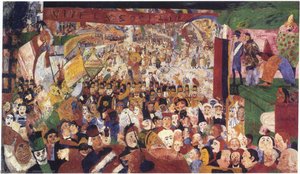
James Ensor's "Chinoiseries," painted in 1880, isn’t merely a depiction of an interior scene; it’s a carefully constructed psychological landscape. This captivating work, residing within the Royal Museums of Fine Arts of Belgium in Brussels, offers a glimpse into the artist’s uniquely unsettling and intensely personal vision. Ensor, born in Ostend to an English father and Belgian mother, possessed a sensibility deeply shaped by his upbringing amidst the vibrant chaos of a seaside resort town – a place saturated with masks, curiosities, and a potent sense of theatricality. This early exposure profoundly influenced his artistic trajectory, leading him away from conventional academic training and toward a fiercely independent style that would forever challenge the established norms of art.
“Chinoiseries” is a masterclass in Expressionist technique, subtly blended with elements of Orientalism. Ensor’s brushstrokes are not delicate or refined; they are bold, assertive, and often deliberately rough, conveying an underlying sense of unease and emotional intensity. The color palette—dominated by deep blues and greens—creates a claustrophobic atmosphere, intensifying the feeling of being trapped within the confines of the room. Notice how he utilizes contrasting colors – the vibrant reds and yellows of the decorative objects against the somber background – to draw the eye and heighten the drama. The composition itself is deliberately unbalanced, with the figures positioned in ways that disrupt any sense of harmony or stability. This deliberate distortion reflects Ensor’s interest in exploring the darker aspects of human experience.
The title itself, “Chinoiseries,” immediately signals Ensor’s fascination with the exotic – specifically, Chinese-inspired motifs. The table laden with porcelain vases, bowls, and cups isn't simply decorative; it represents a deliberate attempt to introduce an element of the ‘other’ into a European setting. This reflects a broader trend in 19th-century art, where artists sought to explore and interpret foreign cultures through visual representation. However, Ensor doesn’t offer a romanticized view of the Orient. Instead, he presents these objects within a context that is unsettling and ambiguous. The two figures present – one standing, the other seated – are deliberately undefined, their faces obscured or averted, suggesting a lack of genuine connection. The cat, perched on the floor, adds another layer of intrigue, embodying mystery and perhaps even a touch of foreboding.
“Chinoiseries” is often compared to the work of Clyfford Still, a pioneer of Abstract Expressionism, due to their shared emphasis on emotional intensity and non-representational forms. However, Ensor's approach is far more rooted in psychological observation than pure abstraction. His paintings are not simply about depicting objects; they’re about conveying feelings – anxiety, isolation, and the unsettling nature of human relationships. The painting’s creation coincided with a period of significant social and artistic change, mirroring the growing anxieties of modern life. It's a testament to Ensor’s ability to capture the complexities of the human condition through a uniquely personal and often disturbing lens. Reproductions of “Chinoiseries” offer a remarkable opportunity to experience this powerful work firsthand, bringing its enigmatic atmosphere into any space.
Explore more captivating works by James Ensor and discover high-quality reproductions at BuyPopArt.com. For deeper insights into the artist’s life and oeuvre, visit his Wikipedia profile: https://en.wikipedia.org/wiki/James_Ensor.
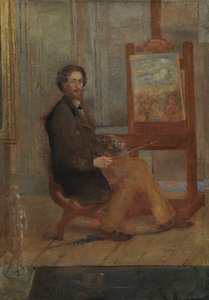
Geboren in Oostende, België, in 1860, kwam James Sidney Edouard Ensor voort uit een fascinerende samensmelting van culturen—zijn vader Engels, zijn moeder Belgisch. Deze dualiteit vormde wellicht de voorbode van de levenslange fascinatie van de kunstenaar voor maskers en vermommingen, thema's die zijn verontrustende maar meeslepende oeuvre zouden gaan dominerende. Opgegroeid te midden van de bruisende energie van een badplaats, werd de jonge James diep beïnvloed door de sfeer van kermissen en rariteiten. Zijn ouders runden een souvenirwinkel vol schelpen, carnavalsmaskers en bijzondere objecten—een waarlijk kabinet van curiositeiten dat zijn verbeelding prikkelde en een rijke visuele woordenschat bood voor zijn toekomstige kunst. Hoewel hij aanvankelijk aarzelde om traditionele academische paden te bewandelen, schreef Ensor zich uiteindelijk in aan de Académie Royale des Beaux-Arts in Brussel, maar vond de rigide structuur verstikkend voor zijn ontluikende artistieke visie. Hij realiseerde zich snel dat hij zijn eigen weg moest banen, een pad dat hem ver voorbij de conventionele grenzen zou leiden.
Ensors vroege schilderijen weerspiegelden een meer traditionele benadering, met scènes uit het dagelijks leven in sombere tinten. Werken zoals Russische muziek (1881) en De dronkaards (1883) onthullen een ontluikend talent dat worstelt met het realisme, maar zelfs in deze vroege stukken zijn de sporen van de latere verontrustende beeldspraak al aanwezig. Een cruciale verschuiving vond plaats toen het palet van Ensor lichter werd en zijn onderwerpkeuze steeds bizarrer werd. Hij begon zijn doeken te bevolken met kermissen, skeletten, poppen en allegorische figuren—een wereld doordrenkt van fantasie en vaak grenzend aan het groteske. Dit was niet louter een stilistische verandering; het was een bewuste verkenning van de duistere aspecten van het menselijk bestaan, een afwijzing van maatschappelijke normen en een omarming van het irrationele. Zijn stijl werd direct herkenbaar aan de gedurfde penseelstreken, levendige kleuren en theatrale kwaliteit—een visuele taal die uniek voor hem was. De invloed van zijn jeugdige omgeving is onmiskenbaar: die carnavalsmaskers waren niet simpelweg decoratelijke elementen; ze waren symbolen van verborgen identiteiten, sociale kritiek en de broosheid van de schijn.
Gedurende zijn carrière produceerde Ensor een reeks werken die het publiek tot op de dag van vandaag blijven choqueren en fascineren. De gescandaleerde maskers (1883) staat als een vroeg getuigenis van zijn fascinatie voor de kracht van vermomming en het vermogen om verborgen emoties te onthullen. Wellicht zijn meest controversiende werk, De opkomst van Christus in Brussel (1888-1889), blijft een krachtige satire op religieuze hypocrisie en maatschappelijke onverschilligheid—een schilderij dat aanvankelijk met harde kritiek werd ontvangen, maar nu wordt gevierd als een meesterwerk. Het verontrustende beeld van Christus die een stad binnenkomt vol groteske, gemaskerde figuren is een krachtig commentaar op de kloof tussen spirituele idealen en menselijk gedrag. Skeletten die vechten om een opgehangene (1891) biedt een rauwe meditatie over sterfelijkheid, verval en de absurditeit van het leven, terwijl De beproevingen van de heilige Antonius (1887) duikt in complexe allegorische thema's van verleiding, zonde en spirituele strijd. Terugkerend in zijn werk zijn de verkenningen van de dood, sociale kritiek, religieuze satire en de grenzeloze kracht van de verbeelding—thema's die een tijdloze relevantie bezitten.
Hoewel Ensor zich verzette tegen eenvoudige categorisering, is zijn artistieke stamboom complex en fascinerend. Hij erkende invloeden van meesters als Pieter Bruegel de Oude, wiens drukke scènes en moraliserende verhalen resoneerden met zijn eigen visie, evenals Francisco Goya, wiens zwarte humor en onverbloemde weergaven van menselijk lijden een blijvende indruk achterlieten. Ook de nadruk op estheticisme door James Abbott McNeill Whistler speelde een rol in de vorming van Ensors artistieke gevoel. Ensor was echter niet louter een imitator; hij synthetiseerde deze invloeden tot iets geheel nieuws en origineels. Hij wordt nu algemeen erkend als een sleutelfiguur in de overgang van het 19e-eeuwse symbolisme naar het vroeg-20e-eeuwse expressionisme en surrealisme—een ware pionier van de moderne kunst. Zijn onbevreesde verkenning van het onderbewuste, zijn omarming van groteske beelden en zijn afwijzing van academische conventies plaveiden de weg voor toekomstige generaties kunstenaars die de moed hadden om artistieke normen uit te dagen. Ondanks de aanvankelijke weerstand kreeg Ensor in zijn latere jaren uiteindelijk erkenning, waarbij hij in 1929 door koning Albert I tot baron werd benoemd en in 1933 de Légion d'honneur ontving. Hij stierf in Oostende in 1949, en liet een oeuvre na dat blijft boeien, verontrusten en inspireren. Zijn nalatenschap blijft voortbestaan als een getuigenis van de kracht van kunst om ongemakkelijke waarheden onder ogen te zien en de diepten van de menselijke conditie te verkennen.
1860 - 1949 , België

Dive into the visceral world of Surrealist Expressionism. Explore how dream logic meets raw emotion through a visual journey of iconic techniques, post-war history, and bold aesthetics to transform your modern space with high-impact, unforgettable art.


Blijf op de hoogte van het laatste kunstnieuws, exclusieve aanbiedingen en inspirerende interieurideeën.
Vertel ons over uw project en onze kunstexperts geven u 3 gepersonaliseerde kunstsuggesties.
Wij stellen 3 opties speciaal voor u samen – Gratis!


 Bekijk op ware grootte
 Verstuur
 Delen
Delen
 Details bekijken

 Download
 Vergelijkbare werken
 Röntgenonderzoek
 Diavoorstelling
 Lees meer







 De optie voor glas is alleen beschikbaar bij een formaat kleiner dan 110 cm.