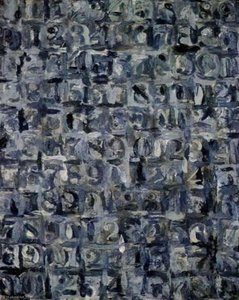
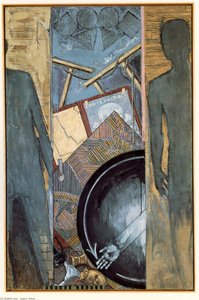
Giclée- of canvasafdruk van museumkwaliteit met een snelle productie en flexibele afwerkingsmogelijkheden. ( Bestel een handgeschilderde reproductie van dit verzamelobject Naar afbeelding wisselen)





























Kies uit onze vooraf ingestelde maten die overeenkomen met de originele verhoudingen van het kunstwerk.

U kunt uw eigen afmetingen opgeven om in een specifieke lijst of ruimte te passen. Als de door u gekozen maat niet overeenkomt met de proporties van het originele kunstwerk, zullen wij de afbeelding bijsnijden of uitbreiden met een gespiegelde of effen rand. Een digitaal mockup wordt ter goedkeuring naar u verzonden voordat de productie begint.
Houd er rekening mee dat de preview op het scherm de werkelijke bijsneding of uitbreiding niet weergeeft. Alleen de mockup toont de uiteindelijke compositie nauwkeurig.
Hoewel aangepaste maten beschikbaar zijn, raden wij aan een afmeting uit de vooraf bepaalde lijst te kiezen om de originele proporties te behouden.
Wereldwijde levering () binnen 2 weken in plaats van de standaard 4/5 weken. (8 augustus)


Spring
Formaat reproductie
Jasper Johns stands as one of the most influential figures in 20th-century American art, simultaneously embodying the rebellious spirit of Abstract Expressionism and establishing a cornerstone for Pop Art’s embrace of familiar imagery. Born in Augusta, Georgia, in 1930, Johns' early life was marked by familial instability—a divorce that instilled within him a profound awareness of displacement—an observation that would resonate throughout his artistic career as he wrestled with questions of selfhood and belonging against the backdrop of American cultural symbols.
Breaking Free From Abstraction: The Genesis of Symbolic Representation
Prior to his relocation to New York City in 1949, Johns pursued diverse educational paths before briefly attending the University of South Carolina. However, it was this move that catalyzed his artistic transformation. Immediately immersing himself in the vibrant energy of Greenwich Village, he began experimenting with techniques rooted in Abstract Expressionism—a movement characterized by spontaneous gesture and emotional intensity—yet swiftly recognizing its limitations in conveying complex ideas.
The Birth of Pop Art: Embracing Familiar Visual Language
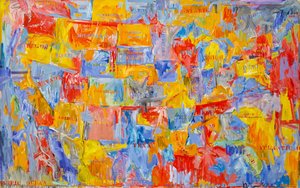
Inspired by the burgeoning Pop Art scene spearheaded by artists like Andy Warhol and Roy Lichtenstein, Johns deliberately rejected abstraction’s preoccupation with inner experience. Instead, he turned his gaze outward, selecting commonplace objects—flags, maps, targets—as subjects for his canvases. This decision wasn't merely stylistic; it represented a fundamental shift in artistic strategy—a conscious effort to engage viewers with recognizable symbols and textures from everyday life.
Iconic Works: Exploring Themes of Visibility and Perception
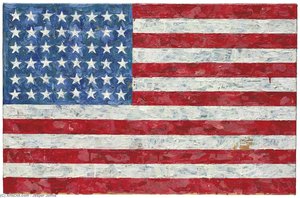
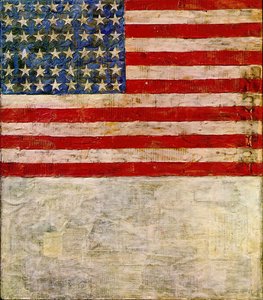
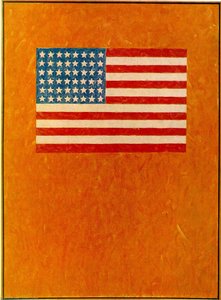
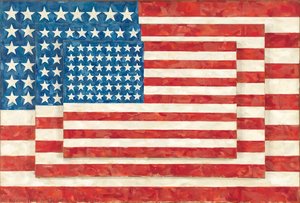
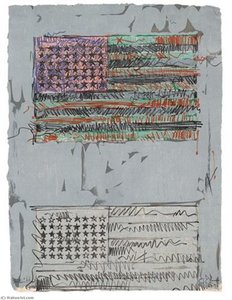
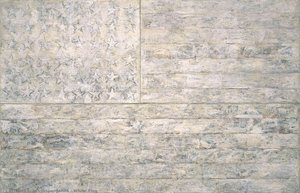
"Flag," arguably Johns’ most celebrated piece, exemplifies this approach. Painted in 1954-55, it depicts a simple American flag—a symbol laden with historical significance—rendered in bold, geometric shapes. The deliberate flatness of the canvas underscores Johns' preoccupation with visual perception and challenges viewers to consider how images communicate meaning beyond their literal representation.
Technique and Materiality: Precision Meets Texture
Johns’ technique is marked by meticulous attention to detail—a hallmark of his artistic process. He employs encaustic, a medium combining beeswax, resin, and pigment, creating surfaces that possess remarkable depth and luminosity. This painstaking layering process contributes to the textural richness of his paintings—a deliberate contrast to the gestural spontaneity championed by Abstract Expressionists.
Symbolism Beyond Representation: Decoding Layers of Meaning
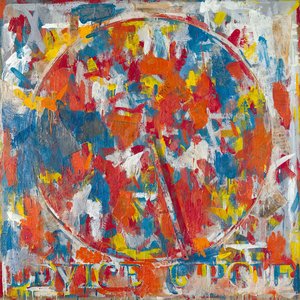
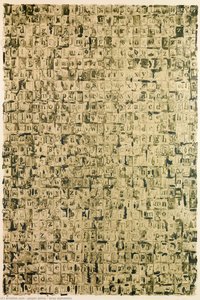
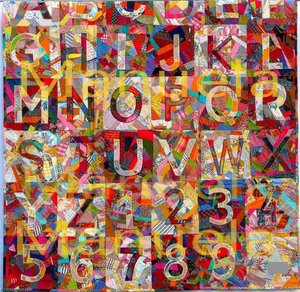
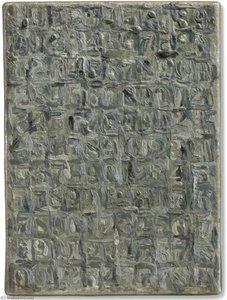
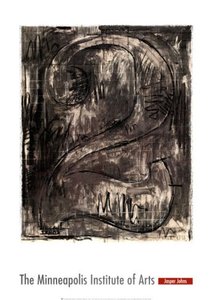
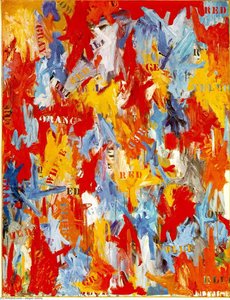
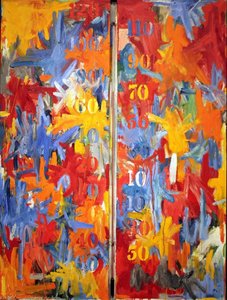
Throughout his oeuvre, Johns utilizes symbols—maps, targets, numbers—to explore themes of identity, exploration, and control. These objects aren’t merely depicted; they are imbued with significance—representing journeys undertaken, goals pursued, and territories charted. By confronting viewers with familiar visual cues, Johns compels them to contemplate the complexities of human experience.
Emotional Resonance: Capturing Moments of Reflection
Ultimately, Johns’ art transcends mere visual representation; it evokes profound emotional responses. His paintings invite contemplation—encouraging viewers to consider questions of selfhood, memory, and perception. The quiet dignity of his compositions speaks to a deeper understanding of the human condition—a testament to Johns' enduring legacy as one of America’s most visionary artists.

1930 - , Verenigde Staten van Amerika

Explore the groundbreaking abstract expressionism of Morris Louis, a pioneer of Color Field painting. Discover his innovative techniques, influential series & lasting legacy in post-war American art. Learn more at BuyPopArt.
Explore the life & work of Jacob Kainen, a pivotal figure in American Abstract Expressionism and Color Field painting. Discover his journey from Social Realism to vibrant abstraction and lasting influence on 20th-century art.

Explore the captivating world of John Augustus Atkinson (1775-1830), a key figure in British Romanticism and genre painting. Discover his stunning Russian history scenes, naval art & delicate watercolors. Learn about his legacy at BuyPopArt.

Explore the captivating genre paintings of John George Brown, celebrated for his realistic depictions of 19th-century American life. Discover his legacy & find museum-quality reproductions at BuyPopArt.

Explore the captivating Orientalist paintings of John Frederick Lewis! Discover his mastery of detail, genre scenes & influence on 19th-century British art. Learn about his life, techniques & legacy at BuyPopArt.


Blijf op de hoogte van het laatste kunstnieuws, exclusieve aanbiedingen en inspirerende interieurideeën.
Vertel ons over uw project en onze kunstexperts geven u 3 gepersonaliseerde kunstsuggesties.
Wij stellen 3 opties speciaal voor u samen – Gratis!


 Bekijk op ware grootte
 Verstuur
 Delen
Delen
 Details bekijken

 Download
 Vergelijkbare werken
 Röntgenonderzoek
 Diavoorstelling
 Lees meer







 De optie voor glas is alleen beschikbaar bij een formaat kleiner dan 110 cm.