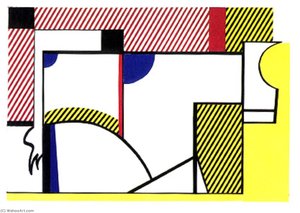
2020
2020 6.0 x 10.0 cm
 Islamic Museum of Australia
Koop een digitale afbeelding in hoge resolutie met verbeterde kwaliteit, die veel superieur is aan de online voorvertoning.
Elk bestand wordt met uiterste precisie voorbereid door onze interne specialisten, met behulp van geavanceerde tools en deskundige handmatige retouche. Wij garanderen dat elke afbeelding een uitzonderlijke helderheid, nauwkeurige kleurweergave en verfijnde details bezit.
Het uiteindelijke bestand wordt binnen 72 uur per e-mail geleverd, geoptimaliseerd voor direct gebruik in professionele, redactionele en printomgevingen. Dit is dezelfde kwaliteit waarop vooraanstaande designstudio's, uitgevers en galerieën vertrouwen.
Download een bestand met hoge resolutie voor persoonlijke weergave, afdrukken en creatieve projecten. ( Bestel print Bestel handgeschilderde reproductie)
Wanneer u kiest voor BuyPopArt.com, ontvangt u niet alleen een afbeelding – u krijgt een professioneel verbeterd digitaal kunstwerk, met precisie vervaardigd en voorzien van een tevredenheidsgarantie. Dit is alles wat automatisch bij uw bestelling is inbegrepen:

Uw hoogwaardige digitale afbeeldingsbestand wordt binnen 72 uur na bestelling naar u gemaild – klaar voor direct gebruik.

Uw kunstwerk wordt professioneel geoptimaliseerd met behulp van geavanceerde AI-tools en handmatige bewerkingen, waardoor maximale details, helderheid en kleurnauwkeurigheid worden gegarandeerd.

Je bestand per ongeluk verwijderd of kwijtgeraakt? Geen zorgen – we sturen het u op elk gewenst moment gratis opnieuw toe.

Geniet direct van uw kunstwerk zonder invoerrechten, belastingen of verzendkosten – digitale downloads zijn altijd belastingvrij.

Met behulp van professionele hulpmiddelen en kleurbeheer zorgen wij ervoor dat uw digitale afbeelding de originele kleuren zo nauwkeurig mogelijk weergeeft.

Als u niet tevreden bent met uw digitale afbeelding, passen wij deze aan of storten wij 100% terug binnen 60 dagen – zonder vragen gesteld.

Niet tevreden? Ontvang binnen 60 dagen na ontvangst van uw digitale bestand uw volledige aankoopbedrag terug – zonder vragen te stellen.

Koop 3 afbeeldingen, bespaar 10% - Koop 5, bespaar 15% - Koop 10+, bespaar 20%. Ideaal voor creatieve projecten, galerieën en bureaus.
Born in 1965 in Bristol, England, Damien Hirst is undeniably one of the most controversial and commercially successful artists of his generation. Initially associated with the Young British Artists (YBAs) movement of the early 1990s – a group that shook the foundations of the art world with its audaciousness and challenge to established norms – Hirst has since forged a singular, often unsettling, artistic path. His work frequently grapples with themes of death, religion, consumerism, and the very nature of representation, pushing boundaries and provoking intense debate about the role of art in contemporary society.
Hirst’s early influences were remarkably diverse. Growing up in a working-class neighborhood, he developed an appreciation for both classical art through visits to the Bristol Museum & Art Gallery and the gritty realities of his surroundings. This juxtaposition informed his later work, often blending elements of traditional artistic techniques with shocking subject matter. He studied at Goldsmiths College in London, where he encountered artists like Gary Hume and Sarah Charlesworth, who encouraged a spirit of experimentation and critical engagement with art’s conventions. Crucially, Hirst's relationship with the collector Charles Saatchi proved pivotal, providing him with unprecedented access to galleries, collectors, and ultimately, enormous financial support that allowed him to realize his ambitious projects.
Hirst’s breakthrough came in 1991 with *Spin Paintings*, a series of brightly colored resin paintings created by pouring acrylic paint onto canvases coated with sugar. These works, initially dismissed as gimmicky, established Hirst's fascination with the accidental and the sublime – a core tenet of his artistic philosophy. However, it was his exploration of death that truly cemented his reputation. Works like *The Physical Impossibility of Death in the Mind of Someone Living* (1994-95), featuring a preserved tiger shark suspended in formaldehyde, became instantly iconic and sparked immediate controversy.
This series, along with subsequent pieces involving dissected animals – sheep, cows, bulls – demonstrated Hirst’s willingness to confront mortality head-on. He wasn't simply depicting death; he was actively engaging with it, presenting the unsettling reality of decay and preservation within a carefully controlled aesthetic framework. The use of formaldehyde, a preservative often associated with medical procedures, further amplified the work’s chilling effect. These pieces weren’t intended to be beautiful in the traditional sense, but rather to force viewers to confront their own anxieties about mortality and the fragility of life.
While his early works were often perceived as shock tactics, Hirst's artistic practice has evolved considerably over time. He’s moved beyond simply presenting dead animals, incorporating a wider range of media including spot paintings (works covered in thousands of tiny dots), neon sculptures, video installations, and even performance art. His “Spot Paintings,” for example, are not merely decorative; they represent a complex meditation on the nature of perception and the illusion of reality – a concept deeply rooted in his earlier explorations of accidental beauty.
Crucially, Hirst’s success has been inextricably linked to the dynamics of the art market. He deliberately cultivated an aura of exclusivity and scarcity, often producing limited editions of his works at exorbitant prices. This strategy, combined with his provocative subject matter and celebrity status, created a frenzy among collectors, driving up demand and solidifying his position as one of the wealthiest artists in the world. This has led to ongoing debates about the ethics of art investment and the role of money in shaping artistic value.
Damien Hirst remains a deeply divisive figure within the art world. Critics often accuse him of exploiting shock value for commercial gain, reducing complex philosophical ideas to mere spectacle. However, his influence on contemporary art is undeniable. He has challenged traditional notions of beauty, representation, and the role of the artist, forcing viewers to confront uncomfortable truths about death, consumerism, and the nature of reality.
Despite the controversy surrounding his work, Hirst’s impact extends beyond the gallery walls. His willingness to push boundaries and engage in open dialogue has sparked critical conversations about art's purpose and its relationship to society. His legacy is not simply defined by his market success but also by his sustained provocation of thought and his enduring challenge to established artistic conventions.

1965 - , Lebanon


Blijf op de hoogte van het laatste kunstnieuws, exclusieve aanbiedingen en decoratie-ideeën.
Vertel ons over uw project en onze kunstexperts geven u 3 gepersonaliseerde kunstsuggesties.
Wij stellen drie opties speciaal voor u samen – gratis!


 Voorvertoning
 Verstuur
 Delen
Delen
 Details bekijken

 Download
 Vergelijkbare items
 Röntgenonderzoek
 Diavoorstelling
 Lees meer